
GIA Research
GIA is proud to provide the most comprehensive research in the industry with a world-renowned field gemology team and a dedication to acquiring colored stones directly from the source.
Our cutting-edge research lays a strong scientific foundation to set the standard for diamond and gemstone reports. It also allows GIA to develop innovative instruments and educate future gemologists and industry leaders. Most importantly, our research helps us protect consumers across the globe. Learn more about what we do.
Apply to GIA’s Liddicoat Postdoctoral Research Fellowship Program
Research Content
Diamond Research
Get details on the latest research from the GIA research team, including: natural diamond geology and mining locations, causes of colors and optical features, laboratory-grown diamond research, various cut and color research that inform our diamond grading reports, and advanced instrumentation used.
Colored Stone Research
Get details on the latest colored stone research from the GIA research team, including: sources and their legend, lore, and traceability; photomicrography; treatments and identification; and the gemology of gemstone formation.
Pearl Research
Get details on the latest pearl research from the GIA research team, including: identification of natural and cultured pearls, color treatments and processes, advanced and unconventional pearl testing techniques, and structural analysis and biomineralization.
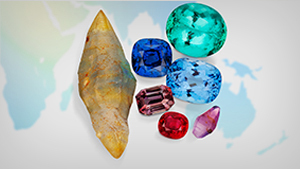
Publications
From the history of the Chivor emerald mine to the ancient craft of jade carving to insight into the causes of corundum color, these articles combine science with art and history to provide insight into the fascinating and complex world of gemstones. Offering up the best and most current research by GIA lab scientists, all were published in GIA’s peer-reviewed academic journal,Gems & Gemology, or other professional journals. View theResearch Publication Archive.
Explore GIA Publications
Read about the some of the world’s most valued gems and the identification of unusual gem treatments and rare gem materials.
Read More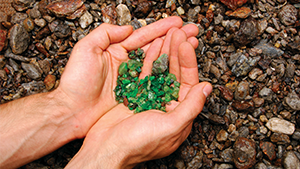
Field Gemology
GIA field gemologists are globetrotters, traveling to all corners of the world to study new gem sources, such as Colombian emerald or Mozambican ruby. In the past decade, they’ve been on 95 expeditions to 21 countries, collecting more than 1 million carats of samples. Collecting gems from known geographic localities is of tremendous importance to the GIA research program. By collecting samples in the field, we have a much better understanding of where they come from, and the geologic conditions of formation of the gem deposit itself. We can obtain samples of both the gem materials and the host rocks in which they occur, as well as photographs and video footage of the area. Once back at GIA, these gem samples can be studied using a wide variety of scientific techniques, and the resulting data can be added to our information database which supports the gem identification report services of the GIA Laboratory.
Explore Field Gemology Articles
Curious about artisanal mining, the conditions of gem formation or how gemologists determine gemstone country of origin?
Read More
Collaborations & Support to Academia
To support our commitment to gem knowledge, GIA researchers share their findings in professional publications and often collaborate with researchers at universities or other institutions to coauthor articles. These diverse articles represent pressing topics that our scientists are currently investigating, including knowledge that addresses current gemological challenges.
Explore Articles From GIA Researchers
Learn more about how our researchers collaborate and share their findings with scientists at other institutes.
Read MoreResearchers & Scientists
Blodgett

Specialty: clarity, cut, and analytical problem solving.
Breeding

Specialty: diamond defects, treatments and color origin, and geochemistry.
Conant

Specialty: mathematics, algorithms, data analysis, AI.
D’Haenens-
Johansson

Specialty: defect physics of natural, treated and synthetic diamond materials.
Hardman

Specialty: diamond and colored gemstones geostatistics.
Jin

Specialty: mineral crystallography and crystal chemistry.
Jollands

Specialty: point defects, diffusion kinetics, experimental petrology.
Jones

Specialty: diamond science and instrumentation development.
Katsurada

Specialty: minerals in metamorphic rocks.
Lai
Specialty: diamond geology, geochemistry and spectroscopy.
Luo

Specialty: mineralogy, metrology, quality control.
Magaña

Specialty: diamond physics, diamond treatment and synthetics.
Miura

Specialty: mantle petrology, mineralogy and geochemistry, field geology.
Palke
Specialty: geology and geochemistry, and origin of colored stones.
Reinitz

Specialty: diamond cut grading, gemstone metrology, spectroscopy.
Saruwatari

Specialty: diamond physics, diamond treatment and synthetics.
Shigley

Specialty: defect physics of natural, treated and synthetic diamond materials.
M. Smith

Specialty: diamond geology.
Soonthorntantikul
-Soonthorntantikul.jpg-120.jpg)
Specialty: corundum spectroscopy.
Tsai

Specialty: spectroscopy; optical and computational imaging.
Wang

Specialty: geology and geochemistry, HPHT experiment, diamond treatment.
Zhou

Specialty: pearls and related materials.

Specialty: Color and Imaging, Color Vision and Psychophysics

Why GIA Research
GIA's Commitment to Research
Research not only deepens the world’s understanding of gems, but also protects those who buy or sell them.
Instrumentation
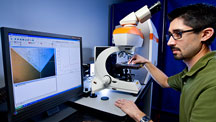
Scientific Instruments Help Researchers Tell Gem Stories
Researchers use powerful analytical tools to determine the distinctive characteristics of natural, synthetic and treated gem materials.
Learn MoreGIA Gem Project

Dr. Edward J. Gubelin Gem Collection
GIA has studied more than 400 important gemstones in the Edward J. Gubelin Collection and is committed to sharing this repository of gemological information.
Go To IndexRecent Research
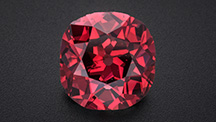
A Study of the Winston Red: The Smithsonian’s New Fancy Red Diamond
Read Article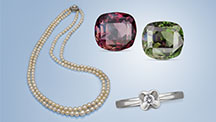
Classification of Gem Materials Using Machine Learning
Read Article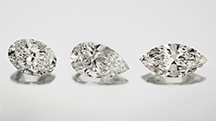
Observations of Oval-, Pear-, and Marquise-Shaped Diamonds: Implications for Fancy Cut Grading
Read Article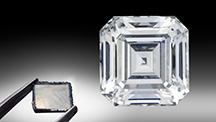
Laboratory-Grown Diamonds: An Update on Identification and Products Evaluated at GIA
Read Article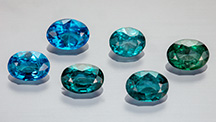
Color Modification of Spinel by Nickel Diffusion: A New Treatment
Read Article


