Summer 2017 G&G: Russian Diamonds and PL Mapping of Synthetic Diamonds, Plus Sapphire Inclusions Chart
August 7, 2017
The Fall 2017 issue of Gems & Gemology covers topics across the gemological spectrum, from HPHT synthetic diamond identification criteria to natural saltwater pearls harvested during the Columbian era and the current state of Colombia’s emerald industry. Other highlights include a study of photoluminescence spectra in emerald as a method of determining geographic origin, a review of synthetic star corundum from mid-twentieth century Germany, and an examination of the material known in the industry as “dalmatian jasper.”
OBSERVATIONS ON HPHT-GROWN SYNTHETIC DIAMONDS: A REVIEW
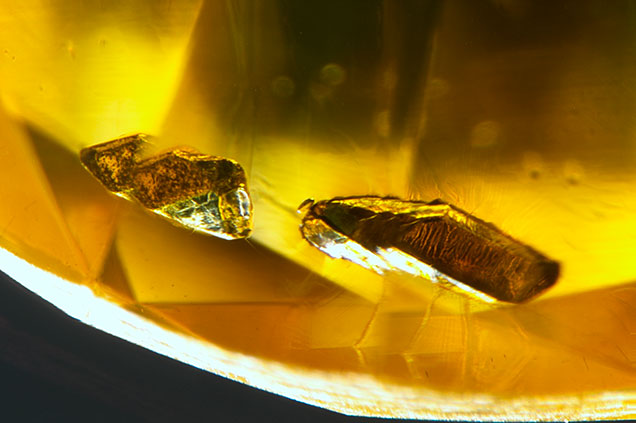
While synthetic diamonds grown by the high-pressure, high-temperature (HPHT) method have been commercially available since the mid-1990s, the technology has made great strides in the last decade. In the issue’s lead article, GIA’s Sally Eaton-Magaña, James E. Shigley, and Christopher M. Breeding provide insight into the HPHT-grown material available on the market, including statistical data about the cut, color, and clarities available as well as identification criteria for gemologists.
SALTWATER PEARLS FROM THE PRE- TO EARLY COLUMBIAN ERA: A GEMOLOGICAL AND RADIOCARBON DATING STUDY
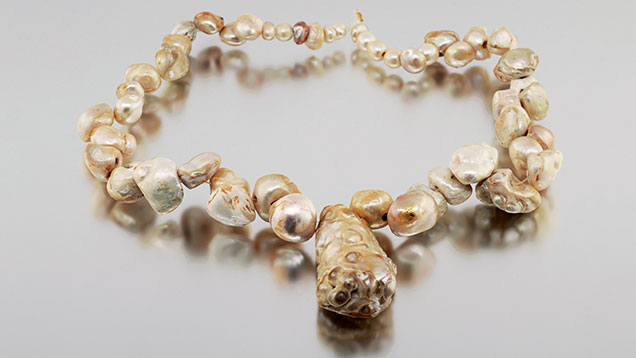
Pearls were treasured by the indigenous people of the Americas and by the Spanish colonists. Oyster beds in the Caribbean were heavily exploited during the first half of the sixteenth century before oysters became scarce. A supplier came into possession of 85 pearls, reportedly from Central or South America and dating from the pre- or early Columbian era. A team from GIA and the Gübelin Gem Lab, led by Chunhui Zhou, analyzes the pearls through a variety of methods to validate these claims.
PHOTOLUMINESCENCE SPECTRA OF EMERALDS FROM COLOMBIA, AFGHANISTAN, AND ZAMBIA

Photoluminescence (PL) in emerald arises from trace chromium impurities. An emerald’s PL spectrum displays two features that can vary depending on the stone’s origin. Lead author David Brian Thompson and his team examine the PL spectra of 48 emeralds from Colombia, Afghanistan, and Zambia to provide evidence for or against possible geographic origins.
SYNTHETIC STAR SAPPHIRES AND RUBIES PRODUCED BY WIEDE’S CARBIDWERK, FREYUNG, GERMANY

During the 1950s, Wiede’s Carbidwerk patented a method of growing star synthetic corundum for the commercial market. The company sold these goods through the late 1970s, though the samples from the 1960s and beyond differ slightly from their earlier counterparts. Karl Schmetzer and his coauthors explore the variant of the Verneuil process that Wiede’s used to grow these synthetics.
TRUE COLORS OF “DALMATIAN JASPER”

The decorative gemstone known in the trade as “dalmatian jasper” due to its black spots (identified as arfvedsonite) is not widely discussed in the published literature. Tomas Powolny and Magdalena Dumańska-Słowik investigate the stone’s mineralogical composition and properties. On the basis of the study, they suggest the use of “dalmatian stone,” as the material does not meet the gemological definition of jasper.
THE COLOMBIAN EMERALD INDUSTRY: WINDS OF CHANGE

Emerald mining in Colombia dates back more than a thousand years. Yet its greatest opportunities may still lie ahead, as multinational companies invest in the industry as transparency and traceability come to the forefront. In this field report, an expedition led by Colombian gemologist Darwin Fortaleché documents the recent changes in the country’s mine-to-market emerald industry.
LAB NOTES
Updates from GIA’s labs include reports on a high-quality diamond from Brazilian kimberlite, synthetic overgrowth on a flux-heated ruby and a beryllium-diffused sapphire, and separation of synthetic melee from natural diamond using GIA’s iD100 screening device.
MICRO-WORLD

G&G’s photomicrography section features a flower-like inclusion in a Sri Lankan sapphire, silvery rutile inclusions in quartz, and fluorite hosting eye-visible barite inclusions.
GEM NEWS INTERNATIONAL
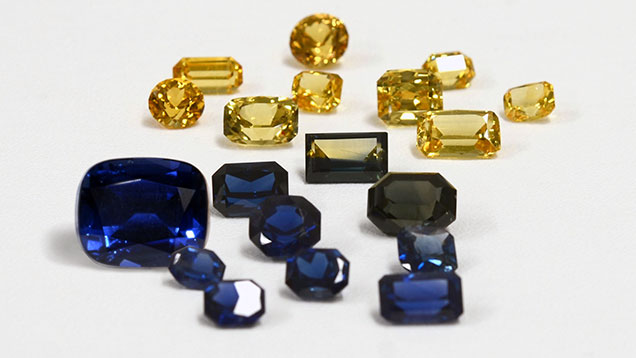
The Fall GNI section includes an update on Mozambique ruby mining, an analysis of blue-green pyrope-spessartine with high vanadium, and an examination of sapphires reportedly from new sources in northern Nigeria.
Jennifer-Lynn Archuleta is the editor of Gems & Gemology.