Winter 2017 G&G: Cullinan-Like Superdeep Diamonds, the Artistic Exquisite Gem Carvings of the Dreher Family, and Matrix-Matched Corundum Standards
January 22, 2018
From diamonds that originate deep within the earth’s mantle to pearls cultured along Australia’s eastern coastline, the Winter 2017 issue of Gems & Gemology reports on the many facets of the gemological world. Articles include a look at the origin of Cullinan-like “superdeep” diamonds, the lifelike gem carvings of Gerd and Patrick Dreher, and the characteristics of Australian akoya cultured pearls. The Winter issue also introduces GIA’s new calibration standards sets for analyzing the chemistry of corundum, compares two different types of detectors in microradiographic imaging of pearls, and features a chart showing inclusions in natural, synthetic, and treated ruby.
THE VERY DEEP ORIGIN OF THE WORLD’S BIGGEST DIAMONDS
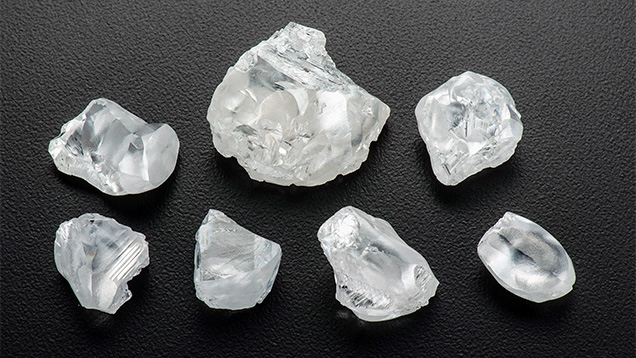
The lead article of the Winter 2017 issue reviews the remarkable diamonds found deep in the earth’s convecting mantle. In a follow-up to his December 2016 article in Science magazine, Evan Smith and coauthors examine 83 of these large, pure, Cullinan-like diamonds, known for their high clarity and D color grades. The samples used in this paper, along with their inclusions and other properties, provide a glimpse into the earth’s geologic formation.
GEM VIRTUOSOS: THE DREHERS AND THEIR EXTRAORDINARY CARVINGS
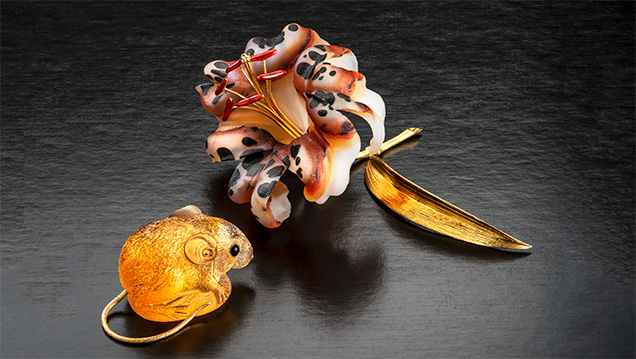
The German town of Idar-Oberstein is known for its gem cutting and carving industry. Coauthors Robert Weldon, Cathleen Jonathan, and Rose Tozer explore the town’s rich history and the carving tradition of the Dreher family, which has passed down its skills through thirteen generations. The work of contemporary masters Gerd and Patrick Dreher is the focus of this article, which is accompanied by online videos and slideshows.
AKOYA CULTURED PEARL FARMING IN EASTERN AUSTRALIA
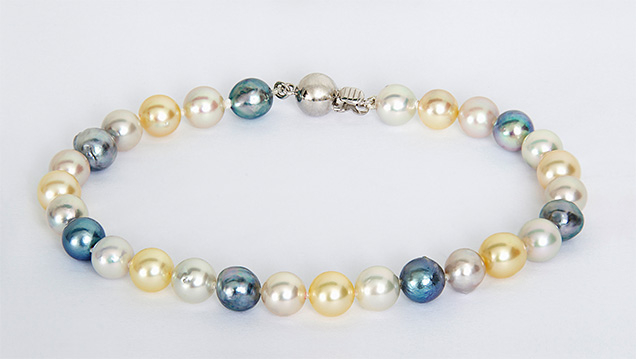
For two decades, akoya cultured pearls in a variety of colors have been produced from P. imbricata fucata mollusks on Australia’s eastern coast. In this article, Laura M. Otter and her coauthors detail the production and conduct the first gemological and mineralogical study of these pearls. Their study concludes that colored Australian akoyas can be separated from pearls produced by other mollusk species.
ACCURATE REPORTING OF KEY TRACE ELEMENTS IN RUBY AND SAPPHIRE USING MATRIX-MATCHED STANDARDS
Trace element analysis is crucial to determining geographic origin of corundum. Jennifer Stone-Sundberg and a team of researchers have developed highly accurate calibration standards for chemical analysis at GIA using the LA-ICP-MS technique. These sets are designed for use in basic research and geographic origin reporting of ruby and sapphire.
REAL-TIME MICRORADIOGRAPHY OF PEARLS: A COMPARISON BETWEEN DETECTORS

Over the past twenty years, real-time X-ray microradiography (RTX) has largely replaced film-based X-ray imaging in the examination and identification of pearls. Stefanos Karampelas and his colleagues discuss the benefits and drawbacks of two different types of detectors used with RTX units.
CHART OF INCLUSIONS IN NATURAL, SYNTHETIC, AND TREATED RUBY
The third wall chart in a series documents inclusions often found in natural, synthetic, and treated emerald. Inclusion specialists Nathan Renfro, John Koivula, and Jonathan Muyal provided the 30 detailed photomicrographs in this chart.
LAB NOTES
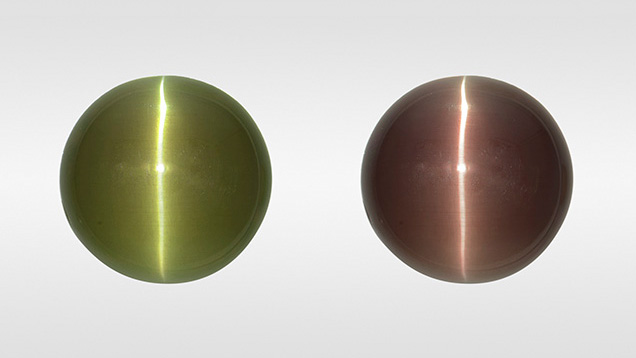
Bulletins from GIA’s labs around the world include a cat’s-eye alexandrite with a unique inclusion pattern, a synthetic moissanite imitating rough diamond, and two natural sapphires with synthetic ruby overgrowth.
MICRO-WORLD
G&G’s section on the inner world of gemstones features entries on aragonite spheres in Ethiopian opal, twinned calcite inclusions in Mogok ruby, and shattuckite in quartz.
GEM NEWS INTERNATIONAL
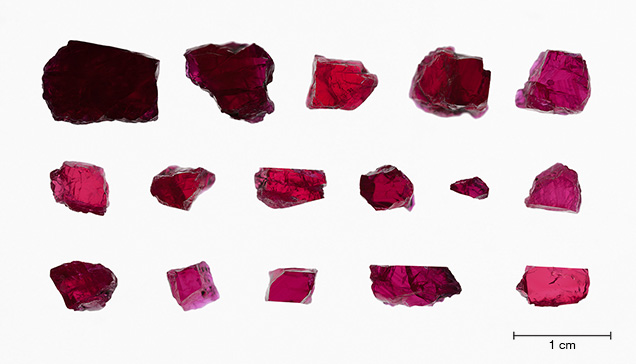
The GNI section features a preliminary look at facet-grade ruby from Longido, Tanzania; an update on the Foxfire rough diamond, mined from Canada’s Diavik mine in 2015; and the testing of hydrophane opals dyed pink and blue.
2017 DR. EDWARD J. GÜBELIN MOST VALUABLE ARTICLE AWARD
G&G’s Most Valuable Article Award invites the journal’s readers to vote on the three most important articles from the previous year. Each completed ballot is entered into a drawing to win a one-year subscription to Gems & Gemology. To qualify for the drawing, please submit your votes for the 2017 MVA Award by Monday, March 12, 2018.
Jennifer-Lynn Archuleta is the editor of Gems & Gemology.