


Overview
About Aquamarine
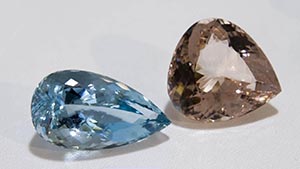
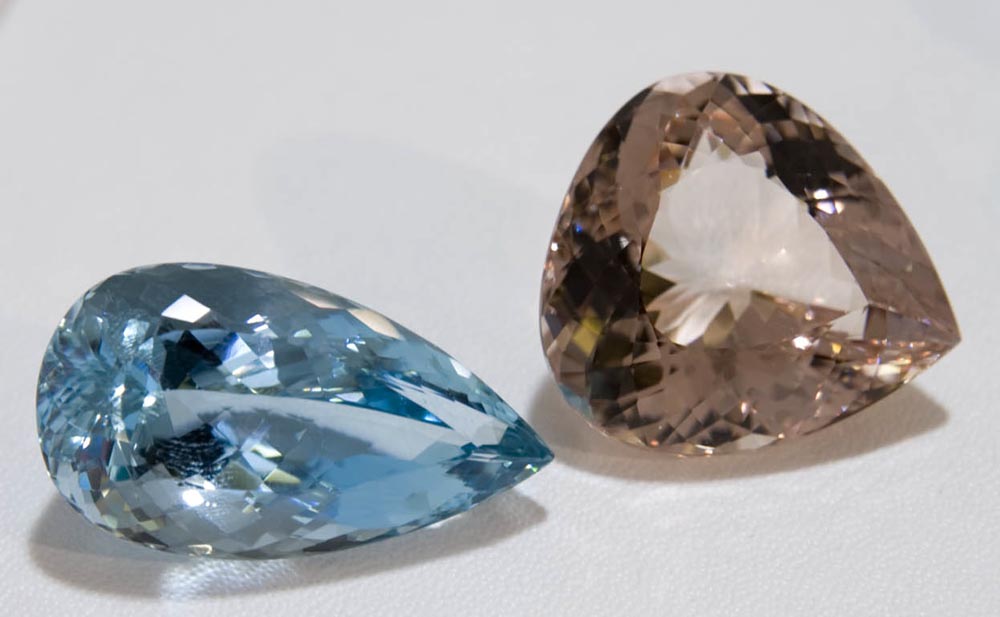


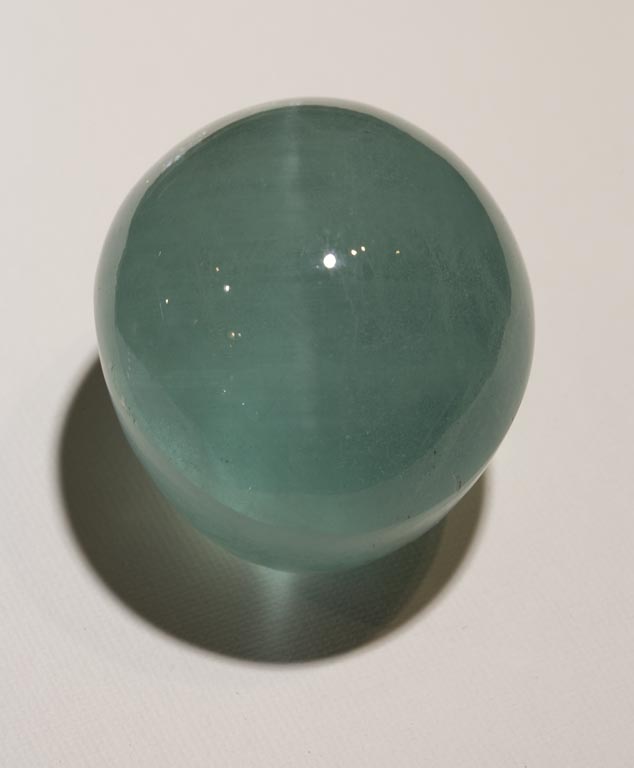
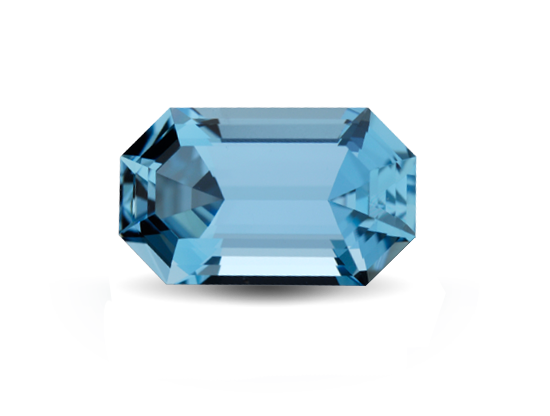
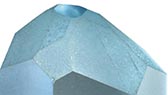
Aquamarine’s name comes from the Latin for seawater and it was said to calm waves and keep sailors safe at sea. March’s birthstone was also thought to enhance the happiness of marriages. The best gems combine high clarity with limpid transparency and blue to slightly greenish blue hues. Like many beryls, aquamarine forms large crystals suitable for sizable fashioned gems and carvings.
Birthstones & Anniversaries
Aquamarine is the birthstone for March and the gem of the 19th wedding anniversary.
110 Kilos
The largest gem-quality aquamarine crystal mined to date is 19 inches long.
Beryl
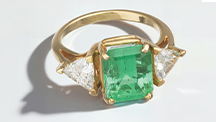
Like emerald, aquamarine is a color variety of the mineral beryl.
15,000 feet
Aquamarine is mined at high elevations in Pakistan’s Karakoram Mountains.
Facts
-
-
Mineral:
beryl
-
Chemistry:
Be3Al2Si6O18
-
Color:
greenish blue, light in tone
-
Refractive index:
1.577 to 1.583
-
Birefringence:
0.005 to 0.009
-
Specific gravity:
2.72
- Mohs Hardness: 7.5 to 8.0
Treatments
There are a number of processes used to alter the color, apparent clarity, or improve the durability of gems.
Learn MoreSynthetics
Some gemstones have synthetic counterparts that have essentially the same chemical, physical, and optical properties, but are grown by man in a laboratory.
Learn MoreImitations
Any gem can be imitated—sometimes by manmade materials or by natural materials chosen by man to impersonate a particular gem.
Learn More
Why We Love This Gemstone
Beautiful Crystals
Aquamarine grows in beautiful six-sided prismatic crystals that on rare occasions can be more than a foot long.
Transparency
Faceted aquamarine is often exceptionally transparent with vitreous luster,
so it really sparkles.
Dichroic
Using a dichroscope, you can see aquamarine is near colorless and stronger blue in different crystal directions.
Quality Factors
Assessment of the following characteristics determines aquamarine’s value.
Color
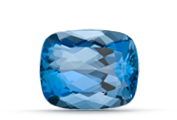
Aquamarine’s preferred color is a moderately strong dark blue to slightly greenish blue.
Clarity
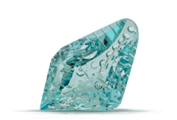
Most cut gems are eye-clean. Large examples are available without visible inclusions.
Cut
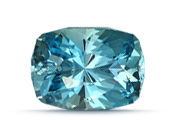
Because aquamarine’s color is light, cutting is important and well-cut gems show brilliance.
Carat Weight
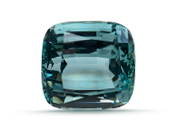
Aquamarine crystals range from tiny to very large—some even up to 100 lbs.
Aquamarine Quality Factors: The Comprehensive Guide
Research
Explore sources, gemological research, and the role of aquamarine in history.
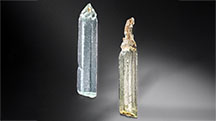
Heliodor and Aquamarine with Surface Etching
Rhiana Elizabeth Henry and Adriana Robinson , Aug 2, 2024 Read Article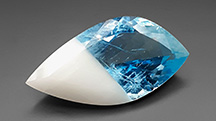
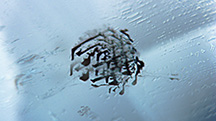
Internal World of Aquamarine from Xinjiang
Yubing Chen, Jun Shu, Yanling Wang, and Qishen Zhou , Aug 4, 2023 Read Article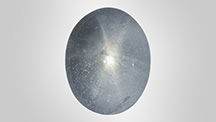
Recommended Reading
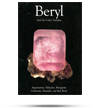
Beryl and its Color Varieties
Dimitriy Belakovskiy, et al
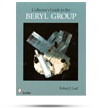
Collector's Guide to the Beryl Group
Robert J. Lauf
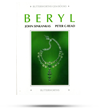
Beryl
John Sinkankas and Peter Read