
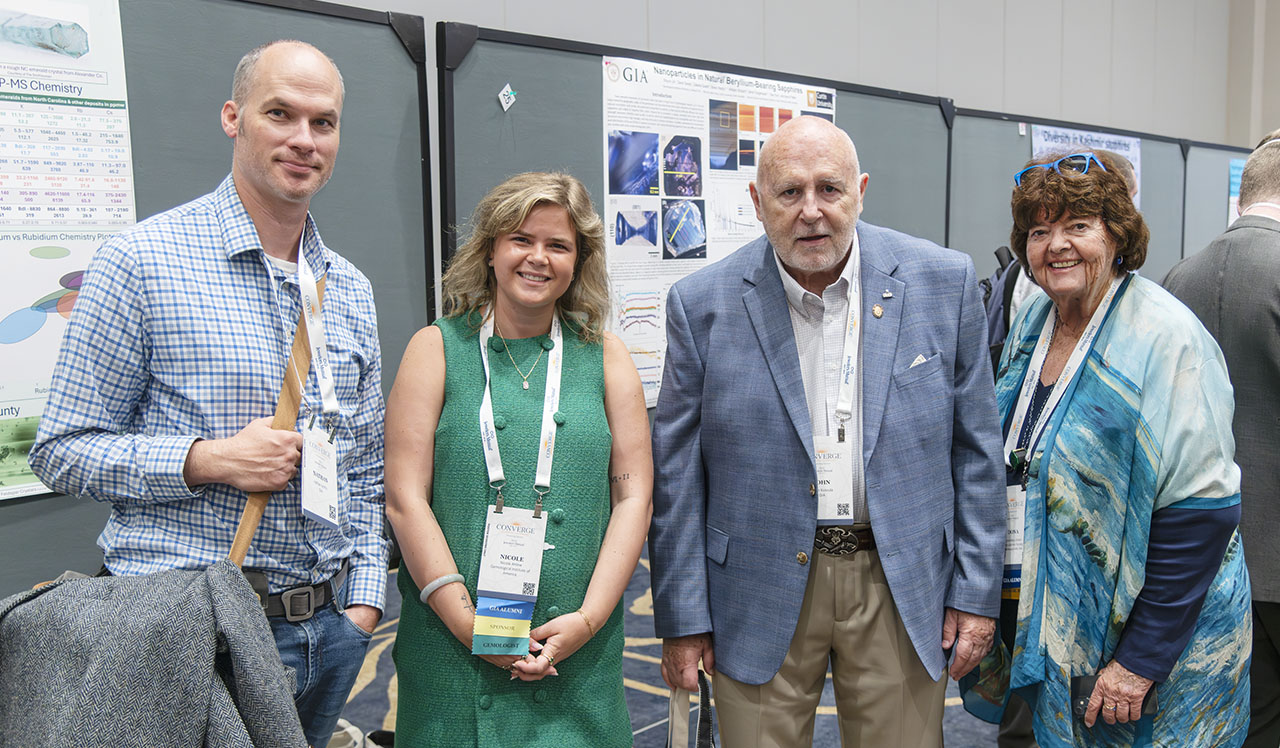
More than 30 posters covering broad topics related to the industry were presented at Converge 2025. Presenters were on hand to interact with Converge attendees to share their gemological knowledge (figure 1). In the poster presentations outlined below, only the principal, or first-listed author, appears.
COLORED STONES AND PEARLS
Gemological Characterization of Emeralds from North Carolina, USA
Nicole Ahline | GIA, Carlsbad
North Carolina’s emerald deposits are among the few recognized in North America, best known because they are historically significant and gemologically distinct due to their chemistry and color zoning. This poster provides the context of the geological environment the emeralds formed in, an overview of their standard gemological properties, inclusion photomicrographs, and chemistry.
Emerald Report Features at GIA Laboratories
Alex Goodsuhm | GIA, Carlsbad
Since December 2024, GIA has offered optional filler identification on its emerald origin reports. This poster details the new service, which is available in addition to the standard report information and includes identification of the stone and the degree of filler. Currently offered at no cost, the service provides the filler information in the following format: Type A (oils and other naturally occurring materials such as Canada balsam, cedarwood oil, and paraffin) and Type B (artificial resins such as Opticon, Permasafe, and Araldite).
Explorations in Brazil: GIA’s 102nd Field Expedition
Dr. Aaron Palke | GIA, Carlsbad
This poster focuses on a recent GIA field gemology expedition to Brazil, which remains a colored stone mining powerhouse. The objective was to bolster GIA’s colored stone reference collection with representative samples of white opal from Piauí State and emerald from Campos Verdes, Goiás State, and to revisit the legendary copper-bearing tourmaline deposits in Paraíba. The opal samples, which resemble Australian opal, will help support an upcoming new GIA opal report, and the emerald samples are of interest because their chemistry and inclusion suites can resemble gems from other locations including Pakistan, Afghanistan, and Colombia.
Field Gemology and GIA’s Colored Stone Reference Collection
Wim Vertriest | GIA, Bangkok
This poster summarizes GIA’s field gemology expeditions and the nature of the Institute’s colored stone reference collection. A map shows the locations of mining areas visited to date and the types of gem materials collected. Short summaries provide the reference collection’s focus along with an explanation of the six sample categories (A–F), based on proximity to the mine when collected by the field gemologist.
Glass Ceramics as Imitation Gems
Dr. Wasura Soonthorntantikul | GIA, Bangkok
Glass ceramics are materials consisting of crystalline phases dispersed in an amorphous glass matrix, which combine properties of glass and ceramics. While mainly produced for industrial purposes, these materials are very suitable for use as imitation gems. They are tougher and more wear-resistant than regular glass and are inexpensive to produce in any color or transparency. This poster outlines how glass ceramics are made, their gemological properties, and possible identification challenges.
Advances in Jadeite Origin Determination at GIA
Alex Goodsuhm | GIA, Carlsbad
Due to the increase in supply of high-quality Guatemalan jadeite/omphacite jade (known as fei cui in the trade) reaching gem markets, GIA recently conducted a study of untreated Guatemalan and Burmese (Myanmar) material. Trace element chemistry analysis using laser ablation–inductively coupled plasma–mass spectrometry followed by application of machine learning revealed differences that, when coupled with observations, allow separation and permit origin determination of both sources.
Gemological Analysis on Sterling Opals
Jeffrey Hernandez | GIA, Carlsbad
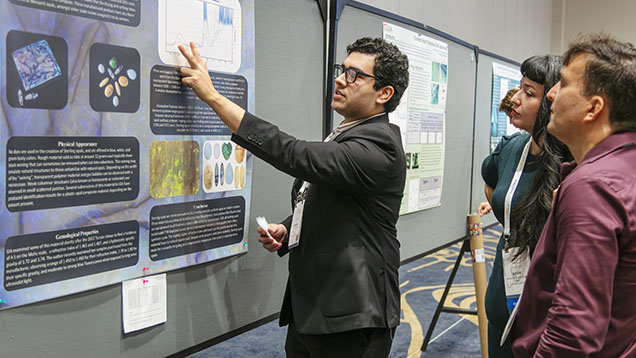
The author presented a gemological characterization of Sterling synthetic opals along with context about their origin, physical appearance, production process, and place in the market (figure 2). This distinctive material, essentially polymer-impregnated laboratory-grown opal, is readily identified by characteristic black polymer-filled fissures and its distinctive Fourier-transform infrared absorption peaks.
Gemological Characteristics of Natural Pearls from Windowpane Oysters (Placunidae Family) from Indonesia
Karan Rajguru | GIA, Mumbai
This poster provides an overview of the gemological characteristics of natural pearls from windowpane oysters, which are widely distributed along the coasts of India, Indonesia, the Philippines, and China. Observations include surface structures and real-time X-ray microradiography and X-ray computed microtomography of the pearls’ interiors. Spectroscopic and trace element analyses are also presented, confirming these pearls are composed of calcite rather than aragonite.
Organic-Rich Cores in South Sea Non-Bead Cultured (“Keshi”) Pearls
Nishka Vaz | GIA, Mumbai
The authors present a study of 43 South Sea “keshi” non-bead cultured (NBC) pearls from the Pinctada maxima mollusk using real-time X-ray microradiography, X-ray computed microtomography, and Raman spectroscopy. Examination revealed a variety of internal structures including cores with light gray nuclei, seedlike features, off-round nuclei, and multiple cores and nuclei, which are key indicators of NBC pearls from this mollusk. Raman spectroscopy confirmed that the cores primarily combine conchiolin and aragonite nacre.
Hydrogen-Related Peaks in the Infrared Spectra of Corundum: What Are They, and What Can They Tell Us?
Dr. Michael Jollands | GIA, New York
In corundum, most infrared absorption bands relate to hydrogen in defects associated with a small number of other trace elements: beryllium, magnesium, nickel, iron, cobalt, titanium, tin, vanadium, and silicon. The exact positions of these bands correlate to the atomic structures of these defects. The author outlines how specific bands can correspond to different localities, heat treatment conditions, or laboratory-grown material. The nature of these bands can be determined by combining atomic modeling with analysis of trace element concentrations.
Nanoparticles in Natural Beryllium-Bearing Sapphires
Dr. Shiyun Jin | GIA, Carlsbad
Trace element analysis of gem corundum is important because it helps us understand which chromophores color them and often informs country of origin determination. Although beryllium is most often associated with diffusion treatment, it does occur naturally in corundum, where it is always associated with heavy high field strength elements (HHFSEs) such as niobium, tantalum, and tungsten. These elements are found in primary nano-inclusions that precipitate out of the corundum as irregular-shaped clouds or milky bands as it cools. This poster presents an analysis of the distribution and nature of these particles.
Diversity in Kashmir Sapphires
Sudarat Saeseaw | GIA, Bangkok
Kashmir’s blue sapphire mines owe their legendary status to a relatively short window of production in the 1880s and 1890s. What little production has emerged since then has been of much lower quality than that of this early period. The trade identifies old production as “Classic” and more recent material as “New Kashmir.” GIA recently had the opportunity to study a suite of 400 sapphires sourced from old collections and more recent finds near the mines. As both types contain very similar inclusion patterns, they are likely from the same deposit. This poster presents a representative set of photomicrographs from this research.
Chromophore Simulation of Copper-Bearing Tourmaline
Dr. Yusuke Katsurada | GIA, Tokyo
Paraíba tourmaline owes its blue to green color to the presence of trace amounts of copper and manganese. Although the influence of copper, which creates an absorption between 600 and 1000 nm, is relatively well understood, the role of manganese has not yet been studied in detail. Following experimental analysis of the other chromophores that contribute to color in elbaite tourmaline, the authors propose a model to predict their influence in addition to copper. The addition of iron creates a darker blue, manganese (Mn3+) a violet to purple, and manganese plus titanium (Mn-Ti) a greenish blue to green color.
The Evolution of Persian Turquoise Classification from Past to Present
Dr. Niloofar Mousaviapak | Claude Bernard University, Lyon, France
This poster examines the evolution of Iranian turquoise classification. Originally, naming and valuation were linked to the name of the mine producing the turquoise, but during the Qajar Period (1794–1925), factors such as the texture, presence of matrix, and depth of color were introduced, making the description of quality and appearance more consistent. This poster is centered on a chart that shows how ancient, Qajar, and modern terminology correlate.
DIAMONDS
Correlations Between Spectroscopic Characteristics and Growth Parameters of Nitrogen-Doped CVD Diamond
Dr. Matthew Dale | De Beers, Maidenhead, United Kingdom
This poster summarizes a photoluminescence (PL) spectroscopy and luminescence imaging study of specially grown chemical vapor deposition (CVD) diamonds, exploring correlations between the intensities of different PL features and the nitrogen concentrations and growth rates of the samples.
The Current Gemological Landscape of Laboratory-Grown Diamonds
Dr. Sally Eaton-Magaña | GIA, Carlsbad
This work surveys the current production of laboratory-grown diamonds (LGDs), showing how color, clarity, cut grades, and color distribution have changed over time (2015–2025) using both high-pressure, high-temperature (HPHT) and chemical vapor deposition (CVD) methods. The poster outlines the advanced testing methods used by GIA to conclusively identify LGDs, the services provided by the GIA laboratory, and the growth of CVD diamonds at GIA.
Fluorescence Lifetime Analysis and Mapping of a Hydrogen-Rich Diamond
Dr. Paul Johnson | GIA, New York
This poster presents details of a custom-built instrument designed to measure the lifetime of diamond color centers over picosecond to millisecond timescales, along with analysis of a hydrogen-rich, type Ia diamond sample specially prepared for this study. The sample, a natural diamond crystal from Zimbabwe fashioned into a 0.92 ct cube and subsequently heated and irradiated, contains a stellate-shaped cloud inclusion.
Reflecting on Fancy-Cut Diamond Patterning
Dr. James Conant | GIA, Las Vegas
The author provides a visual guide to various aspects of fancy-cut diamond patterns, beginning with generating symmetrical diamond designs and determining the degree of symmetry to create a three-dimensional model. This allows for the modeling of light and demonstrates the visual appearance of virtual facets and the evaluation of any patterning, such as “bow ties” or “crushed ice,” that a particular design might display.
Spatial Distribution of Defects in Natural C-Center–Bearing Diamonds
Taryn Linzmeyer | GIA, Carlsbad
A C-center is a crystallographic defect in which a single isolated nitrogen atom substitutes for a carbon atom within a diamond’s crystal structure. Diamonds with this defect are called type Ib and are rare in nature because residence in Earth’s mantle tends to cause the defects to aggregate into pairs (A-centers) or clusters of four nitrogen atoms surrounding a vacancy (B-centers). C-centers might cause vibrant yellow to orange colors, making these diamonds valuable to the gem trade. In this study, the authors use photoluminescence and Fourier-transform infrared spectroscopy to characterize these rare natural diamonds.
GENERAL GEMOLOGY
10,000 Years of Collecting Malachite
Dona Dirlam | Geo-Literary Society, Redwood Falls, Minnesota
This poster features a list of important malachite deposits by country and a timeline of malachite references in historic literature flanking an image of the GIA Museum’s specimen “Atlantis,” a stunning 70 × 20 cm array of green malachite spires coated with blue chrysocolla from the Star of the Congo mine in Lubumbashie, Haute-Katanga, Democratic Republic of the Congo.
The Elephants Are Winning
Charles Carmona | Guild Laboratories, Los Angeles
Although the global elephant population has started to rebound following historic lows between 1990 and 2010, they are still threatened by the illegal ivory trade and human-elephant conflict, including encroachment of livestock into elephant habitats and habitat fragmentation driven by human population growth. This poster contrasts the modest rebound in elephant numbers with the serious decline in the global coral population driven by overharvesting and climate change, and creates awareness of other endangered species.
Gem Mineral Localities at the Time of the Taj Mahal
Dona Dirlam | Geo-Literary Society, Redwood Falls, Minnesota
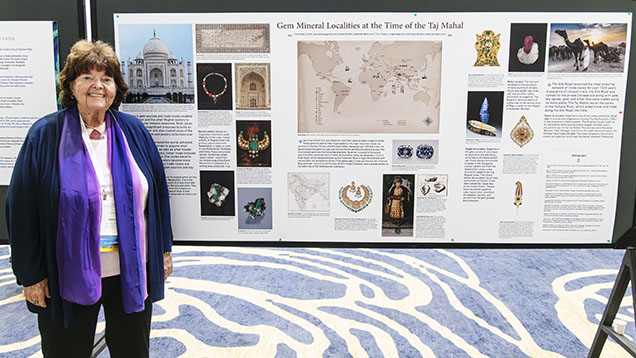
Long-established maritime and land trade routes, including the Silk Road, enabled Shah Jahan and other Mughal rulers to amass mineral and gem resources, resulting in remarkable jewelry pieces and spectacular monuments such as the Taj Mahal in the 1600s and 1700s. Centered on a map illustrating historic gem sources and the routes that connected the gem trade to the Mughal markets, this poster features examples of emerald, diamond, and spinel jewelry pieces produced during this opulent period (figure 3).
For more information, see Dirlam D.M., Rogers C.L., Weldon R. (2019) Gemstones in the era of the Taj Mahal and the mughals. G&G, Vol. 55, No. 3, pp. 294–319, http://dx.doi.org/10.5741/GEMS.55.3.294
The Global Trade Routes and Localities of Gemstones According to 17th–18th Century Armenian Sources
Dr. Sona Tajiryan | Los Angeles
This poster illuminates the early modern (1500s–1800s) gem trade by way of previously unpublished archival sources. It documents the practices of Armenian merchants who were central to the transcontinental movement of gems at the time. A map shows the major trade routes of the most sought-after gems—ruby, pearl, sapphire, turquoise, lapis lazuli, amber, and coral—from mines or manufacturing centers and onward to hubs of consumption, illustrating the sophistication of these early modern trading networks.
Inclusion Chronicles: A Pursuit of Photomicrography
Randall Lightfoot | Mayflower Estate Buying & Consulting, Towson, Maryland
This poster is a reminder of the wonders within gems as revealed by the practice of photomicrography. The author, winner of Gem-A’s 2023 Photographer of the Year Award, presents a set of gemstone inclusion photomicrographs as an inspiration to others to explore and record the interior of gems.
The Literature of Gem-Bearing Granitic Pegmatites
Dona Dirlam | Geo-Literary Society, Redwood Falls, Minnesota
Pegmatites have fascinated scientists since the dawn of mineralogy. This poster explores the term’s origin in early literature, beginning with its coining by French mineralogist René Just Haüy. The authors provide pointers to more modern references, plus a list of the world’s major gem pegmatite districts along with specific examples of important pegmatites from the literature—Brazil’s Pederneira pegmatite and the Emmons pegmatite from the U.S. state of Maine. Also included is a QR code linking to a unique pegmatite bibliography provided by GIA’s Dr. James Shigley.
For more information, see Palke A.C., Shigley J.E. (2025) Colored Stones Unearthed: Gem granitic pegmatites. G&G, Vol. 61, No. 2, pp. 192–204.
Mineral-Driven Technology and Aesthetics: Material Basis and Cultural Expression of Chinese and Western Colored Glaze Crafts
Dr. Shangjia Wen | Gemmological Institute, China University of Geosciences, Wuhan
Minerals have often served as vehicles for human technological innovation and cultural expression. This poster explores the use of the copper mineral malachite, source of the copper pigment used to color ancient Egypt’s turquoise blue Faience (circa 3000 BCE) as well as the vibrant green glazed ceramics produced by the Changsha Kiln during the Tang Dynasty (eighth to ninth century).
Pigments Historically Sourced from Gem Materials
Britni LeCroy | GIA, Carlsbad
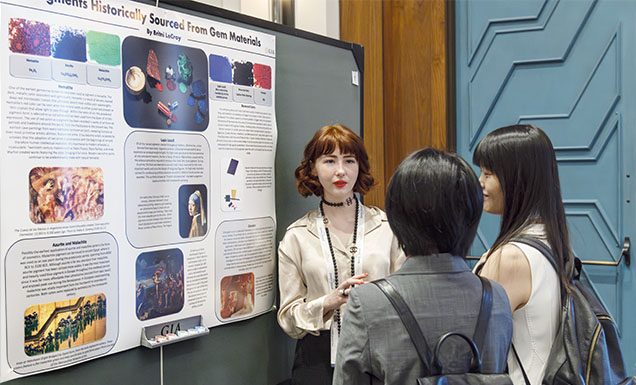
This presenter examines the pivotal role of six gem and mineral materials—hematite, azurite, malachite, lapis lazuli, bone and ivory, and cinnabar—as the sources for pigments throughout human history (figure 4). The poster cites examples using these pigments, from red ochre–outlined handprints in ancient caves to master works by Vermeer, Titian, Malevich, and Degas, showing how gem materials and human ingenuity infuse art through the ages.
For more information, see LeCroy B. (2022) Gems on canvas: Pigments historically sourced from gem materials. G&G, Vol. 58, No. 3, pp. 318–337, http://dx.doi.org/10.5741/GEMS.58.3.318
Revision of the GIA Pearls Course
Dr. Tao Hsu | GIA, Carlsbad
This poster outlines the updated GIA Pearls eLearning course and Pearl Lab Class, showing a list of each assignment’s contents. The updated course includes the addition of two new assignments covering natural nacreous pearls and natural non-nacreous pearls, respectively, addressing a gap in the curriculum.
An Update on the GIA Library’s Rare Book Digitization Project
Dianna Parsons | GIA, Carlsbad
With more than 50,000 books and 1,000 magazine and journal titles on topics related to gemstones and jewelry, GIA’s Richard T. Liddicoat Gemological Library and Information Center is the largest, most complete library of its kind. This poster spotlights the library’s work digitizing rare books, outlining the digitization system used and citing examples of works publicly available through this initiative. Works cited and accessible by QR codes include Clinton’s The Story of a Pearl Oyster (1914), Schmidt’s Diamond Gold and Silver Invoice (1702), John Brogden’s Jewellery, Original Watercolor Drawings for Decorative Jewellery (1885), and Nawab Ahsanullah’s Dacca Collection (circa 1900).
Young’s Durability Scale
Kennon Young | Vermont Gemological Laboratory, Burlington
The author proposes a rating system for the durability of gemstones, which considers three properties: Mohs hardness (35%), fracture toughness (45%), and inclusions (20%). This produces a practical scale of 1 through 10 with opal, fluorite, and pearl at one end (1–2) and chrysoberyl, jadeite, corundum, and nephrite at the other (9–10).
NEW TECHNOLOGIES AND TECHNIQUES
Advanced Data Analysis and Machine Learning: Applications in Gem Identification
Dr. Matthew Hardman | GIA, Carlsbad
Natural and laboratory-grown diamonds (LGDs) can be indistinguishable to the unaided eye, and practical considerations dictate that they must be separated by nondestructive analytical techniques. The author demonstrates how a combination of photoluminescence spectroscopy and machine learning can allow evaluation and simplification of this spectral data by presenting a study of 1,121 natural diamonds and 1,178 chemical vapor deposition LGDs.
Polish to Rough Matching: Delivering Objective Assurance
Mayank Jain | DiaDNA AI Labs, Surat, India
The author presents a potential solution for rough-to-polished diamond traceability from mine to market. With many touchpoints in diamond manufacturing and multiple changes of hand thereafter, tracking a diamond from rough to a finished gem in jewelry is one of the industry’s greatest challenges. The author proposes a solution involving high-resolution scanning followed by automated matching using artificial intelligence.
An Extended Application of Quantitative Description Methods for Color Cause of Chrysoberyl
Xinxin Gao | University of Chinese Academy of Sciences, Beijing
Guided by recent research into the chromophores of corundum, the authors present a parallel study of iron- and chromium-bearing chrysoberyl, driven by the similarities in the two minerals’ chemistry, structure, and ultraviolet/visible/near-infrared (UV-Vis-NIR) spectral features. Results are presented as calculated color circles and UV-Vis-NIR absorption cross sections for both chromophores in chrysoberyl.
Identification of Known Pinctada maxima Pearls Using Trace Element Analysis and Machine Learning
Artitaya Homkrajae | GIA, Carlsbad
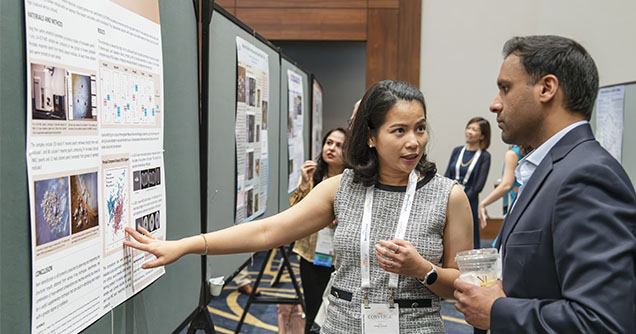
Although most pearl identification still relies on X-ray techniques, a combination of trace element chemistry and machine learning can provide a useful adjunct with a greater degree of confidence. This poster presents a study on known natural and cultured Pinctada maxima pearls employing laser ablation–inductively coupled plasma–mass spectroscopy paired with analysis using machine learning methods (figure 5).
Jewelry Verification Service
Najmeh Anjomani | GIA, Carlsbad
This poster provides an overview of GIA’s Jewelry Verification Service and describes aspects of the service with examples. The service verifies the condition, measurements, metal type, and metal purity of a jewelry piece, along with the identity of any stones including the presence of treatments, and authenticates the brand, if applicable. Verification employs energy-dispersive X-ray fluorescence for the metals and Fourier-transform infrared and Raman spectroscopy for the stones. This service checks the description provided by the seller and offers surety for the buyer, benefiting everyone in the supply chain.
Metal Analysis for GIA Jewelry Services
Carlos Bautista | GIA, Carlsbad
This poster explains the use of X-ray fluorescence (XRF) testing to analyze and identify metals in jewelry pieces for GIA’s laboratory services. It outlines the process, use of standards, testing procedures for jewelry items, and capabilities of the XRF devices used. Also described are some of the testing considerations involving multitone jewelry items, use of solder and repairs, and the presence of plating, all of which must be taken into account by the technician.
More than 30 posters covering broad topics related to the industry were presented at Converge 2025. Presenters were on hand to interact with Converge attendees to share their gemological knowledge (figure 1). In the poster presentations outlined below, only the principal, or first-listed author, appears.
COLORED STONES AND PEARLS
Gemological Characterization of Emeralds from North Carolina, USA
Nicole Ahline | GIA, Carlsbad
North Carolina’s emerald deposits are among the few recognized in North America, best known because they are historically significant and gemologically distinct due to their chemistry and color zoning. This poster provides the context of the geological environment the emeralds formed in, an overview of their standard gemological properties, inclusion photomicrographs, and chemistry.
Emerald Report Features at GIA Laboratories
Alex Goodsuhm | GIA, Carlsbad
Since December 2024, GIA has offered optional filler identification on its emerald origin reports. This poster details the new service, which is available in addition to the standard report information and includes identification of the stone and the degree of filler. Currently offered at no cost, the service provides the filler information in the following format: Type A (oils and other naturally occurring materials such as Canada balsam, cedarwood oil, and paraffin) and Type B (artificial resins such as Opticon, Permasafe, and Araldite).
Explorations in Brazil: GIA’s 102nd Field Expedition
Dr. Aaron Palke | GIA, Carlsbad
This poster focuses on a recent GIA field gemology expedition to Brazil, which remains a colored stone mining powerhouse. The objective was to bolster GIA’s colored stone reference collection with representative samples of white opal from Piauí State and emerald from Campos Verdes, Goiás State, and to revisit the legendary copper-bearing tourmaline deposits in Paraíba. The opal samples, which resemble Australian opal, will help support an upcoming new GIA opal report, and the emerald samples are of interest because their chemistry and inclusion suites can resemble gems from other locations including Pakistan, Afghanistan, and Colombia.
Field Gemology and GIA’s Colored Stone Reference Collection
Wim Vertriest | GIA, Bangkok
This poster summarizes GIA’s field gemology expeditions and the nature of the Institute’s colored stone reference collection. A map shows the locations of mining areas visited to date and the types of gem materials collected. Short summaries provide the reference collection’s focus along with an explanation of the six sample categories (A–F), based on proximity to the mine when collected by the field gemologist.
Glass Ceramics as Imitation Gems
Dr. Wasura Soonthorntantikul | GIA, Bangkok
Glass ceramics are materials consisting of crystalline phases dispersed in an amorphous glass matrix, which combine properties of glass and ceramics. While mainly produced for industrial purposes, these materials are very suitable for use as imitation gems. They are tougher and more wear-resistant than regular glass and are inexpensive to produce in any color or transparency. This poster outlines how glass ceramics are made, their gemological properties, and possible identification challenges.
Advances in Jadeite Origin Determination at GIA
Alex Goodsuhm | GIA, Carlsbad
Due to the increase in supply of high-quality Guatemalan jadeite/omphacite jade (known as fei cui in the trade) reaching gem markets, GIA recently conducted a study of untreated Guatemalan and Burmese (Myanmar) material. Trace element chemistry analysis using laser ablation–inductively coupled plasma–mass spectrometry followed by application of machine learning revealed differences that, when coupled with observations, allow separation and permit origin determination of both sources.
Gemological Analysis on Sterling Opals
Jeffrey Hernandez | GIA, Carlsbad
The author presented a gemological characterization of Sterling synthetic opals along with context about their origin, physical appearance, production process, and place in the market (figure 2). This distinctive material, essentially polymer-impregnated laboratory-grown opal, is readily identified by characteristic black polymer-filled fissures and its distinctive Fourier-transform infrared absorption peaks.
Gemological Characteristics of Natural Pearls from Windowpane Oysters (Placunidae Family) from Indonesia
Karan Rajguru | GIA, Mumbai
This poster provides an overview of the gemological characteristics of natural pearls from windowpane oysters, which are widely distributed along the coasts of India, Indonesia, the Philippines, and China. Observations include surface structures and real-time X-ray microradiography and X-ray computed microtomography of the pearls’ interiors. Spectroscopic and trace element analyses are also presented, confirming these pearls are composed of calcite rather than aragonite.
Organic-Rich Cores in South Sea Non-Bead Cultured (“Keshi”) Pearls
Nishka Vaz | GIA, Mumbai
The authors present a study of 43 South Sea “keshi” non-bead cultured (NBC) pearls from the Pinctada maxima mollusk using real-time X-ray microradiography, X-ray computed microtomography, and Raman spectroscopy. Examination revealed a variety of internal structures including cores with light gray nuclei, seedlike features, off-round nuclei, and multiple cores and nuclei, which are key indicators of NBC pearls from this mollusk. Raman spectroscopy confirmed that the cores primarily combine conchiolin and aragonite nacre.
Hydrogen-Related Peaks in the Infrared Spectra of Corundum: What Are They, and What Can They Tell Us?
Dr. Michael Jollands | GIA, New York
In corundum, most infrared absorption bands relate to hydrogen in defects associated with a small number of other trace elements: beryllium, magnesium, nickel, iron, cobalt, titanium, tin, vanadium, and silicon. The exact positions of these bands correlate to the atomic structures of these defects. The author outlines how specific bands can correspond to different localities, heat treatment conditions, or laboratory-grown material. The nature of these bands can be determined by combining atomic modeling with analysis of trace element concentrations.
Nanoparticles in Natural Beryllium-Bearing Sapphires
Dr. Shiyun Jin | GIA, Carlsbad
Trace element analysis of gem corundum is important because it helps us understand which chromophores color them and often informs country of origin determination. Although beryllium is most often associated with diffusion treatment, it does occur naturally in corundum, where it is always associated with heavy high field strength elements (HHFSEs) such as niobium, tantalum, and tungsten. These elements are found in primary nano-inclusions that precipitate out of the corundum as irregular-shaped clouds or milky bands as it cools. This poster presents an analysis of the distribution and nature of these particles.
Diversity in Kashmir Sapphires
Sudarat Saeseaw | GIA, Bangkok
Kashmir’s blue sapphire mines owe their legendary status to a relatively short window of production in the 1880s and 1890s. What little production has emerged since then has been of much lower quality than that of this early period. The trade identifies old production as “Classic” and more recent material as “New Kashmir.” GIA recently had the opportunity to study a suite of 400 sapphires sourced from old collections and more recent finds near the mines. As both types contain very similar inclusion patterns, they are likely from the same deposit. This poster presents a representative set of photomicrographs from this research.
Chromophore Simulation of Copper-Bearing Tourmaline
Dr. Yusuke Katsurada | GIA, Tokyo
Paraíba tourmaline owes its blue to green color to the presence of trace amounts of copper and manganese. Although the influence of copper, which creates an absorption between 600 and 1000 nm, is relatively well understood, the role of manganese has not yet been studied in detail. Following experimental analysis of the other chromophores that contribute to color in elbaite tourmaline, the authors propose a model to predict their influence in addition to copper. The addition of iron creates a darker blue, manganese (Mn3+) a violet to purple, and manganese plus titanium (Mn-Ti) a greenish blue to green color.
The Evolution of Persian Turquoise Classification from Past to Present
Dr. Niloofar Mousaviapak | Claude Bernard University, Lyon, France
This poster examines the evolution of Iranian turquoise classification. Originally, naming and valuation were linked to the name of the mine producing the turquoise, but during the Qajar Period (1794–1925), factors such as the texture, presence of matrix, and depth of color were introduced, making the description of quality and appearance more consistent. This poster is centered on a chart that shows how ancient, Qajar, and modern terminology correlate.
DIAMONDS
Correlations Between Spectroscopic Characteristics and Growth Parameters of Nitrogen-Doped CVD Diamond
Dr. Matthew Dale | De Beers, Maidenhead, United Kingdom
This poster summarizes a photoluminescence (PL) spectroscopy and luminescence imaging study of specially grown chemical vapor deposition (CVD) diamonds, exploring correlations between the intensities of different PL features and the nitrogen concentrations and growth rates of the samples.
The Current Gemological Landscape of Laboratory-Grown Diamonds
Dr. Sally Eaton-Magaña | GIA, Carlsbad
This work surveys the current production of laboratory-grown diamonds (LGDs), showing how color, clarity, cut grades, and color distribution have changed over time (2015–2025) using both high-pressure, high-temperature (HPHT) and chemical vapor deposition (CVD) methods. The poster outlines the advanced testing methods used by GIA to conclusively identify LGDs, the services provided by the GIA laboratory, and the growth of CVD diamonds at GIA.
Fluorescence Lifetime Analysis and Mapping of a Hydrogen-Rich Diamond
Dr. Paul Johnson | GIA, New York
This poster presents details of a custom-built instrument designed to measure the lifetime of diamond color centers over picosecond to millisecond timescales, along with analysis of a hydrogen-rich, type Ia diamond sample specially prepared for this study. The sample, a natural diamond crystal from Zimbabwe fashioned into a 0.92 ct cube and subsequently heated and irradiated, contains a stellate-shaped cloud inclusion.
Reflecting on Fancy-Cut Diamond Patterning
Dr. James Conant | GIA, Las Vegas
The author provides a visual guide to various aspects of fancy-cut diamond patterns, beginning with generating symmetrical diamond designs and determining the degree of symmetry to create a three-dimensional model. This allows for the modeling of light and demonstrates the visual appearance of virtual facets and the evaluation of any patterning, such as “bow ties” or “crushed ice,” that a particular design might display.
Spatial Distribution of Defects in Natural C-Center–Bearing Diamonds
Taryn Linzmeyer | GIA, Carlsbad
A C-center is a crystallographic defect in which a single isolated nitrogen atom substitutes for a carbon atom within a diamond’s crystal structure. Diamonds with this defect are called type Ib and are rare in nature because residence in Earth’s mantle tends to cause the defects to aggregate into pairs (A-centers) or clusters of four nitrogen atoms surrounding a vacancy (B-centers). C-centers might cause vibrant yellow to orange colors, making these diamonds valuable to the gem trade. In this study, the authors use photoluminescence and Fourier-transform infrared spectroscopy to characterize these rare natural diamonds.
GENERAL GEMOLOGY
10,000 Years of Collecting Malachite
Dona Dirlam | Geo-Literary Society, Redwood Falls, Minnesota
This poster features a list of important malachite deposits by country and a timeline of malachite references in historic literature flanking an image of the GIA Museum’s specimen “Atlantis,” a stunning 70 × 20 cm array of green malachite spires coated with blue chrysocolla from the Star of the Congo mine in Lubumbashie, Haute-Katanga, Democratic Republic of the Congo.
The Elephants Are Winning
Charles Carmona | Guild Laboratories, Los Angeles
Although the global elephant population has started to rebound following historic lows between 1990 and 2010, they are still threatened by the illegal ivory trade and human-elephant conflict, including encroachment of livestock into elephant habitats and habitat fragmentation driven by human population growth. This poster contrasts the modest rebound in elephant numbers with the serious decline in the global coral population driven by overharvesting and climate change, and creates awareness of other endangered species.
Gem Mineral Localities at the Time of the Taj Mahal
Dona Dirlam | Geo-Literary Society, Redwood Falls, Minnesota
Long-established maritime and land trade routes, including the Silk Road, enabled Shah Jahan and other Mughal rulers to amass mineral and gem resources, resulting in remarkable jewelry pieces and spectacular monuments such as the Taj Mahal in the 1600s and 1700s. Centered on a map illustrating historic gem sources and the routes that connected the gem trade to the Mughal markets, this poster features examples of emerald, diamond, and spinel jewelry pieces produced during this opulent period (figure 3).
For more information, see Dirlam D.M., Rogers C.L., Weldon R. (2019) Gemstones in the era of the Taj Mahal and the mughals. G&G, Vol. 55, No. 3, pp. 294–319, http://dx.doi.org/10.5741/GEMS.55.3.294
The Global Trade Routes and Localities of Gemstones According to 17th–18th Century Armenian Sources
Dr. Sona Tajiryan | Los Angeles
This poster illuminates the early modern (1500s–1800s) gem trade by way of previously unpublished archival sources. It documents the practices of Armenian merchants who were central to the transcontinental movement of gems at the time. A map shows the major trade routes of the most sought-after gems—ruby, pearl, sapphire, turquoise, lapis lazuli, amber, and coral—from mines or manufacturing centers and onward to hubs of consumption, illustrating the sophistication of these early modern trading networks.
Inclusion Chronicles: A Pursuit of Photomicrography
Randall Lightfoot | Mayflower Estate Buying & Consulting, Towson, Maryland
This poster is a reminder of the wonders within gems as revealed by the practice of photomicrography. The author, winner of Gem-A’s 2023 Photographer of the Year Award, presents a set of gemstone inclusion photomicrographs as an inspiration to others to explore and record the interior of gems.
The Literature of Gem-Bearing Granitic Pegmatites
Dona Dirlam | Geo-Literary Society, Redwood Falls, Minnesota
Pegmatites have fascinated scientists since the dawn of mineralogy. This poster explores the term’s origin in early literature, beginning with its coining by French mineralogist René Just Haüy. The authors provide pointers to more modern references, plus a list of the world’s major gem pegmatite districts along with specific examples of important pegmatites from the literature—Brazil’s Pederneira pegmatite and the Emmons pegmatite from the U.S. state of Maine. Also included is a QR code linking to a unique pegmatite bibliography provided by GIA’s Dr. James Shigley.
For more information, see Palke A.C., Shigley J.E. (2025) Colored Stones Unearthed: Gem granitic pegmatites. G&G, Vol. 61, No. 2, pp. 192–204.
Mineral-Driven Technology and Aesthetics: Material Basis and Cultural Expression of Chinese and Western Colored Glaze Crafts
Dr. Shangjia Wen | Gemmological Institute, China University of Geosciences, Wuhan
Minerals have often served as vehicles for human technological innovation and cultural expression. This poster explores the use of the copper mineral malachite, source of the copper pigment used to color ancient Egypt’s turquoise blue Faience (circa 3000 BCE) as well as the vibrant green glazed ceramics produced by the Changsha Kiln during the Tang Dynasty (eighth to ninth century).
Pigments Historically Sourced from Gem Materials
Britni LeCroy | GIA, Carlsbad
This presenter examines the pivotal role of six gem and mineral materials—hematite, azurite, malachite, lapis lazuli, bone and ivory, and cinnabar—as the sources for pigments throughout human history (figure 4). The poster cites examples using these pigments, from red ochre–outlined handprints in ancient caves to master works by Vermeer, Titian, Malevich, and Degas, showing how gem materials and human ingenuity infuse art through the ages.
For more information, see LeCroy B. (2022) Gems on canvas: Pigments historically sourced from gem materials. G&G, Vol. 58, No. 3, pp. 318–337, http://dx.doi.org/10.5741/GEMS.58.3.318
Revision of the GIA Pearls Course
Dr. Tao Hsu | GIA, Carlsbad
This poster outlines the updated GIA Pearls eLearning course and Pearl Lab Class, showing a list of each assignment’s contents. The updated course includes the addition of two new assignments covering natural nacreous pearls and natural non-nacreous pearls, respectively, addressing a gap in the curriculum.
An Update on the GIA Library’s Rare Book Digitization Project
Dianna Parsons | GIA, Carlsbad
With more than 50,000 books and 1,000 magazine and journal titles on topics related to gemstones and jewelry, GIA’s Richard T. Liddicoat Gemological Library and Information Center is the largest, most complete library of its kind. This poster spotlights the library’s work digitizing rare books, outlining the digitization system used and citing examples of works publicly available through this initiative. Works cited and accessible by QR codes include Clinton’s The Story of a Pearl Oyster (1914), Schmidt’s Diamond Gold and Silver Invoice (1702), John Brogden’s Jewellery, Original Watercolor Drawings for Decorative Jewellery (1885), and Nawab Ahsanullah’s Dacca Collection (circa 1900).
Young’s Durability Scale
Kennon Young | Vermont Gemological Laboratory, Burlington
The author proposes a rating system for the durability of gemstones, which considers three properties: Mohs hardness (35%), fracture toughness (45%), and inclusions (20%). This produces a practical scale of 1 through 10 with opal, fluorite, and pearl at one end (1–2) and chrysoberyl, jadeite, corundum, and nephrite at the other (9–10).
NEW TECHNOLOGIES AND TECHNIQUES
Advanced Data Analysis and Machine Learning: Applications in Gem Identification
Dr. Matthew Hardman | GIA, Carlsbad
Natural and laboratory-grown diamonds (LGDs) can be indistinguishable to the unaided eye, and practical considerations dictate that they must be separated by nondestructive analytical techniques. The author demonstrates how a combination of photoluminescence spectroscopy and machine learning can allow evaluation and simplification of this spectral data by presenting a study of 1,121 natural diamonds and 1,178 chemical vapor deposition LGDs.
Polish to Rough Matching: Delivering Objective Assurance
Mayank Jain | DiaDNA AI Labs, Surat, India
The author presents a potential solution for rough-to-polished diamond traceability from mine to market. With many touchpoints in diamond manufacturing and multiple changes of hand thereafter, tracking a diamond from rough to a finished gem in jewelry is one of the industry’s greatest challenges. The author proposes a solution involving high-resolution scanning followed by automated matching using artificial intelligence.
An Extended Application of Quantitative Description Methods for Color Cause of Chrysoberyl
Xinxin Gao | University of Chinese Academy of Sciences, Beijing
Guided by recent research into the chromophores of corundum, the authors present a parallel study of iron- and chromium-bearing chrysoberyl, driven by the similarities in the two minerals’ chemistry, structure, and ultraviolet/visible/near-infrared (UV-Vis-NIR) spectral features. Results are presented as calculated color circles and UV-Vis-NIR absorption cross sections for both chromophores in chrysoberyl.
Identification of Known Pinctada maxima Pearls Using Trace Element Analysis and Machine Learning
Artitaya Homkrajae | GIA, Carlsbad
Although most pearl identification still relies on X-ray techniques, a combination of trace element chemistry and machine learning can provide a useful adjunct with a greater degree of confidence. This poster presents a study on known natural and cultured Pinctada maxima pearls employing laser ablation–inductively coupled plasma–mass spectroscopy paired with analysis using machine learning methods (figure 5).
Jewelry Verification Service
Najmeh Anjomani | GIA, Carlsbad
This poster provides an overview of GIA’s Jewelry Verification Service and describes aspects of the service with examples. The service verifies the condition, measurements, metal type, and metal purity of a jewelry piece, along with the identity of any stones including the presence of treatments, and authenticates the brand, if applicable. Verification employs energy-dispersive X-ray fluorescence for the metals and Fourier-transform infrared and Raman spectroscopy for the stones. This service checks the description provided by the seller and offers surety for the buyer, benefiting everyone in the supply chain.
Metal Analysis for GIA Jewelry Services
Carlos Bautista | GIA, Carlsbad
This poster explains the use of X-ray fluorescence (XRF) testing to analyze and identify metals in jewelry pieces for GIA’s laboratory services. It outlines the process, use of standards, testing procedures for jewelry items, and capabilities of the XRF devices used. Also described are some of the testing considerations involving multitone jewelry items, use of solder and repairs, and the presence of plating, all of which must be taken into account by the technician.