
When COVID-19 evolved from a regional crisis to a global pandemic, the gem and jewelry trade abruptly paused for a short period and then gradually recovered to the pre-pandemic level. To investigate the trade’s reaction, the impact on business, and market trends over the past two years, the authors took advantage of the Tucson show to survey the exhibitors.
This brief report presents outcomes from written surveys conducted with 35 randomly selected AGTA and GJX show exhibitors. The survey consists of two portions: general information about the business, and six pandemic- and market trend-related questions. All 35 exhibitors based their responses on their own experiences, with a very limited number of “not applicable” answers that were not included in the findings.
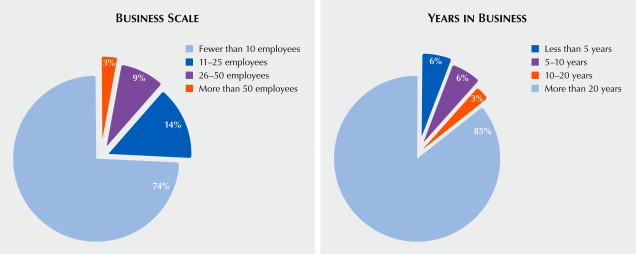
Nearly all respondents identified themselves as wholesalers, with a couple of exceptions as designers or miners. The authors noticed that some exhibitors played multiple roles: wholesaler, retailer, and sometimes even designer. While traditional roles in the gem and jewelry industry still carry on, the boundaries between them have become blurred. More than 70% of the exhibitors surveyed have fewer than 10 employees, and 85% of them are industry veterans with more than 20 years’ experience in the trade (figure 1). Although the pool is small, it aptly reflects the nature of the gem and jewelry business in general, with small-scale business as the majority, but often with generations of commitment to the industry.
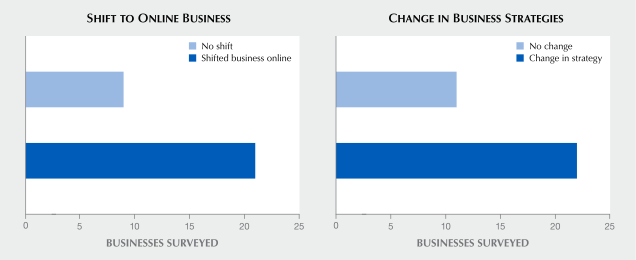
When asked about the impact of the pandemic on their business, most responded that it was most impactful at the beginning of the crisis, but recovery has been quite smooth since then. Some did express concern about the post-pandemic supply issues. Two-thirds of the interviewees stated that more business shifted online over the past two years, resulting in marketing and selling strategy changes (figure 2). Notably, the relatively new businesses, many with less than five years in the trade, often started with more business online than offline. Though sellers mostly embraced online trading of gems and jewelry, some had difficulties capitalizing on it, particularly with colored stones since buyers still prefer to check the quality in person.
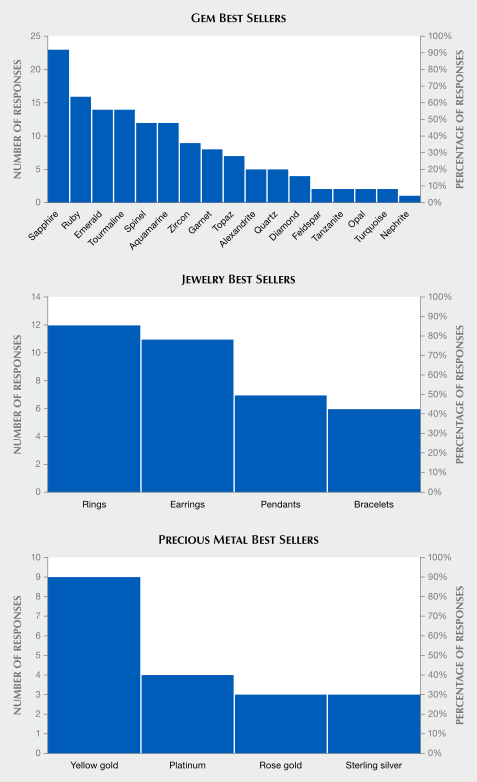
To investigate the types of stone and jewelry sales over the past two years, the authors asked the selected exhibitors to circle the corresponding items, with many circling multiple answers in each category. These questions covered gemstone species, jewelry, precious metal, and pearl types, with the understanding that while diamond sales continue to dominate the market, they are not the focus for the exhibitors surveyed. Not surprisingly, the “big three” still dominate sales, with sapphire leading the trend (figure 3, top), and tourmaline and spinel immediately following the big three. As for jewelry types, rings and earrings lead the way (figure 3, middle). Yellow gold still sells the best, with platinum as the second best seller (figure 3, bottom). Several pearl dealers circled their best sellers, but the authors found that overall sales were quite evenly distributed among the four major cultured pearl types.
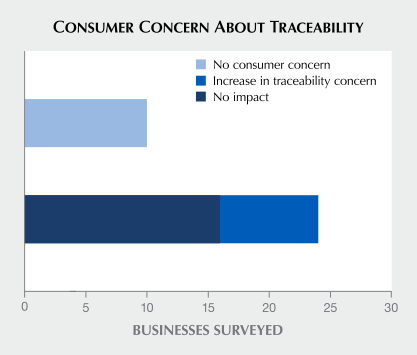
As traceability is a hot topic in the trade, the authors also asked two related questions about whether respondents noticed increased consumer concern on traceability. If they answered yes, they were asked whether it affected how they do business. The result shows that about two-thirds of them noticed the concern, and two-thirds of those who noticed the concern did not feel that it affected their business (figure 4).
As the world enters the post-pandemic era, it is worthwhile to continue monitoring how the market reacts to the changes and how tradespeople adapt to the new normal.
When COVID-19 evolved from a regional crisis to a global pandemic, the gem and jewelry trade abruptly paused for a short period and then gradually recovered to the pre-pandemic level. To investigate the trade’s reaction, the impact on business, and market trends over the past two years, the authors took advantage of the Tucson show to survey the exhibitors.
This brief report presents outcomes from written surveys conducted with 35 randomly selected AGTA and GJX show exhibitors. The survey consists of two portions: general information about the business, and six pandemic- and market trend-related questions. All 35 exhibitors based their responses on their own experiences, with a very limited number of “not applicable” answers that were not included in the findings.
Nearly all respondents identified themselves as wholesalers, with a couple of exceptions as designers or miners. The authors noticed that some exhibitors played multiple roles: wholesaler, retailer, and sometimes even designer. While traditional roles in the gem and jewelry industry still carry on, the boundaries between them have become blurred. More than 70% of the exhibitors surveyed have fewer than 10 employees, and 85% of them are industry veterans with more than 20 years’ experience in the trade (figure 1). Although the pool is small, it aptly reflects the nature of the gem and jewelry business in general, with small-scale business as the majority, but often with generations of commitment to the industry.
When asked about the impact of the pandemic on their business, most responded that it was most impactful at the beginning of the crisis, but recovery has been quite smooth since then. Some did express concern about the post-pandemic supply issues. Two-thirds of the interviewees stated that more business shifted online over the past two years, resulting in marketing and selling strategy changes (figure 2). Notably, the relatively new businesses, many with less than five years in the trade, often started with more business online than offline. Though sellers mostly embraced online trading of gems and jewelry, some had difficulties capitalizing on it, particularly with colored stones since buyers still prefer to check the quality in person.
To investigate the types of stone and jewelry sales over the past two years, the authors asked the selected exhibitors to circle the corresponding items, with many circling multiple answers in each category. These questions covered gemstone species, jewelry, precious metal, and pearl types, with the understanding that while diamond sales continue to dominate the market, they are not the focus for the exhibitors surveyed. Not surprisingly, the “big three” still dominate sales, with sapphire leading the trend (figure 3, top), and tourmaline and spinel immediately following the big three. As for jewelry types, rings and earrings lead the way (figure 3, middle). Yellow gold still sells the best, with platinum as the second best seller (figure 3, bottom). Several pearl dealers circled their best sellers, but the authors found that overall sales were quite evenly distributed among the four major cultured pearl types.
As traceability is a hot topic in the trade, the authors also asked two related questions about whether respondents noticed increased consumer concern on traceability. If they answered yes, they were asked whether it affected how they do business. The result shows that about two-thirds of them noticed the concern, and two-thirds of those who noticed the concern did not feel that it affected their business (figure 4).
As the world enters the post-pandemic era, it is worthwhile to continue monitoring how the market reacts to the changes and how tradespeople adapt to the new normal.