
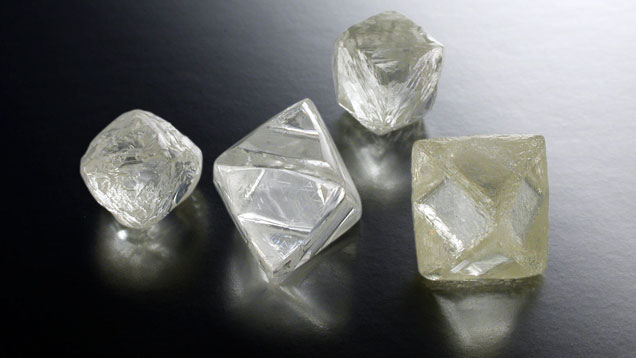
Buoyed by encouraging retail signs in the U.S. and Asia, De Beers allocated another large sight in February ‒ an estimated $730 million ‒ but left prices at January levels.
Premiums on De Beers’ sight boxes rose on the wave of optimism and increased prices at tender sales in January, but De Beers’ executives held the line of prices. They are probably waiting for the results of March’s Hong Kong show to gauge the true state of the market. Diamond dealers hope that rising demand will lift polished prices, which have been stagnant for most of last year. The next sight is the first week of April.
De Beers is also making the most of these early-year sights because the application process for the next sight term is beginning soon, and one of the criteria for selection will apparently be clients’ purchase history. Some clients deferred a significant percentage of their purchases in the first half of last year, while some potential clients were strong buyers at De Beers’ rough auctions, which comprise about 10% of its sales.
ZALE CORP. SALE: The announcement of the acquisition of Zale Corp by its chief competitor, Signet Group (Kay Jewelers and Jared, The Galleria of Jewelry), caught most in the industry by surprise; not because Zale would be sold ‒ retail analysts were predicting this for several years ‒ but that another major jewelry chain would snap it up.
Signet has fared well in recent years, holding its own through the worst economy this generation has known, in an increasingly competitive retail arena. Zale, however, has struggled to reposition itself in an environment that has changed drastically in the past decade. The company made some progress in retooling itself during the past two years, which probably made it a more attractive acquisition, especially for a price of $1.4 billion (all figures in U.S. dollars).
Zale earned $10 million on sales of $1.9 billion in fiscal 2013, but showed losses of $26.9 million on sales of $1.86 billion in 2012 and $112 million on sales of $1.74 billion in 2011.
The question now is what will happen with a retail chain that is nearly 3,600 stores strong, especially since many of those stores operate in the same shopping malls as the company that bought it. Shifting an operation of Zale’s size to Signet’s vastly different business model will take years, even if it seems likely that a number of the Zale and Gordon’s stores will close.
Integrating the two companies on such a large scale will have its challenges. Signet never lost sight of the fact that it is a jewelry seller and has combined a strong sales associate training program with a very highly targeted merchandising plan. Additionally, its advertising always stressed the romantic side of the product. Zale’s incorporated a department store approach with little variation in its product mix between regions or store brands and its advertising tended to be more price-oriented.
DIAMONDS: The 29.62 carat blue diamond mined recently by Petra Diamond Ltd., brought a top bid of $25.5 million ($862,780 per carat), an astounding price for a rough diamond, from Cora International of New York.
In recent years, top fancy colored diamonds have been fetching record prices at the world’s leading auction houses. Last November, a New York diamond dealer paid $85 million for a GIA-graded 59.6 carat Fancy Vivid pink diamond sold by Sotheby’s at its Geneva auction. This stone nearly doubled the previous record for the highest price ever paid for any gem at auction, the 24.78 carat Fancy Vivid pink diamond that sold for $46 million in 2010. (Update: According to media reports, Sotheby’s cancelled the sale of the Pink Star several months after the auction when the the winning bidder was unable to complete the transaction.) The highest price per-carat ever paid for a blue diamond was $1.8 million for the 5.30 carat Bulgari Blue diamond which GIA graded Fancy Deep blue. It was sold by Bonham’s in London in November of last year.
The large blue diamond was found in the Cullinan Mine which, since its opening in 1903, has yielded an unparalleled treasure trove of legendary diamonds, starting with the 3,106 carat Cullinan, which was polished into the 530 carat pear-shaped diamond that is the centerpiece of Britain’s crown jewels and eight other significant stones. The mine also yielded the 240.8 carat Taylor-Burton diamond, the 353.9 carat Premier Rose, the 755.5 carat Golden Jubilee and the 599.1 carat Centenary diamond, among others. Last year, a 25.5 carat blue diamond that sold for $17 million, or $663,000 per carat, was found there.
COLORED STONES: The Myanmar military has reportedly moved in to secure the jade mining area around Hpakant, in the southern part of the nation, after a miner discovered a 37-ton jade boulder in mid-February. According to local press reports, the jade rock measured 13 feet high. Local authorities reportedly halted all informal mining in the region until the boulder could be relocated to a secure facility.
Buoyed by encouraging retail signs in the U.S. and Asia, De Beers allocated another large sight in February ‒ an estimated $730 million ‒ but left prices at January levels.
Premiums on De Beers’ sight boxes rose on the wave of optimism and increased prices at tender sales in January, but De Beers’ executives held the line of prices. They are probably waiting for the results of March’s Hong Kong show to gauge the true state of the market. Diamond dealers hope that rising demand will lift polished prices, which have been stagnant for most of last year. The next sight is the first week of April.
De Beers is also making the most of these early-year sights because the application process for the next sight term is beginning soon, and one of the criteria for selection will apparently be clients’ purchase history. Some clients deferred a significant percentage of their purchases in the first half of last year, while some potential clients were strong buyers at De Beers’ rough auctions, which comprise about 10% of its sales.
ZALE CORP. SALE: The announcement of the acquisition of Zale Corp by its chief competitor, Signet Group (Kay Jewelers and Jared, The Galleria of Jewelry), caught most in the industry by surprise; not because Zale would be sold ‒ retail analysts were predicting this for several years ‒ but that another major jewelry chain would snap it up.
Signet has fared well in recent years, holding its own through the worst economy this generation has known, in an increasingly competitive retail arena. Zale, however, has struggled to reposition itself in an environment that has changed drastically in the past decade. The company made some progress in retooling itself during the past two years, which probably made it a more attractive acquisition, especially for a price of $1.4 billion (all figures in U.S. dollars).
Zale earned $10 million on sales of $1.9 billion in fiscal 2013, but showed losses of $26.9 million on sales of $1.86 billion in 2012 and $112 million on sales of $1.74 billion in 2011.
The question now is what will happen with a retail chain that is nearly 3,600 stores strong, especially since many of those stores operate in the same shopping malls as the company that bought it. Shifting an operation of Zale’s size to Signet’s vastly different business model will take years, even if it seems likely that a number of the Zale and Gordon’s stores will close.
Integrating the two companies on such a large scale will have its challenges. Signet never lost sight of the fact that it is a jewelry seller and has combined a strong sales associate training program with a very highly targeted merchandising plan. Additionally, its advertising always stressed the romantic side of the product. Zale’s incorporated a department store approach with little variation in its product mix between regions or store brands and its advertising tended to be more price-oriented.
DIAMONDS: The 29.62 carat blue diamond mined recently by Petra Diamond Ltd., brought a top bid of $25.5 million ($862,780 per carat), an astounding price for a rough diamond, from Cora International of New York.
In recent years, top fancy colored diamonds have been fetching record prices at the world’s leading auction houses. Last November, a New York diamond dealer paid $85 million for a GIA-graded 59.6 carat Fancy Vivid pink diamond sold by Sotheby’s at its Geneva auction. This stone nearly doubled the previous record for the highest price ever paid for any gem at auction, the 24.78 carat Fancy Vivid pink diamond that sold for $46 million in 2010. (Update: According to media reports, Sotheby’s cancelled the sale of the Pink Star several months after the auction when the the winning bidder was unable to complete the transaction.) The highest price per-carat ever paid for a blue diamond was $1.8 million for the 5.30 carat Bulgari Blue diamond which GIA graded Fancy Deep blue. It was sold by Bonham’s in London in November of last year.
The large blue diamond was found in the Cullinan Mine which, since its opening in 1903, has yielded an unparalleled treasure trove of legendary diamonds, starting with the 3,106 carat Cullinan, which was polished into the 530 carat pear-shaped diamond that is the centerpiece of Britain’s crown jewels and eight other significant stones. The mine also yielded the 240.8 carat Taylor-Burton diamond, the 353.9 carat Premier Rose, the 755.5 carat Golden Jubilee and the 599.1 carat Centenary diamond, among others. Last year, a 25.5 carat blue diamond that sold for $17 million, or $663,000 per carat, was found there.
COLORED STONES: The Myanmar military has reportedly moved in to secure the jade mining area around Hpakant, in the southern part of the nation, after a miner discovered a 37-ton jade boulder in mid-February. According to local press reports, the jade rock measured 13 feet high. Local authorities reportedly halted all informal mining in the region until the boulder could be relocated to a secure facility.