Iridescent Pen Shell
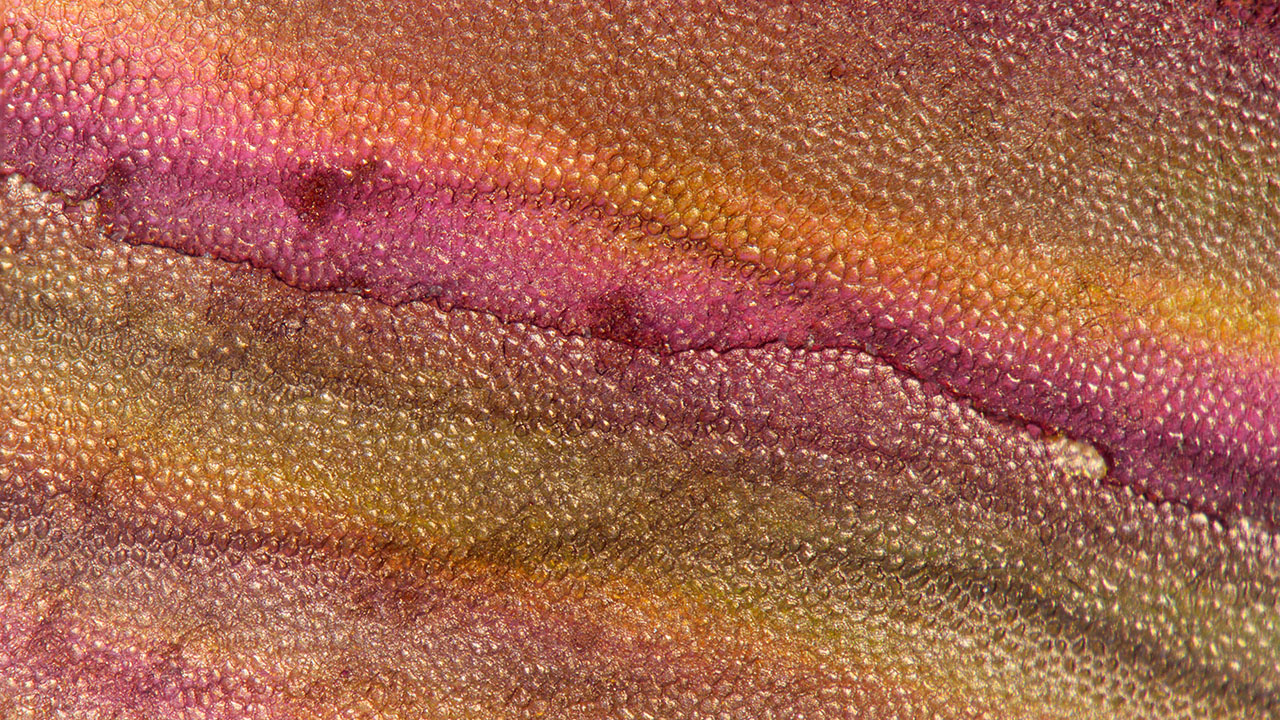
A thin layer of iridescent aragonite overlays the prismatic calcite of a Pinnidae shell, creating a captivating iridescent effect. Photomicrograph by Ravenya Atchalak; field of view 2.88 mm.
The thin, wedge-shaped shell of the Pinnidae family (pen) mollusk is made of calcium carbonate in the forms of calcite and aragonite. The outer (posterior) surface is composed of non-nacreous calcite prisms covering the entire shell, while the inner (anterior) surface is composed of both calcite and aragonite. The nacreous aragonite tablets are deposited over the calcite and restricted to a section of the shell at the tapered end. The figure above shows the calcite covered by a thin, iridescent layer of aragonite. The interplay between the two crystalline forms highlights the intricate structural complexity of the shell.