An Unusual Metallic Core in a Natural Pinctada radiata Pearl from Kuwait
The pearl (oyster) beds, or heirat in Arabic, around the State of Kuwait in the Persian (Arabian) Gulf have been known throughout history for producing some of the finest natural pearls. GIA’s Bangkok laboratory recently examined a quantity of these pearls obtained from a Kuwaiti pearl diver. The trusted diver said they were fished from wild Pinctada radiata mollusks at depths of 6 to 15 meters from one of the main pearl beds in the waters of Kuwait. The parcel consisted of various shapes and colors ranging from white to light yellow, with a few colored pearls as well.
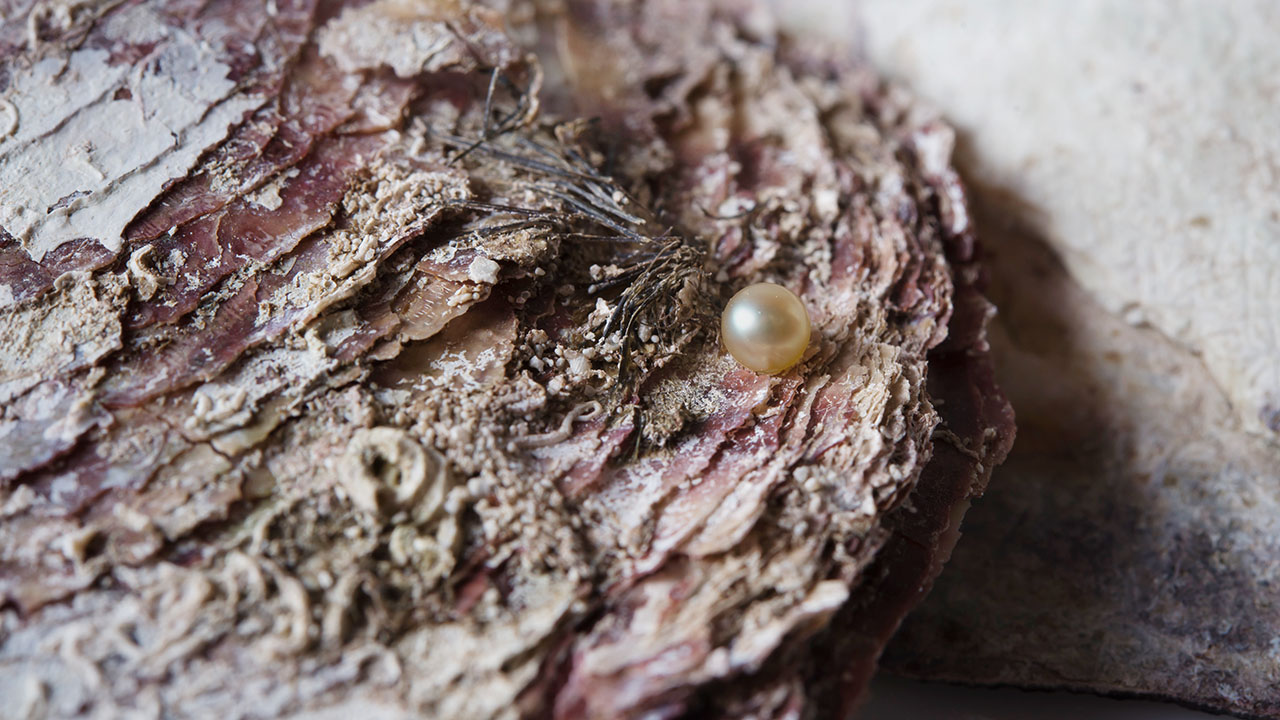
The samples showed a variety of internal structures, but one round cream-colored pearl in particular, weighing 0.23 ct and measuring 3.20 × 3.12 mm (figure 1), revealed an interesting structure using real-time microradiography (RTX) and X-ray computed microtomography (μ-CT) analyses. When viewed under 40× magnification, the pearl’s smooth and high-luster surface exhibited typical nacreous overlapping aragonite platelets.
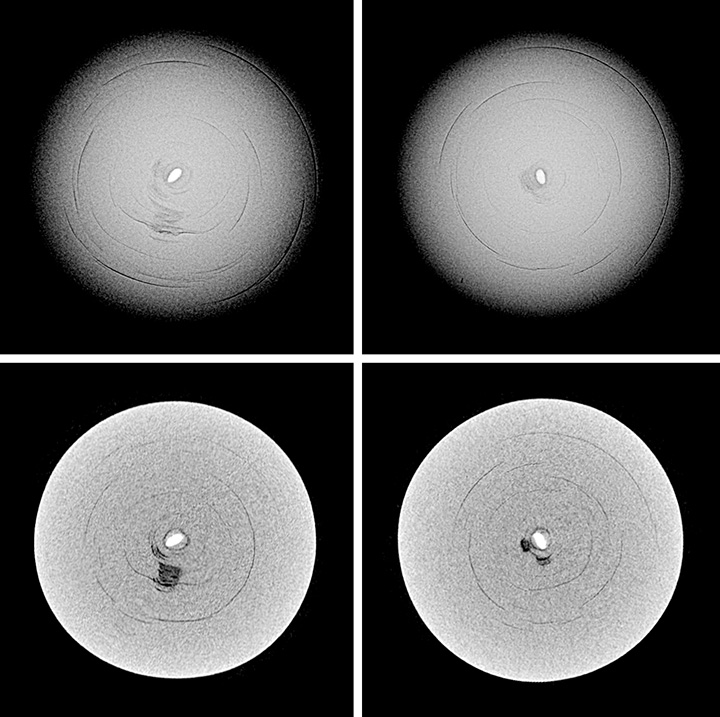
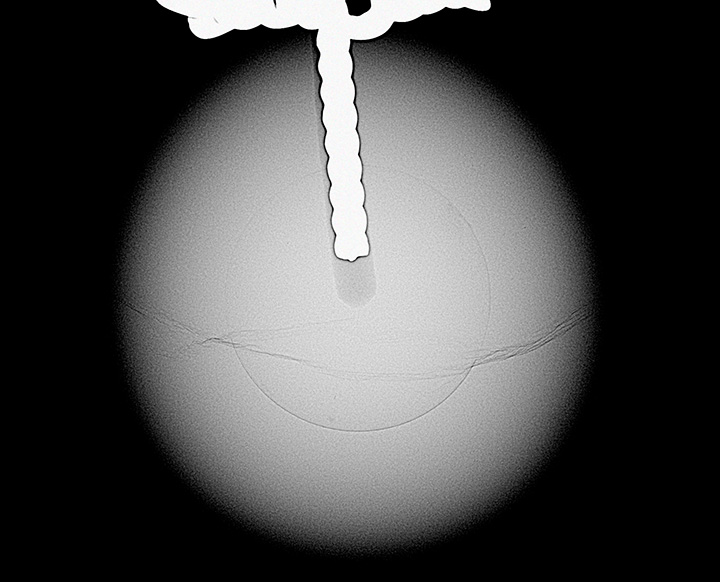
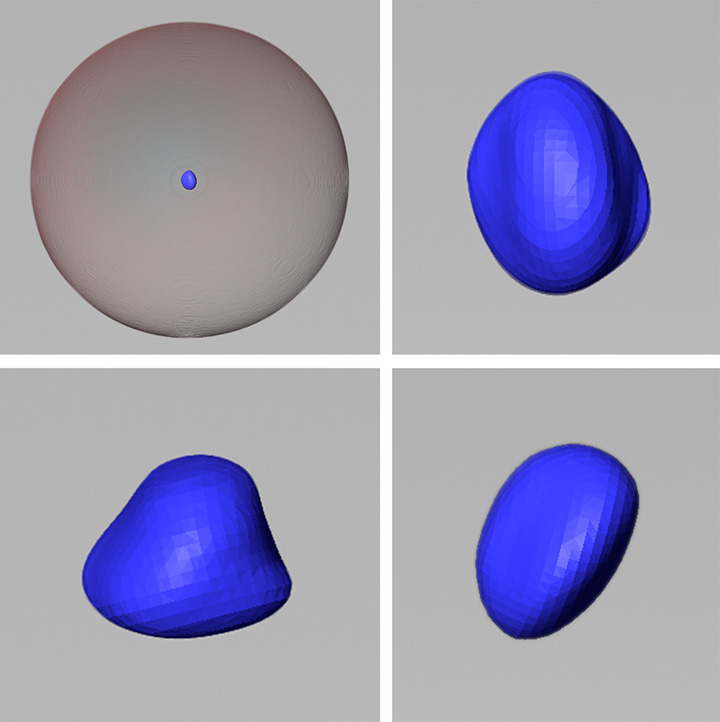
RTX imaging revealed a very unusual small ovalish radiopaque white core located in the pearl’s center. The radiopaque core stood out in contrast to the rest of the pearl’s structure (figure 2), indicating that the feature was composed of a material containing elements with higher atomic numbers on the periodic table. The appearance of the core was typical of that seen for metals when examined by X-rays, such as the metal post within the drill hole of the pearl in figure 3. The core measured approximately 0.19 × 0.15 × 0.13 mm and was surrounded by fine concentric rings with a small area of associated radiolucent organic-rich material. The small organic-rich area extending toward the outer growth layers appeared darker gray in the RTX and μ-CT images. Although the metallic core created doubts about the pearl’s origin, the associated concentric ring structure surrounding it was more indicative of natural origin. The μ-CT scan images were also rendered using specialized software (“New 3-D software expands GIA’s pearl identification capabilities,” GIA Research News, May 13, 2016) to create a three-dimensional image that made it easier to visualize the form of the central metal core (figure 4; see video of the 3D model).
Energy-dispersive X-ray fluorescence spectrometry revealed no manganese and a strontium level of 1400 ppm, which is characteristic of a saltwater environment. Raman analysis using 514 nm laser excitation was also carried out on the pearl’s surface and showed a doublet at 702 and 705 cm–1 as well as a peak at 1085 cm–1 indicative of aragonite. Weak polyenic pigment peaks associated with the pearl’s cream coloration were also observed at around 1135 and 1530 cm–1. Ultraviolet/visible reflectance spectra showed features at around 410, 435, and 460 nm and an additional band at 495 nm, in keeping with observations previously recorded for Pinctada radiata pearls (A. Al-Alawi et al., “Saltwater cultured pearls from Pinctada radiata in Abu Dhabi (United Arab Emirates),” Journal of Gemmology, Vol. 37, No. 2, 2020, pp. 164–179).
Although GIA was not permitted to cut the pearl in half or grind the surface down to reach the metal, we believe the feature may be a metal oxide similar to one previously documented (M.S. Krzemnicki, “Pearl with a strange metal core,” SSEF Facette, No. 24, 2018, p. 27). How this apparent metal found its way inside the mollusk is still a mystery. Since the diver found the pearl with other natural pearls that GIA also examined and confirmed, and it came from an area that lacks any pearl farms, it seems unlikely that a human inserted the metal core as a bead nucleus. It is possible that the core resulted from the pollution the region witnessed after the Gulf War in 1992, and a foreign metallic particle found its way into a mollusk. Residue from the shipping industry is another possibility, with potential pollution from the heavy volume of oil tankers and other vessels in the area. Hence, water contamination may be a convincing explanation for the unusual structure observed in this unique and fascinating natural Kuwaiti pearl.