
ABSTRACT
A sixteenth-century pendant on display at the Museum of the National Library of France in Paris has been linked to Catherine de’ Medici, Queen of France from 1547 to 1559, and François Dujardin, goldsmith to King Charles IX beginning in 1570. The pendant is adorned with two emeralds that one historian claimed were Colombian without documentation or scientific proof. This study aims to confirm the nature of these emeralds and determine their geographic origin. The microscopic, spectroscopic, and chemical data collected in this study indicate that these two emeralds are from Pakistan. The presence of emeralds from Pakistan in this sixteenth-century European pendant provides strong evidence of the existence of trade routes between Asia and Europe during this period of time, or even before, and suggests such emeralds might be present in other royal jewels.
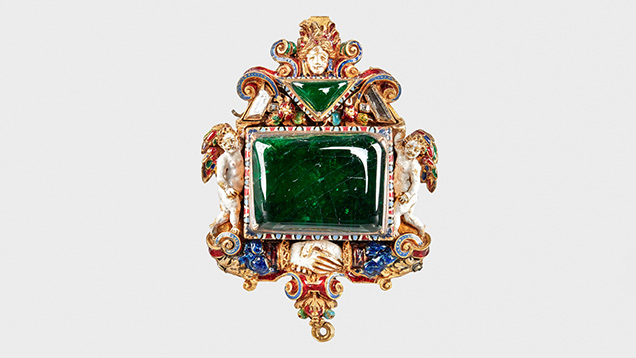
A pendant linked to Catherine de’ Medici (figures 1 and 2) is part of the collections of the Museum of the National Library of France (Musée de la Bibliothèque nationale de France—BnF) in Paris. The museum includes the Cabinet of Coins, Medals and Antiques (Cabinet des monnaies, médailles et antiques), which was created to preserve collections of medals, coins, glyptic art, and jewels belonging to various kings of France. Established by King Charles IX, who reigned between 1560 and 1574, the Cabinet of Coins, Medals and Antiques was created as a distinct entity from the French crown jewels collection founded by King François I in 1530. As one of the oldest museums in France, it eventually opened to the public during the French Revolution in 1791.
DESCRIPTION, INTERPRETATION, AND HISTORICAL BACKGROUND
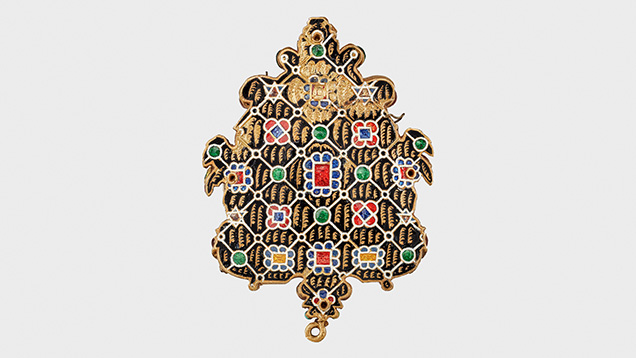
The pendant, typical of Renaissance jewelry, is made of enameled gold adorned with six gemstones in a closed-back setting that prohibits light from passing through. The symmetrical composition is organized around a large rectangular green gem. The upper part of the pendant is comprised of a mask and a motif forming the letter M, with a smaller triangular gem set in the center, and symmetrically flanked by four colorless step-cut gems, two trapezoidal and two square. Two winged putti frame the main gem, which is underlined by the dextrarum iunctio (joining right hands) motif. At the bottom of the pendant is a small wire loop from which a pearl may have been suspended, as was customary in sixteenth-century European jewelry. The gold frame is richly decorated with ronde-bosse enamel in a variety of bright colors. The reverse side of the pendant is entirely covered with cloisonné enamel of various colors, depicting a geometric design of button patterns, stylized flowers, six-rayed stars, and gold palm motifs (figure 1). There are no visible clasps, but two small hooks on the side (upper right of figure 1) could have been used to sew the jewel onto a hat or hang it from a chain.

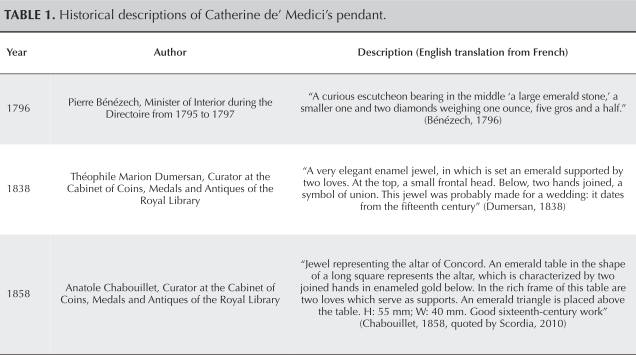
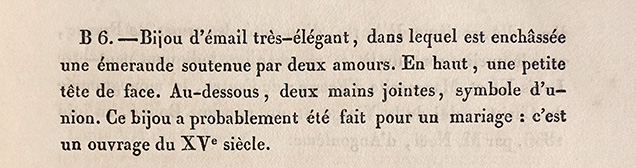
The first description associated with the pendant was written by Pierre Bénézech, Minister of the Interior during the Directoire, in 1796 (figure 3, translation in table 1). Interestingly, Bénézech described the main gem as “une grande prime d’Emeraude,” which at the time meant the large green gem was not very transparent but more translucent to opaque. This description was published in Procès-verbal des objets envoyés par l’administration de la Monnaie au Muséum des Antiques de la Bibliothèque nationale (Report on items sent by the Mint to the National Library’s Museum of Antiques) that later became the Cabinet of Coins, Medals and Antiques. In this report, the origins of some of the precious objects were written in the margins. Some of the objects came from the Garde-Meuble, where the royal collections were conserved. However, nothing is written in the margin next to the pendant, so the royal origin of such a jewel can only be a supposition based upon the current state of knowledge (figure 3; see again table 1). Other later descriptions are associated with the pendant. Among them is one by Théophile Marion Dumersan (1780–1849), curator at the Cabinet of Coins, Medals and Antiques of the Royal Library, which was uncovered during the present study (figure 4, translation in table 1).
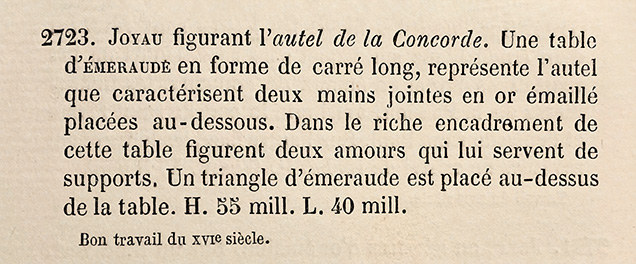
Regarding its meaning, such a jewel can have different interpretations. The one proposed by Dumersan, who hypothesized a bridal jewel, is particularly convincing, even if the statement that the piece was made during the fifteenth century is most likely inaccurate. In 1858, Anatole Chabouillet (1814–1899), curator of the Cabinet of Coins, Medals and Antiques of the Royal Library from 1859 to 1890, qualified the pendant in his Catalogue as “good sixteenth-century work” and described it as “l’autel de la Concorde” (the altar of Concord) (figure 5; see table 1 for translation), traditionally associated with marriage since antiquity. The combination of the dextrarum iunctio motif with the emerald’s symbolism related to faith, virginity, chastity, and love during the Renaissance was particularly meaningful in a bridal context (Cassius-Duranton, 2022, 2024). Regarding the pendant’s provenance, however, none of the descriptions listed and translated in table 1 mention the commissioner or recipient of the jewel.
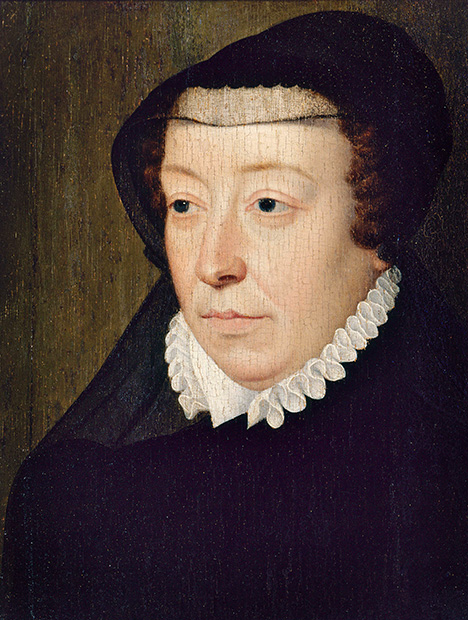
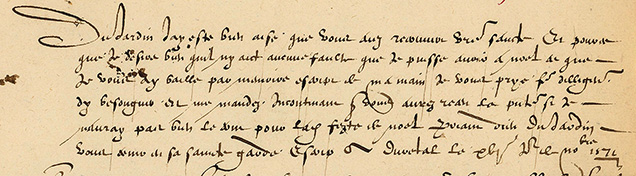
The pendant’s association with Catherine de’ Medici (1519–1589) was suggested for the first time in 1966 by Yvonne Hackenbroch, curator at the Metropolitan Museum of Art in New York and recognized specialist of Renaissance jewelry. Catherine de’ Medici (figure 6) was born in Florence and was Queen of France from 1547 to 1559 by marriage to King Henry II. She was the mother of three French kings who succeeded one another: François II (1559–1560), Charles IX (1560–1574), and Henry III (1574–1589). The time of her sons’ reigns has been called “the age of Catherine de’ Medici” because she extensively influenced French politics with controversial results. In 1966, Hackenbroch discovered an exceptional document in the BnF manuscript department (“Recueil de devises grecques...,” 16th century): a letter of order dated November 16, 1571, written by Catherine de’ Medici to French jeweler François Dujardin, commissioning an emerald jewel for Christmas (de Vielcastel, 1855) (figure 7).
Hackenbroch included this English translation in her 1966 publication:
The emerald is a brittle stone which breaks easily, and there are two hands symbolizing faith which enclose the emerald; there must be a word saying that fides and friendship which are the desire of the one who presents this jewel are not like the stone, but like the two hands which are inseparable and the color of the enamel on the jewel which is yellow lasting without growing pale.
Du Jardin [...] in order that there should be no mistake concerning my wish to receive at Christmas that I asked of you in a note written by my hand, I beg you to hurry executing and sending it to me for the already mentioned Christmas time, while I pray to God, Du Jardin, to protect you. Written at Duretal, November 16th 1571.
Although the above description does not exactly fit the jewel presented here, it is very similar. This document led Hackenbroch to associate the pendant with an important historic provenance, Catherine de’ Medici, and Dujardin, a prestigious jeweler of the Renaissance and goldsmith to King Charles IX from 1570 to 1574. Based on her knowledge of the historic context, but without any documentary evidence, she suggested it was a jewel related to the French Wars of Religion (1562–1598), given by Catherine de’ Medici as a Christmas gift to her son King Charles IX (1550–1574), who reigned from 1560 to 1574 (Hackenbroch, 1966). The political dimension does not contradict the bridal interpretation of the jewel, because, at the highest level of the state, marriage was used as a political weapon to create alliances. Conferring multiple meanings and different levels of interpretation (public, private, intimate) on a work of art was a common practice in the Renaissance (Scordia, 2010).
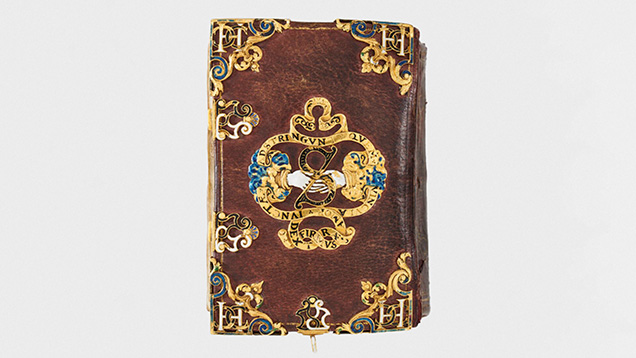
Further supporting Hackenbroch’s hypothesis, we can connect the dextrarum iunctio motif to another work associated with Catherine de’ Medici. This motif was also depicted on the binding of the Horae ad usum Romanum (“Roman hours for use”), called the Book of Hours of Catherine de’ Medici and among the most important manuscripts of the French Renaissance. Initially ordered by King François I circa 1530, who gave it to Catherine after her marriage in 1533 to his son King Henry II (1519–1559) who reigned from 1547 to 1559 (Horae ad usum Romanum, 16th century), the book was transformed through time by Catherine de’ Medici and later by its successive owners during the sixteenth and seventeenth centuries. During its restoration from 2019 to 2022, Maxence Hermant and Mathieu Deldicque determined that the precious binding in enameled gold was ordered in 1572 by Catherine de’ Medici from her goldsmith, Mathurin Lussault. Interestingly, on the binding, inscribed on a ribbon surrounding the dextrarum iunctio motif, is the Latin motto Firmus amor junctae adstringunt quem vincula dextrae (“The enduring love whose clasped hands tighten the bonds”). The binding corners are covered with the Queen’s monogram composed of two embracing Cs bearing an H, representing Catherine de’ Medici and her late husband King Henry II’s initials (Hermant and Deldicque, 2022) (figure 8).
Regarding the emeralds in the pendant, no document provides any information about their provenance or geographic origin. In 2010, medieval historian Lydwine Scordia published an article dedicated to the jewel. After reiterating Hackenbroch’s point of view, she wondered about the origin of the emeralds set in the pendant and claimed the following:
“The magnificent color of the emeralds in this pendant indicates that they were mined in South America. Until the voyages of Columbus, emeralds came from the Indian continent. The discoveries of the sixteenth century transformed the geography of their extraction. The emeralds in this jewel are said to have come from a gift from the Aztec emperor Montezuma II to Cortes, who in turn gave them to Charles Quint. The latter is said to have given them to the court on his election to the empire in 1519; unless they were given at the time of Philip II’s marriage to Elisabeth de Valois, daughter of Henri II and Catherine de Médicis, in 1559.”
However, Scordia gives no historic source to support these statements, and according to historians like Kris Lane, who studied the history of the Colombian emerald trade, they seem highly improbable because the arrival of Colombian emeralds on the European market occurred after 1519 (Lane, 2010). The only reliable way to determine a gem’s geographic origin is based on gemological analysis, not on general knowledge and beliefs.
Therefore, the main goal of this paper is to present the first gemological, spectroscopic, and chemical study of the green gems of this historic pendant, presenting their characteristics and in parallel assessing their geographic origin. This study is in line with other scientific studies (e.g., Bosshart, 1989; Fritsch et al., 2007; Gaillou and Post, 2007; Farges et al., 2015; Karampelas et al., 2022) conducted on historical artifacts conserved in museums, in order to advance knowledge on such national treasures.
MATERIALS AND METHODS
Only the two green gems in Catherine de’ Medici’s pendant were examined in this study. Due to its historic importance, the pendant was analyzed in its conservation place, using strictly nondestructive mobile instruments belonging to the Université de Lyon and the Laboratoire Français de Gemmologie (LFG). The BnF Museum generously provided access to the piece, limited to two three-hour sessions for four people.
Observation was performed using a Zeiss Stemi 508 binocular microscope (magnification up to 80×) equipped with a fiber-optic light source and an incorporated camera to acquire photos. Luminescence was examined using a 6-watt ultraviolet lamp (Vilber Lourmat VL-6.LC) with long-wave (365 nm) and short-wave (254 nm) UV light.
Raman spectra were acquired with an Ocean Optics QE Vis-NIR mobile spectrometer with a 785 nm laser excitation. Raman spectra were recorded in the 200–2000 cm–1 range with an exposure time of 5 seconds and five accumulations, at a spectral resolution of 10 cm–1. The spectrometer was calibrated using the 1331.8 cm–1 diamond band. Ultraviolet/visible/near-infrared (UV-Vis-NIR) spectra were collected with an Ocean Optics USB2000 mobile spectrometer coupled with optical fibers for light delivery to the sample and detection of the resulting signal, from 250 to 980 nm, with an acquisition time of 1.2 seconds (two cycles) and a spectral resolution of 1.5 nm. Energy-dispersive X-ray fluorescence (EDXRF) analyses were performed using a Thermo Scientific NITON XL3t 980 GOLDD+ XRF Analyzer (accelerating voltage 50 kV and beam current 40 μA) with a lateral resolution of 3 mm and an analysis time of 120 seconds. The preinstalled “ores” mode was calibrated using NIST SRM 610 and 612 glass standards.
RESULTS AND DISCUSSION
The two gems are of dark green color and both cut en cabochon; the larger is rectangular and the smaller triangular. The approximate dimensions of both emeralds (confirmed by Raman spectroscopy) were measured, with the larger being about 21.5 × 16.5 × 4.5 mm and the smaller about 9.5 × 6.5 × 3.5 mm. The emeralds’ lengths and widths were measured directly with a Leveridge caliper because of the closed-back setting, but the stones’ depths could only be measured indirectly. This was done using an optical microscope by precisely focusing on the samples’ surfaces and bottoms and calculating the difference (apparent depth) using the microscope’s vernier scale. The emeralds’ depths were calculated by multiplying the apparent depths by the samples’ refractive index (1.58 used here). The approximate calculated weights were 12.5 and 1.5 ct, respectively (Carmona, 1998). Both emeralds were inert under long-wave and short-wave UV light.
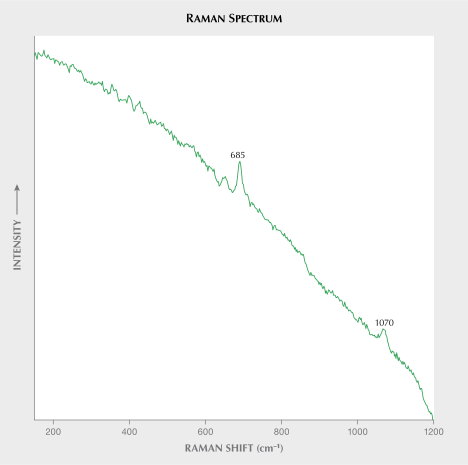
Figure 9 shows the Raman spectrum of the larger sample; the smaller emerald presents a very similar Raman spectrum. The Raman band at around 685 cm–1 is associated with Be-O stretching, and the vibrational band at around 1070 cm–1 is related to Si-O and/or Be-O stretching in beryl (Moroz et al., 2000; Bersani et al., 2014). A strong luminescence in the red and near-infrared regions created a background signal that is more intense in the lower Raman shift region.
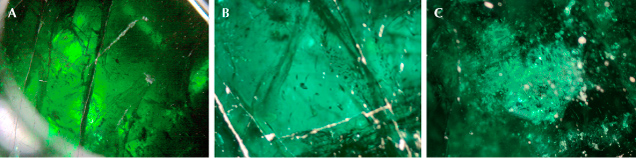
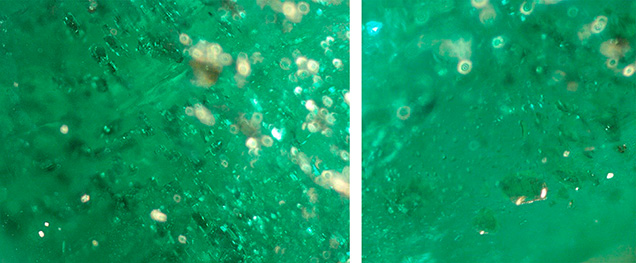
Observing the emeralds under an optical microscope was difficult because of the mounting, but both gems were found to contain natural inclusions. The larger emerald displayed various fissures as well as roundish multiphase inclusions and a large number of closely clustered thin films (figure 10). The smaller emerald was more included, exhibiting mainly flakes/sheets, possibly micas (identified only under the microscope), as well as some small roundish multiphase inclusions (figure 11). These inclusions are not consistent with those observed in emeralds from Colombia; for example, multiphase inclusions with jagged outlines are usually present in emeralds from Colombia, and due to their geological formation, micas are completely absent (Bosshart, 1991; Saeseaw et al., 2014, 2019). No indications of treatment, such as clarity enhancement, were observed microscopically in either of these samples.
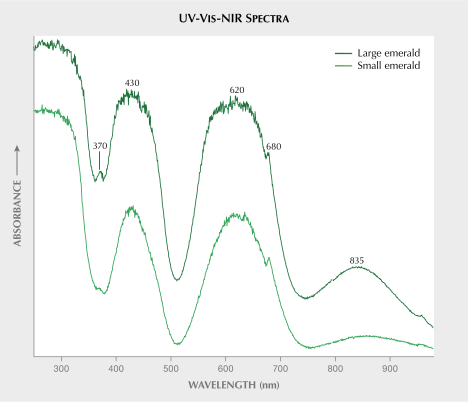
UV-Vis-NIR absorption spectra from 250 to 980 nm are shown in figure 12. Both emeralds present similar spectra, with intense absorptions at around 430 and 620 nm that are both linked to Cr3+ in the octahedral site, as well as two sharp bands (R-lines) of weak intensity at around 680 nm due to Cr3+ (Bosshart, 1991; Saeseaw et al., 2014, 2019; Schmetzer, 2014). Absorptions of low to medium intensity linked to iron at around 370 and 835 nm (Fe3+ and Fe2+, respectively) are observed at the UV and NIR regions of the electromagnetic spectra, and a water-related band at around 965 nm was observed (Wood and Nassau, 1967; Saeseaw et al., 2014, 2019; Schmetzer, 2014). These spectra are different from those observed in the vast majority of emeralds from Colombia, as the latter rarely present iron-related absorptions of low to medium intensity in the UV and NIR regions of the spectra (Bosshart, 1991; Saeseaw et al., 2014, 2019; Karampelas et al., 2019). In some rare cases, iron-related absorptions might be present in Colombian emeralds (see figure 3 in Saeseaw et al., 2019), but these rarer Colombian emeralds still have inclusion scenes similar to all emeralds from Colombia, as well as very low concentrations of alkali metals (see text below for rubidium content).
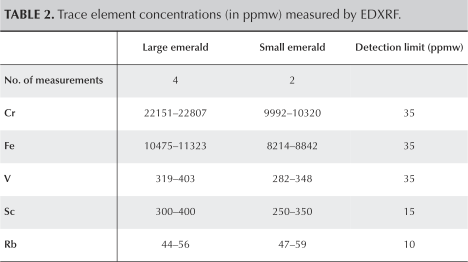
EDXRF chemical analyses are presented in table 2. Both emeralds show relatively high concentrations of chromium and iron and low concentrations of vanadium. It is important to note that all measurements were made with a mobile instrument on a cabochon with no absolutely flat surface, a measurement not as precise or as accurate as a benchtop spectrometer (e.g., chromium content is extremely high for the large emerald). However, the relative intensities of the chromophore elements were Cr>Fe>>V. These chemical analyses are different from those observed in emeralds from Colombia, which have higher vanadium content and lower iron content: V≥Cr>Fe and in some cases Cr>V>Fe (Schwarz and Pardieu, 2009; Saeseaw et al., 2014, 2019; Karampelas et al., 2019; Alonso-Perez et al., 2024; and references therein). Moreover, both emeralds present detectable levels of scandium and rubidium, with cesium and gallium below the detection limit of the instrument. Emeralds from Colombia have rubidium levels below 10 ppmw and rarely have iron levels at or above 2000 ppmw (Saeseaw et al., 2014, 2019; Karampelas et al., 2019).
Taking into account the microscopic, spectroscopic, and chemical data presented above, the supposed Colombian origin of these emeralds can be eliminated. However, South American emeralds were mentioned in the literature; these include not only those from Colombia but also those from Brazil. Brazilian emeralds are not mentioned in the literature before the twentieth century; other American origins mentioned are Mexico and Peru, but it was found that those stones were actually from Colombia (Webster, 1955; Weldon et al., 2016).
The characteristics of the studied emeralds match those observed in emeralds from Swat Valley in Pakistan. In particular, the relatively high iron and chromium, the relatively low vanadium, and the detectable rubidium measured with EDXRF, as well as the low to medium absorption features in the visible range due to iron, can be observed in emeralds from this region. The inclusions observed in the studied samples have been observed in those from Swat Valley (Guo et al., 2020; Cornuz, 2021). Emeralds from other historic sources, such as Egypt, Afghanistan, and Austria, present different microscopic and chemical characteristics (Saeseaw et al., 2014, 2019; Nikopoulou et al., 2023, 2025).
The Swat Valley emerald deposits are generally cited as having been discovered in 1958 (Gübelin, 1982). However, the emerald in a Gallo-Roman earring preserved in the National Museum of Natural History (Muséum National d’Histoire Naturelle) in Paris, discovered in Miribel, France, in 1997, was found to have an oxygen isotope composition corresponding to emeralds from Swat Valley (Giuliani et al., 2000; Schwarz and Giuliani, 2002). Additionally, a thirteenth-century reliquary crown conserved in the Diocesan Museum in Namur (Belgium) appears to contain emeralds from Pakistan based solely on chemistry (Bruni et al., 2021). These results should be further confirmed using nondestructive methods similar to those employed in the present study.
Swat Valley emeralds are believed to have been mined since ancient times, thus long before 1958 as mentioned by Gübelin (1982). After the conquests of Alexander the Great (300 bce), Pakistan, including Peshawar and Swat, became part of the Maurya Empire, and then later, of the Kingdom of Gandhara, whose valleys served as trade routes for silk and other products. Therefore, these emerald deposits, located on the Silk Road, were likely exploited at that time (Schwarz and Pardieu, 2009; Michelou et al., 2022). The emeralds currently mined in Pakistan are generally small, but larger samples can be found as well (Schwarz and Giuliani, 2002; Guo et al., 2020). This is consistent with historic sources described in some ancient texts.
Before the discovery of Colombian emerald deposits during the sixteenth century, Bactria, Egypt, and Scythia were recognized as the main emerald sources. These were mentioned by Pliny the Elder in his Natural History, written during the first century. Pliny was considered a major authority on naturalism, and his comments on gems were repeated in lapidaries—ancient treatises dedicated to gemstones—until the advent of modern science. Pliny’s main source was Theophrastus, pupil of Aristotle, contemporary of Alexander the Great, and author of the first preserved lapidary book in Western history, On Stones, written at the end of the fourth century bce. He wrote the first description of smaragdos (σμάραγδος), a bright green gemstone found only in Bactria, a historic region of Central Asia spanning parts of present-day Afghanistan, Tajikistan, Uzbekistan, and northwest Pakistan. Hence, Pakistan could be one of the first historic emerald sources. Egyptian emeralds were discovered later, during the Roman Empire, and supplied an important international trade as reported by Greek, Indian, Arab, and Persian lapidaries until the discovery of Colombian emeralds (Cassius-Duranton, 2024).
The mystery of Scythian emeralds has so far not been solved. According to the Greek historian Herodotus, the Scythian tribes covered a large territory between Europe and Asia, including the Ural region (Herodotus, 440 bce). No Russian emeralds have been identified in jewelry from before the nineteenth century. An Austrian origin has been suggested of some historical emeralds (identified solely with oxygen isotopes; Giuliani et al., 2000), but Austria was not included in the area once called Scythia and is not mentioned in the lapidaries. Ancient scholars offered varying interpretations of Scythia’s location. Herodotus also mentioned the Scythians from Asia, and the Roman Solinus (third to fourth centuries), inspired by Pliny the Elder, discussed different Scythias, including the “Asian Scythia” described as the country of the emeralds (Solinus, third century bce).
Reportedly, when Hernán Cortés entered modern-day Mexico in 1519, he received emeralds from Montezuma as gifts, and the Spanish originally assumed Peru as the source, where emeralds were abundant among the Incas (see Weldon et al., 2016, and references therein). Spanish conquistador Gonzalo Jiménez de Quesada reached the Eastern Cordillera of the Andes in 1537 and founded Bogotá in 1538. Friar Pedro Simón chronicled Quesada’s discovery of the first emerald source (see again Weldon et al., 2016, and references therein). But even if the emerald deposits of Chivor and Muzo in Colombia were discovered by the Spaniards during the sixteenth century and were used before by the native Chibcha and Muisca, the massive arrival of Colombian emeralds on the international market began no sooner than in the early seventeenth century (Lane, 2010). In the lapidaries, Anselmus Boetius de Boodt (1609) is among the first who wrote about emeralds from the New World, saying that they were less beautiful than “oriental” emeralds whose provenance were uncertain. Later, authors such as Robert de Berquen (1661) and Pouget Fils (1762) also mentioned “oriental” emeralds in their treatises, comparing them with the new ones found in the West. This might be the reason a Colombian emerald of medium quality was described as from Egypt in a museum collection (Karampelas et al., 2024).
The results of the gemological analyses presented here have demonstrated that emeralds from Pakistan were used during the sixteenth century, consistent with reports from the authors of the lapidaries. The present study also shows that knowing the geographical origins of gemstones adds important information to the history of jewelry pieces. This hypothesis invalidates a South American origin of the emeralds in the pendant and allows us to consider a supply route from South Asia to Europe during the sixteenth century (Putnam, 2023) or reuse of ancient gems.
CONCLUSIONS
A pendant linked to Catherine de’ Medici, part of the collection of the BnF Museum, is considered one of the most extraordinary Renaissance jewels containing emeralds. Before the present study, its emeralds were believed to be of South American/Colombian origin. However, chemical (e.g., Cr>Fe>>V), spectroscopic (e.g., iron-related absorptions in the visible range), and microscopic analyses (presence of mica and roundish multiphase inclusions and absence of multiphase inclusions with jagged outlines) rule out this assumption; these characteristics are more consistent with those of emeralds from Pakistan (Swat Valley). This article confirms the benefits of interdisciplinary research projects between historians and gemologists and the importance of scientific studies of museum samples, as such research can help historians in their understanding of artworks and allow curators to better inform the public. Hopefully this study encourages more institutions to grant access to researchers, so they can share new information about specimens with the scientific community as well as the general public.
Dr. Gérard Panczer (gerard.panczer@univ-lyon1.fr) is a professor at the Institute of Light and Matter at Lyon 1 University in Villeurbanne, France, where Robin Fesquet and Lasha Moshi are gemology students. Geoffray Riondet is an expert in ancient jewels (Maison Riondet, Lyon, France). Marie-Laure Cassius-Duranton is a gemology and art history researcher, and Dr. Lætitia Gilles-Guéry is a gemologist, at L’ECOLE, School of Jewelry Arts (with the support of Van Cleef & Arpels) in Paris, France. Aurélien Delaunay is director at Laboratoire Français de Gemmologie (LFG) in Paris. Dr. Stefanos Karampelas (s.karampelas@lfg.paris or skarampelas@geo.auth.gr) is chief gemologist at LFG, as well as professor of mineralogy and gemology at the School of Geology of the Aristotle University of Thessaloniki (Greece).
Dr. Gérard Panczer (gerard.panczer@univ-lyon1.fr) is a professor at the Institute of Light and Matter at Lyon 1 University in Villeurbanne, France, where Robin Fesquet and Lasha Moshi are gemology students. Geoffray Riondet is an expert in ancient jewels (Maison Riondet, Lyon, France). Marie-Laure Cassius-Duranton is a gemology and art history researcher, and Dr. Lætitia Gilles-Guéry is a gemologist, at L’ECOLE, School of Jewelry Arts (with the support of Van Cleef & Arpels) in Paris, France. Aurélien Delaunay is director at Laboratoire Français de Gemmologie (LFG) in Paris. Dr. Stefanos Karampelas (s.karampelas@lfg.paris or skarampelas@geo.auth.gr) is chief gemologist at LFG, as well as professor of mineralogy and gemology at the School of Geology of the Aristotle University of Thessaloniki (Greece).