
The 2015 Maine pegmatite workshop took place at the Poland mining camp, May 29–June 6. As readers know, many important colored gemstones including tourmaline, beryl, topaz, garnet, quartz, and spodumene are mined worldwide from pegmatites, and these rocks are the source for most fine gem crystals. Maine pegmatites have been mined for many decades (some back as far as the 1820s) and are renowned for their fine tourmaline, beryl, and quartz crystals. The workshop’s website is at pegworkshop.com.
The workshop is conducted by Dr. William “Skip” Simmons, Dr. Karen Webber, and Alexander Falster—all formerly of the University of New Orleans—and Ray Sprague, a local pegmatite miner. Simmons, Weber, and Falster were the core of the university’s mineralogy, petrology, and pegmatology (“MP 2 ”) research group. Following the closure of the university’s mineralogy department, they relocated to the new Maine Mineral and Gem Museum in Bethel (www.mainemineralgemmuseum.org).
The workshop has taken place annually since 2001. The 2015 workshop had a total of 26 attendees, including six undergraduate mineralogy students from University of New Orleans, one postgraduate mineralogy student from the University of the Basque Country (Bilbao, Spain), a well-known mineral dealer, a variety of mineral collectors, and interested members of the public.
The workshop is structured with morning presentations and lectures, followed by excursions to mines and quarries in the afternoon. Given the breadth of participants (rockhounds from mineral clubs, undergraduate and graduate geology students, mineral dealers, gemologists, and PhD-level researchers), the content varied from introductory to quite complex—and sometimes contentious— topics, such as pegmatite genesis (fractional crystallization from granite vs. anatexis) and crystallization time. In particular, the relationship of pegmatites to tectonic settings was well explored, as was the current consensus on cooling time and the formation of large crystals. Nonetheless, the presenters did an excellent job and encouraged plenty of debate. Some of the best questions came from the mineral collectors in the group, many of whom have visited these quarries repeatedly.
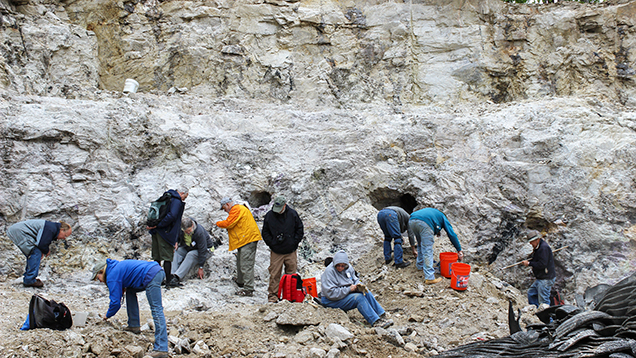
The selection of field excursions (figures 1 and 2) varies from year to year and is dependent on which mines are available or being worked at the time. This year’s destinations included the following quarries: Western Mount Apatite, Tamminen, Waisanen, Bennett, Orchard, Havey, Mount Mica, and Emmons. Around noon each day, participants would caravan in a stream of cars to the “quarry du jour.” The workshop organizers enjoy excellent relationships with local mine owners, dependent on the good conduct of the attendees.
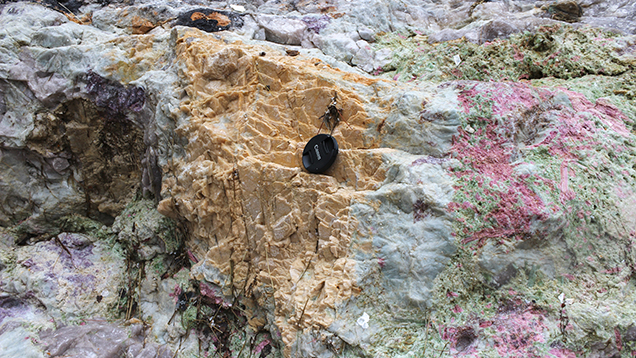
At each quarry, Simmons or Falster explained pegmatite mineralogy and miners Frank Perham or Ray Sprague outlined current or past mining history at the site. The remainder of the time could be spent mineral collecting, which was a focus for a good portion of the group. Those interested in more depth could talk with members of the MP 2 research group about the exposures, or with Perham and Sprague about the practice of mining pegmatites. Indeed, this is the workshop’s strong suit: The theory from the morning presentations is applied to real rocks in the afternoon.
Besides the quarries, workshop attendees also visited the new Maine Mineral and Gem Museum in Bethel. There they could see the progress of the exhibits and view the MP 2 research group’s laboratory in the basement, which includes an electron microprobe, scanning electron microscope, X-ray diffraction equipment, and other advanced instrumentation.
Following an evening lecture on pegmatite mineralogy complemented by numerous hand specimens, the opening session kicked off with a general introduction to pegmatites, the earth’s chemistry, and phase equilibria. Throughout the week, the presentations delivered by Simmons, Webber, and Falster built on the basics to cover the relationship of granites to pegmatites, magmatic differentiation, pegmatite classification, magma genesis, and the influence of tectonic setting. Some of the more complex topics covered included crystallization dynamics, such as the influence of volatiles and fluxes (water, lithium, fluorine, boron, and phosphorous), pegmatite textures, aplites (“line rocks”), pocket formation and indicators, and regional and internal zonation of pegmatites.
Besides these instructional sessions, workshop attendees were also treated to a variety of other presentations, including:
Myles Fetch (Maine Mineral and Gem Museum, Bethel) described the garnet line in Oxford County pegmatites. He explained that the garnet line marks the lower edge of the pegmatite’s productive zone. It might swell upward close to a pocket, serving as an important indicator.
Dr. Encar Roda-Robles (University of the Basque Country and a member of the MP 2 pegmatite research group) presented on pegmatites from the Iberian Massif and the central Maine belt, covering the differentiation of granitic melts vs. anatexis. Dr. Roda-Robles also delivered a talk on tourmaline, mica, and garnet as sensitive indicators of pegmatite evolution in the Berry-Havey pegmatite. This last talk was very relevant, as the afternoon’s field trip was to this quarry.
Idoia Garante-Olave (University of the Basque Country) delivered a presentation on mineralogy and geochemistry of micas from the Tres Arroyos pegmatite field in Badajoz, Spain.
Frank Perham , a noted Maine pegmatite miner, reminisced on the remarkable Newry tourmaline discovery, which produced an estimated $30 million worth of gem and specimen-grade tourmaline crystals in 1972. Perham also delivered a talk on Maine feldspar mining.
Dr. Skip Simmons presented previous work on the chemistry and a calculation of volume, by mineral, for the Mt. Mica pegmatite. The volume of tourmaline was estimated at 1%.
Jim Nizamoff (a mineralogist with Omya AG and former University of New Orleans research associate) and mineral collector Don Dallaire discussed the pegmatite mineralogy of the Conway and Osceola granites from the White Mountains of New Hampshire.
Ray Sprague (pegmatite workshop organizer and miner) presented on the mineralogy of specimens from the Emmons pegmatite in preparation for the all-day visit to that quarry.
The 2015 Maine pegmatite workshop took place at the Poland mining camp, May 29–June 6. As readers know, many important colored gemstones including tourmaline, beryl, topaz, garnet, quartz, and spodumene are mined worldwide from pegmatites, and these rocks are the source for most fine gem crystals. Maine pegmatites have been mined for many decades (some back as far as the 1820s) and are renowned for their fine tourmaline, beryl, and quartz crystals. The workshop’s website is at pegworkshop.com.
The workshop is conducted by Dr. William “Skip” Simmons, Dr. Karen Webber, and Alexander Falster—all formerly of the University of New Orleans—and Ray Sprague, a local pegmatite miner. Simmons, Weber, and Falster were the core of the university’s mineralogy, petrology, and pegmatology (“MP 2 ”) research group. Following the closure of the university’s mineralogy department, they relocated to the new Maine Mineral and Gem Museum in Bethel (www.mainemineralgemmuseum.org).
The workshop has taken place annually since 2001. The 2015 workshop had a total of 26 attendees, including six undergraduate mineralogy students from University of New Orleans, one postgraduate mineralogy student from the University of the Basque Country (Bilbao, Spain), a well-known mineral dealer, a variety of mineral collectors, and interested members of the public.
The workshop is structured with morning presentations and lectures, followed by excursions to mines and quarries in the afternoon. Given the breadth of participants (rockhounds from mineral clubs, undergraduate and graduate geology students, mineral dealers, gemologists, and PhD-level researchers), the content varied from introductory to quite complex—and sometimes contentious— topics, such as pegmatite genesis (fractional crystallization from granite vs. anatexis) and crystallization time. In particular, the relationship of pegmatites to tectonic settings was well explored, as was the current consensus on cooling time and the formation of large crystals. Nonetheless, the presenters did an excellent job and encouraged plenty of debate. Some of the best questions came from the mineral collectors in the group, many of whom have visited these quarries repeatedly.
The selection of field excursions (figures 1 and 2) varies from year to year and is dependent on which mines are available or being worked at the time. This year’s destinations included the following quarries: Western Mount Apatite, Tamminen, Waisanen, Bennett, Orchard, Havey, Mount Mica, and Emmons. Around noon each day, participants would caravan in a stream of cars to the “quarry du jour.” The workshop organizers enjoy excellent relationships with local mine owners, dependent on the good conduct of the attendees.
At each quarry, Simmons or Falster explained pegmatite mineralogy and miners Frank Perham or Ray Sprague outlined current or past mining history at the site. The remainder of the time could be spent mineral collecting, which was a focus for a good portion of the group. Those interested in more depth could talk with members of the MP 2 research group about the exposures, or with Perham and Sprague about the practice of mining pegmatites. Indeed, this is the workshop’s strong suit: The theory from the morning presentations is applied to real rocks in the afternoon.
Besides the quarries, workshop attendees also visited the new Maine Mineral and Gem Museum in Bethel. There they could see the progress of the exhibits and view the MP 2 research group’s laboratory in the basement, which includes an electron microprobe, scanning electron microscope, X-ray diffraction equipment, and other advanced instrumentation.
Following an evening lecture on pegmatite mineralogy complemented by numerous hand specimens, the opening session kicked off with a general introduction to pegmatites, the earth’s chemistry, and phase equilibria. Throughout the week, the presentations delivered by Simmons, Webber, and Falster built on the basics to cover the relationship of granites to pegmatites, magmatic differentiation, pegmatite classification, magma genesis, and the influence of tectonic setting. Some of the more complex topics covered included crystallization dynamics, such as the influence of volatiles and fluxes (water, lithium, fluorine, boron, and phosphorous), pegmatite textures, aplites (“line rocks”), pocket formation and indicators, and regional and internal zonation of pegmatites.
Besides these instructional sessions, workshop attendees were also treated to a variety of other presentations, including:
Myles Fetch (Maine Mineral and Gem Museum, Bethel) described the garnet line in Oxford County pegmatites. He explained that the garnet line marks the lower edge of the pegmatite’s productive zone. It might swell upward close to a pocket, serving as an important indicator.
Dr. Encar Roda-Robles (University of the Basque Country and a member of the MP 2 pegmatite research group) presented on pegmatites from the Iberian Massif and the central Maine belt, covering the differentiation of granitic melts vs. anatexis. Dr. Roda-Robles also delivered a talk on tourmaline, mica, and garnet as sensitive indicators of pegmatite evolution in the Berry-Havey pegmatite. This last talk was very relevant, as the afternoon’s field trip was to this quarry.
Idoia Garante-Olave (University of the Basque Country) delivered a presentation on mineralogy and geochemistry of micas from the Tres Arroyos pegmatite field in Badajoz, Spain.
Frank Perham , a noted Maine pegmatite miner, reminisced on the remarkable Newry tourmaline discovery, which produced an estimated $30 million worth of gem and specimen-grade tourmaline crystals in 1972. Perham also delivered a talk on Maine feldspar mining.
Dr. Skip Simmons presented previous work on the chemistry and a calculation of volume, by mineral, for the Mt. Mica pegmatite. The volume of tourmaline was estimated at 1%.
Jim Nizamoff (a mineralogist with Omya AG and former University of New Orleans research associate) and mineral collector Don Dallaire discussed the pegmatite mineralogy of the Conway and Osceola granites from the White Mountains of New Hampshire.
Ray Sprague (pegmatite workshop organizer and miner) presented on the mineralogy of specimens from the Emmons pegmatite in preparation for the all-day visit to that quarry.