
Gemstone Artisan Keycaps
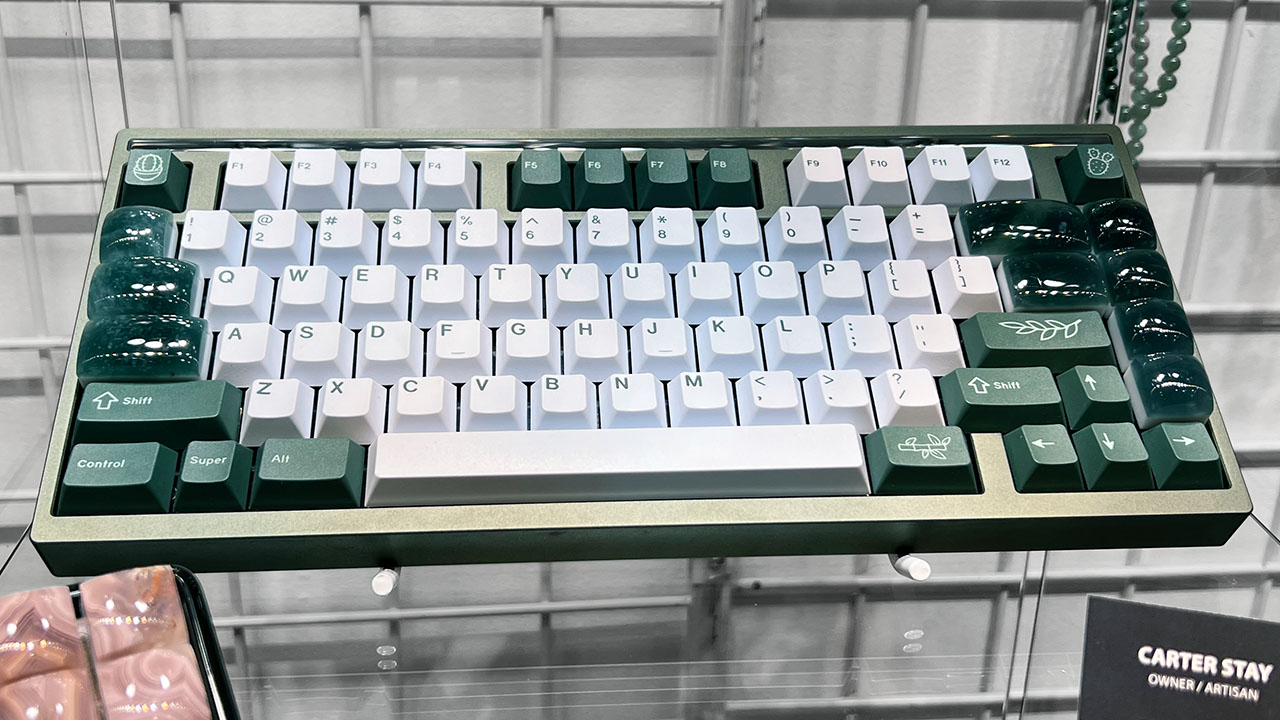
At the 22nd Street show, Carter Stay, owner and artisan behind Keycap Quarry (Salt Lake City, Utah), shared his unique craft with the author, opening up about what led him to pursue an alternative use for one of nature’s most beautiful creations—gemstone keycaps for mechanical keyboards (figure 1).
A mechanical keyboard has a physical switch beneath each keycap that transfers keystrokes to a printed circuit board, resulting in a distinct feel compared to other keyboards. Popular among computer gamers, like Stay himself, mechanical keyboards provide a tactile experience. Artisan keycaps are custom-made for these keyboards, designed to stand out from mass-produced options. They are often crafted in small batches from materials such as metal, resin, or clay.
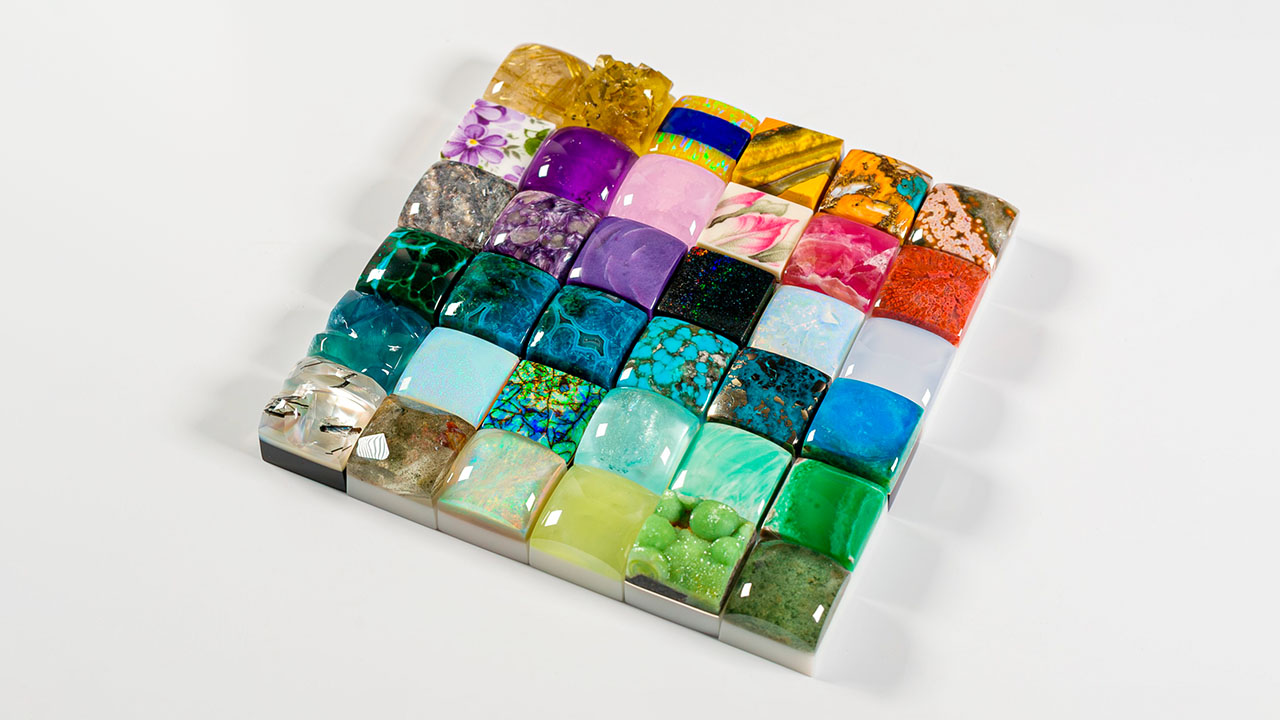
Growing up in Utah and being surrounded by rock hounds and lapidaries fostered Stay’s fascination with rocks. Like many eager to seize opportunity amid the challenges of the COVID-19 pandemic, he launched Keycap Quarry at just 16 years old, and it has since grown into a thriving enterprise with more than 34,000 followers on Instagram. Stay offers a wide variety of gemstone keycaps including opal, jade, quartz, and various agates (figure 2). Each keycap is the result of Stay’s careful selection of the finest rough materials, followed by his keen attention to detail while cutting and polishing.
Stay highlighted the importance of selecting the right slab, or rough material, and how it influences the shape of his keycaps. By sourcing slabs with tighter patterns, he’s able to more efficiently display the unique designs inherent to the stones within the smaller, face-up area of his keycaps. He typically creates keycaps with a square profile, which allows him to use and show off more of the gem material. However, the finish of the top of the keycap varies depending on the stone—he’s created keycaps with faceted, carved, domed, flat, and raw, unaltered tops.
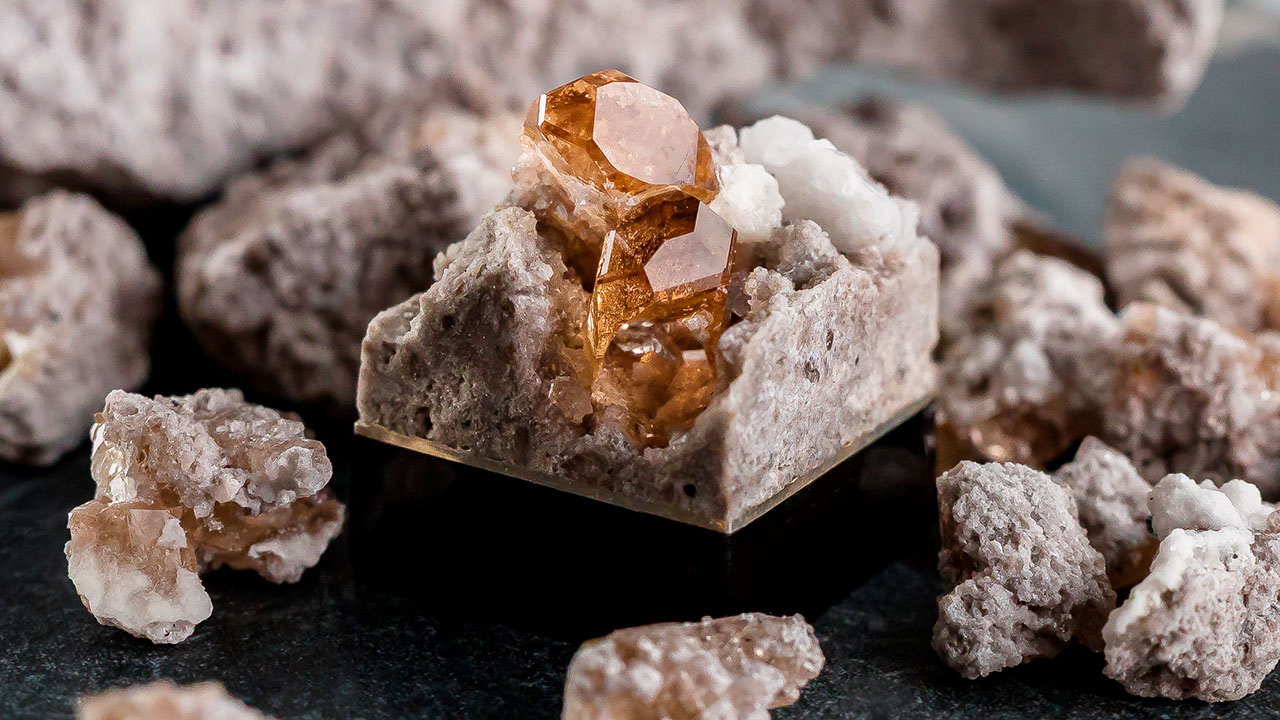
One of Stay’s most popular keycap varieties is the amethyst cluster, with the top remaining in its crystal form. Stay enjoys capturing the tactile essence of gems (figure 3). He lightheartedly mentioned that customers request that “he does a backspace key with the ‘pokey’ ones [raw, unaltered tops], acting like a negative reinforcement if you make a mistake.”
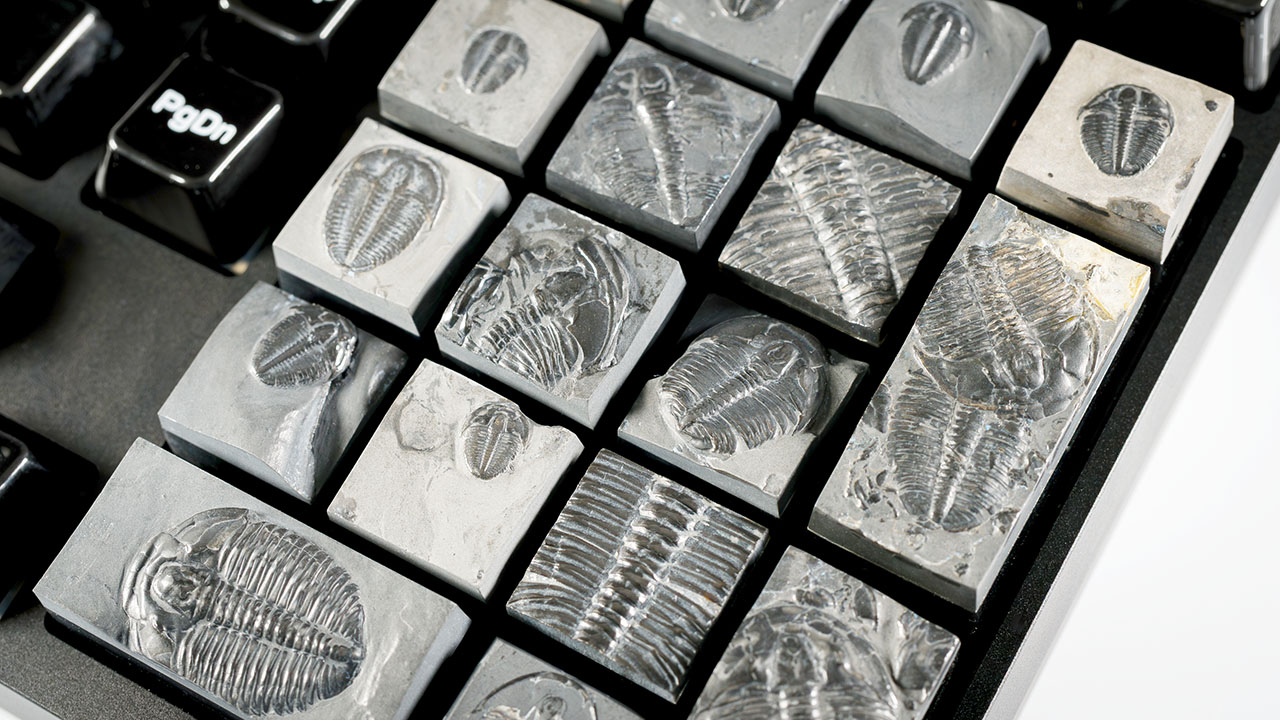
Customers enjoy following Stay’s entire production story, from mining and digging to cutting and polishing, which he often chronicles on Instagram. He has recorded himself digging for fossils at U-Dig Fossils Quarry in Delta, Utah, followed by cracking open the shale and discovering fossilized trilobites to take home and create into keycaps (figure 4). He has also worked with other fossils that he did not collect, such as ammonite, turritella agate, and mammoth molar.
As a self-taught rock enthusiast and lapidary, Stay expressed the value of coming to the Tucson gems shows—not only for the stones, but for the connections he continues to make each year. These unique connections allow him to deepen his understanding of the gemstones he works with. It’s also where he met Luke Miller, owner of Yax Tun Minerals (Denver, Colorado) specializing in Guatemalan jade, who allowed Stay the extraordinary opportunity to exhibit his gemstone keycaps at the Yax Tun booth this year.
So, what’s next for Stay? He’s happy with his current business that allows him to combine two niches—rocks and gaming—and that he’s been able to put his own spin on these unique materials for the gem industry. “That is the direction the art and lapidary world is going. People want the different and unique stuff, rather than the mass-produced items,” he noted. Stay also shared his interest in creating jewelry in the future, having recently acquired a collection of tools from a retiring goldsmith. With his keen attention to detail, passion, and background working with computers, including 3D printing, he’s perfectly poised for the new era of jewelry manufacturing.
.jpg "YMAL GIA Ed")


