
When you purchase a colored gemstone with a GIA report, you're choosing the global standard in gemstone identification and analysis. GIA is a trusted authority renowned for its rigorous, objective analysis of colored stones—from rubies to emeralds and beyond.
As the first U.S. lab to provide comprehensive gemstone identification reports, GIA pioneered advanced techniques for identifying geographic origin and detecting common treatments such as heat treatment and clarity enhancement—factors that can greatly influence a gem’s value. GIA reports provide critical information about a gemstone’s identity, origin (when determinable) and treatment status.
Here’s a clear, step-by-step look at how GIA evaluates colored gemstones once they arrive at the lab.
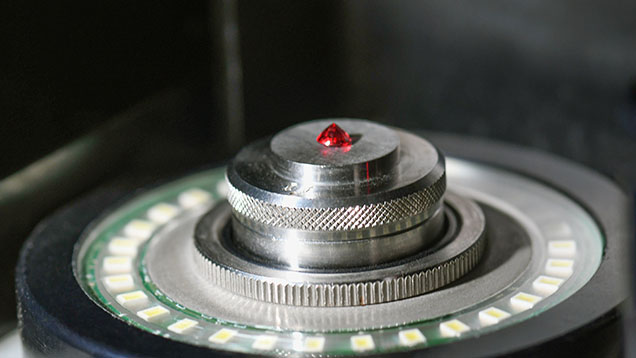
STEP 1: GEMSTONE INTAKE
Once a gem is submitted:
- Your name or store info is removed, so analysis is completely unbiased. Every gem, whether from a local jeweler or a globally recognized brand, is evaluated using the same rigorous, objective standards.
- GIA records the gem’s basic measurements and weight using a noncontact optical device.
- All loose, faceted stones within a certain size will have their specific gravity tested
STEP 2: GEMSTONE TESTING
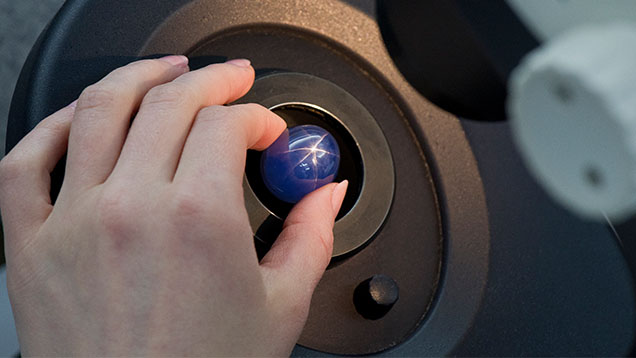
Colored stones are sent to GIA’s colored stone identification department where they are first examined using standard tools, which may include:
- Refractometer
- Polariscope
- Dichroscope
- Spectroscope
These same tools are used in the classroom by students enrolled in GIA’s industry leading Graduate Colored Stones Program.
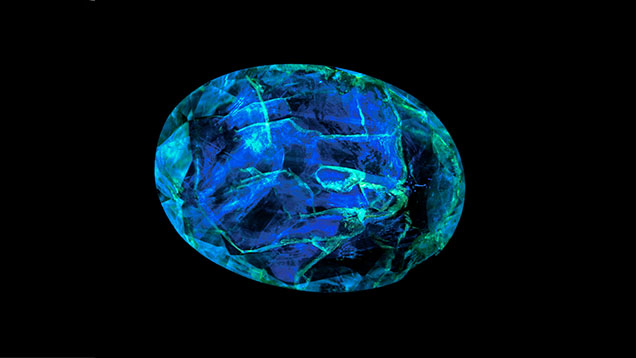
GIA scientists then use shortwave UV light (SWUV) and longwave UV light (LWUV) to check for fluorescence or phosphorescence. The color and pattern of fluorescence can help uncover gemstone identity and some treatments. Some examples of this include:
- Kunzite: Displays a characteristic orange fluorescence under longwave UV (LWUV)
- Rubies: Marble-hosted rubies, such as those from Myanmar (formerly Burma), can display bright red fluorescence under LWUV and shortwave UV (SWUV)
- Emerald: Some fillers used for clarity enhancement can fluoresce bright yellow to blue under LWUV
- Blue Sapphires: Heat treatment can cause gems to exhibit chalky fluorescence under SWUV
STEP 3: COLOR DETERMINATION
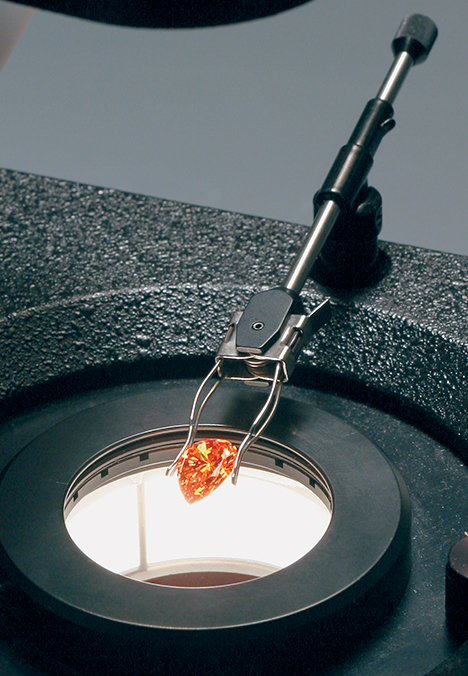
Gemologists examine the gem in a face-up position and compare it to The Munsell Book of Color and masterstones under controlled lighting.
- Special color terms like “royal blue” for blue sapphires or “pigeon’s blood” for rubies are used for stones that meet strict requirements (natural stones that have not undergone diffusion treatment).
STEP 4: HIGH-TECH TESTING FOR GEMSTONES
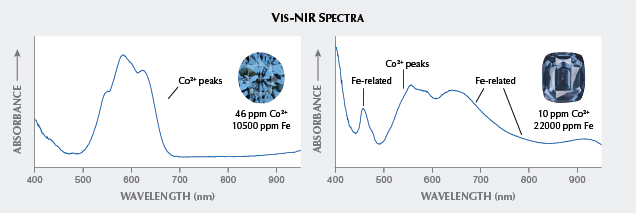
Where needed, GIA uses advanced instruments to determine a gemstone’s origin, whether it has been treated, and if it is natural or laboratory-grown. For example, cobalt spinel is more valuable than spinel colored predominantly by iron. GIA can tell the difference using UV-Vis-NIR spectroscopy and chemical analysis. These tests look closely at the gem’s chemical makeup.
UV-Vis-NIR Spectroscopy: Tests how a gem absorbs ultraviolet, visible and near infrared light to understand cause of color.
- Commonly used for: sapphire, emerald, tourmaline, cobalt spinel
FTIR Spectroscopy: Tests how a gem absorbs infrared light to aid in the determination of certain natural vs. laboratory-grown calls and detect specific treatments.
- Corundum, chrysoberyl, jade, quartz
EDXRF: Tests a gem’s fluorescent X-ray emissions after it is excited by high-energy X-rays to help determine if it is natural vs. laboratory-grown, country of origin and aid in the detection of treatments and coating.
LA-ICP-MS: Minimally invasive test that uses laser to vaporize a tiny part of a gem to know its trace elements. Helps determine if the gem is natural vs. laboratory-grown, country of origin and detect diffusion treatments.
Raman Spectroscopy: Uses laser to determine the identity of a gem or its inclusions. Inclusions can help tell whether the gem is natural vs. laboratory-grown and reveal country of origin. Especially useful for:
MICROSCOPES: STILL A GEMOLOGIST'S BEST FRIEND
Even with advanced instruments, a microscope is key. GIA gemologists use up to 50× magnification to: GIA scientists use different lighting to highlight various features:
- Spot treatments like clarity enhancement, heat treatment or dyeing
- Examine blemishes and inclusions, which can help determine if a gem is natural vs. laboratory-grown and offer insight into its geographic origin
- Identify coatings, assembled stones, damage, and more, which can impact the value of the gem
GIA scientists use different lighting to highlight various features:
- Darkfield: makes inclusions stand out
- Diffused lighting: shows color zoning
- Reflected light: shows surface features
- Fiber-optic lighting: can be adjusted to any angle
- Polarized light: showcases optically aligned and unaligned inclusions, as well as strain patterns
STEP 5: THE RETURN HOME
Once the evaluation is complete, your colored stone is carefully packaged and returned—accompanied by a GIA Colored Stone Identification Report or a GIA Colored Stone Identification and Origin Report, providing clarity and confidence.
a. GIA Colored Stone Identification Report - Identifies and describes the gemstone, including any detectable treatments.
b. GIA Colored Stone Identification and Origin Report - Includes all the information in the Identification Report, with the additional determination of geographic origin for polished, loose, or mounted natural ruby, sapphire, emerald, Paraíba tourmaline, red spinel, and alexandrite.
TRAINING & EXPERTISE
Does all this sound complex? That’s because it is! GIA gemologists are trained in over 60 gemstone species , their varieties and their treatments. They can also determine the geographic origin of natural corundum, emerald, Paraíba-type tourmaline, red spinel and alexandrite. Their expertise comes from years of training the eye, examining countless samples and interpreting data.
GIA’s field gemology team has collected thousands of samples from over 100 field expeditions to mines and gem markets worldwide. These known-origin samples form a world-class reference library used for research and country of origin determination.
If you ever find yourself wondering about the identity, quality and origin of your gem, you can rely on GIA’s experts to provide a detailed, accurate analysis.
SUBMIT YOUR GEM TO GIA
Ready to uncover the full story behind your gem? Submitting a gemstone to GIA is a simple and secure process. Visit GIA's laboratory to get started.
Whether you're seeking identification, origin determination or treatment analysis, GIA ensures expert handling and trusted results. Learn more about how to submit your gem and begin its journey through GIA’s world-renowned identification and evaluation process.
When you purchase a colored gemstone with a GIA report, you're choosing the global standard in gemstone identification and analysis. GIA is a trusted authority renowned for its rigorous, objective analysis of colored stones—from rubies to emeralds and beyond.
As the first U.S. lab to provide comprehensive gemstone identification reports, GIA pioneered advanced techniques for identifying geographic origin and detecting common treatments such as heat treatment and clarity enhancement—factors that can greatly influence a gem’s value. GIA reports provide critical information about a gemstone’s identity, origin (when determinable) and treatment status.
Here’s a clear, step-by-step look at how GIA evaluates colored gemstones once they arrive at the lab.
STEP 1: GEMSTONE INTAKE
Once a gem is submitted:
- Your name or store info is removed, so analysis is completely unbiased. Every gem, whether from a local jeweler or a globally recognized brand, is evaluated using the same rigorous, objective standards.
- GIA records the gem’s basic measurements and weight using a noncontact optical device.
- All loose, faceted stones within a certain size will have their specific gravity tested
STEP 2: GEMSTONE TESTING
Colored stones are sent to GIA’s colored stone identification department where they are first examined using standard tools, which may include:
- Refractometer
- Polariscope
- Dichroscope
- Spectroscope
These same tools are used in the classroom by students enrolled in GIA’s industry leading Graduate Colored Stones Program.
GIA scientists then use shortwave UV light (SWUV) and longwave UV light (LWUV) to check for fluorescence or phosphorescence. The color and pattern of fluorescence can help uncover gemstone identity and some treatments. Some examples of this include:
- Kunzite: Displays a characteristic orange fluorescence under longwave UV (LWUV)
- Rubies: Marble-hosted rubies, such as those from Myanmar (formerly Burma), can display bright red fluorescence under LWUV and shortwave UV (SWUV)
- Emerald: Some fillers used for clarity enhancement can fluoresce bright yellow to blue under LWUV
- Blue Sapphires: Heat treatment can cause gems to exhibit chalky fluorescence under SWUV
STEP 3: COLOR DETERMINATION
Gemologists examine the gem in a face-up position and compare it to The Munsell Book of Color and masterstones under controlled lighting.
- Special color terms like “royal blue” for blue sapphires or “pigeon’s blood” for rubies are used for stones that meet strict requirements (natural stones that have not undergone diffusion treatment).
STEP 4: HIGH-TECH TESTING FOR GEMSTONES
Where needed, GIA uses advanced instruments to determine a gemstone’s origin, whether it has been treated, and if it is natural or laboratory-grown. For example, cobalt spinel is more valuable than spinel colored predominantly by iron. GIA can tell the difference using UV-Vis-NIR spectroscopy and chemical analysis. These tests look closely at the gem’s chemical makeup.
UV-Vis-NIR Spectroscopy: Tests how a gem absorbs ultraviolet, visible and near infrared light to understand cause of color.
- Commonly used for: sapphire, emerald, tourmaline, cobalt spinel
FTIR Spectroscopy: Tests how a gem absorbs infrared light to aid in the determination of certain natural vs. laboratory-grown calls and detect specific treatments.
- Corundum, chrysoberyl, jade, quartz
EDXRF: Tests a gem’s fluorescent X-ray emissions after it is excited by high-energy X-rays to help determine if it is natural vs. laboratory-grown, country of origin and aid in the detection of treatments and coating.
LA-ICP-MS: Minimally invasive test that uses laser to vaporize a tiny part of a gem to know its trace elements. Helps determine if the gem is natural vs. laboratory-grown, country of origin and detect diffusion treatments.
Raman Spectroscopy: Uses laser to determine the identity of a gem or its inclusions. Inclusions can help tell whether the gem is natural vs. laboratory-grown and reveal country of origin. Especially useful for:
MICROSCOPES: STILL A GEMOLOGIST'S BEST FRIEND
Even with advanced instruments, a microscope is key. GIA gemologists use up to 50× magnification to: GIA scientists use different lighting to highlight various features:
- Spot treatments like clarity enhancement, heat treatment or dyeing
- Examine blemishes and inclusions, which can help determine if a gem is natural vs. laboratory-grown and offer insight into its geographic origin
- Identify coatings, assembled stones, damage, and more, which can impact the value of the gem
GIA scientists use different lighting to highlight various features:
- Darkfield: makes inclusions stand out
- Diffused lighting: shows color zoning
- Reflected light: shows surface features
- Fiber-optic lighting: can be adjusted to any angle
- Polarized light: showcases optically aligned and unaligned inclusions, as well as strain patterns
STEP 5: THE RETURN HOME
Once the evaluation is complete, your colored stone is carefully packaged and returned—accompanied by a GIA Colored Stone Identification Report or a GIA Colored Stone Identification and Origin Report, providing clarity and confidence.
a. GIA Colored Stone Identification Report - Identifies and describes the gemstone, including any detectable treatments.
b. GIA Colored Stone Identification and Origin Report - Includes all the information in the Identification Report, with the additional determination of geographic origin for polished, loose, or mounted natural ruby, sapphire, emerald, Paraíba tourmaline, red spinel, and alexandrite.
TRAINING & EXPERTISE
Does all this sound complex? That’s because it is! GIA gemologists are trained in over 60 gemstone species , their varieties and their treatments. They can also determine the geographic origin of natural corundum, emerald, Paraíba-type tourmaline, red spinel and alexandrite. Their expertise comes from years of training the eye, examining countless samples and interpreting data.
GIA’s field gemology team has collected thousands of samples from over 100 field expeditions to mines and gem markets worldwide. These known-origin samples form a world-class reference library used for research and country of origin determination.
If you ever find yourself wondering about the identity, quality and origin of your gem, you can rely on GIA’s experts to provide a detailed, accurate analysis.
SUBMIT YOUR GEM TO GIA
Ready to uncover the full story behind your gem? Submitting a gemstone to GIA is a simple and secure process. Visit GIA's laboratory to get started.
Whether you're seeking identification, origin determination or treatment analysis, GIA ensures expert handling and trusted results. Learn more about how to submit your gem and begin its journey through GIA’s world-renowned identification and evaluation process.