Euhedral Phantom Sapphire in Sapphire
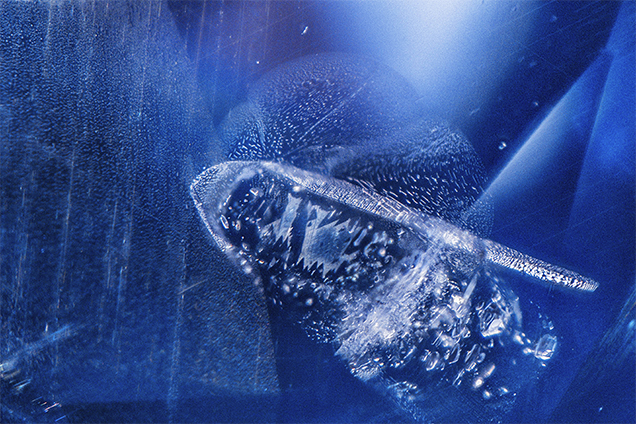
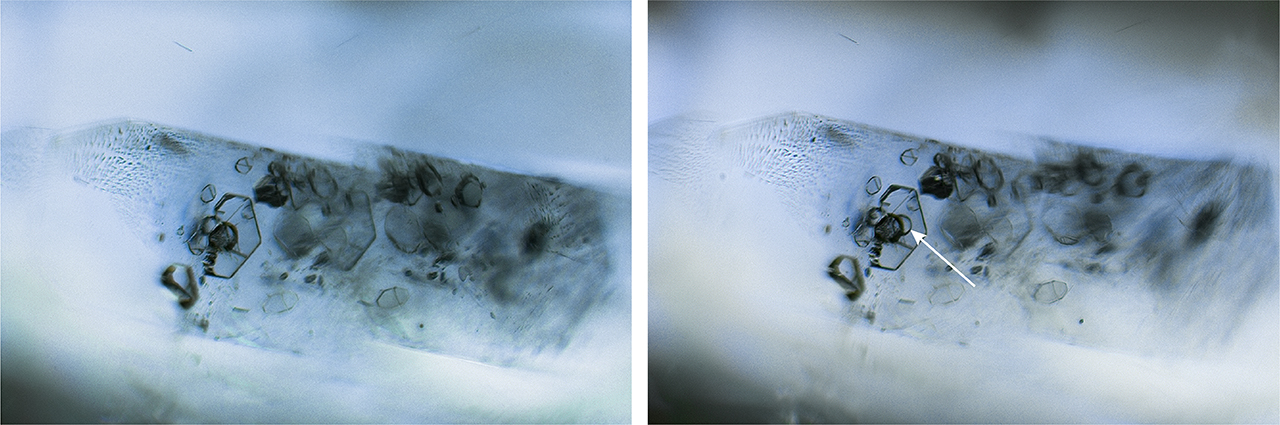
A phantom sapphire crystal within a host sapphire crystal was recently examined at GIA’s Carlsbad laboratory. The inclusion showed euhedral morphology as one half of a partially tapered bipyramid. The visible boundaries of the included crystal were composed of unaltered fingerprints with geometric patterns and fine linear rows. The crystal’s surface also showed moderate-order birefringence colors; these represented the shared interface between the host’s crystal lattice and the inclusion’s crystal lattice (figure 1). External local fingerprints also terminated around the crystal’s end point. Negative crystals within the inclusion showed tabular hexagonal habit (figure 2, left). When the host sapphire was exposed to temperatures below the freezing point of water, a CO2 bubble was seen within the largest negative crystal (figure 2, right). A sapphire with this inclusion combination is rarely seen.