
The Tucson shows were busy for Perpetuum Jewels (New York and San Francisco), a wholesaler specializing in post-consumer recycled diamonds and colored stones in original, antique cuts. They also work with mine-to-market gemstones and estate jewelry. Co-founder Jared Holstein spoke to us about the importance of recycled gems to the industry (figure 1).
Perpetuum works mainly with designers and jewelry stores in the bridal market. The company originally sought to provide alternatives to newly mined material, focusing on stones cut before 1940. They are active on social media and with organizations such as the Women’s Jewelry Association and Ethical Metalsmiths, which drives traffic their way. Holstein and his partner, Jay Moncada, enjoy working with antique stones because each one is different. Rather than achieving a “mathematical ideal of what a stone should look like,” each is cut to different proportions and has a history and character all of its own. Holstein teaches his clients the progression from the first point cut (with eight facets) to today’s multifaceted cuts. While they have a good deal of stock for center stones, they also have antique melee for eternity bands and other pieces.
Loading video player...
Recycled gemstones from Perpetuum Jewels
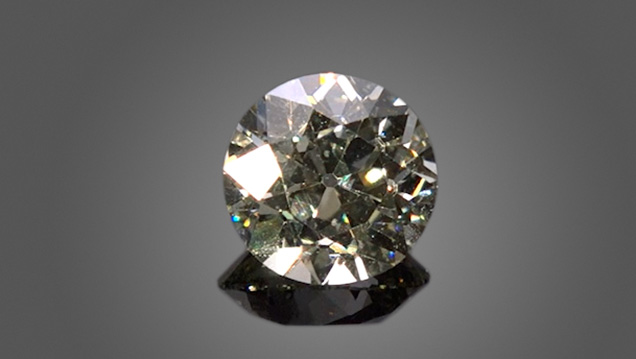
Their clients seek the smallest possible environmental footprint—as Holstein points out, “Diamonds are the ultimate recyclable material, because they are so hard,” allowing them to be used in jewelry again and again—or choose, for other reasons, to avoid newly mined gems. Many simply love the appearance and mystique of large antique-cut diamonds. The oldest one in stock was a Peruzzi-cut diamond with a double-cut bottom and a triple-cut top; the diamond came from a Victorian ring that it clearly predated. Diamond’s hardness allows a long journey through many cuts and several mountings. Holstein explained, “I like to think that there is probably a modern brilliant, which was a transitional cut, which was an Old European cut, which was an old cushion, which was a Peruzzi, which was a Mazarin, which was a table cut, and which was a point cut.”
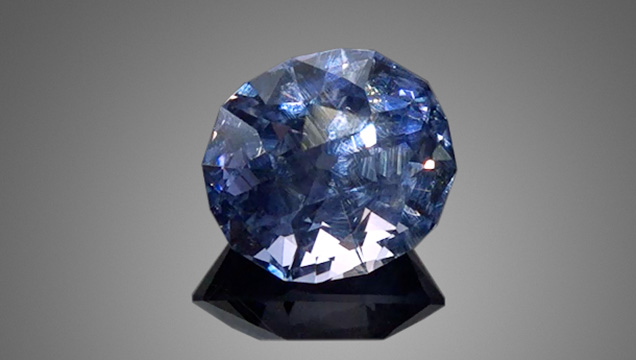
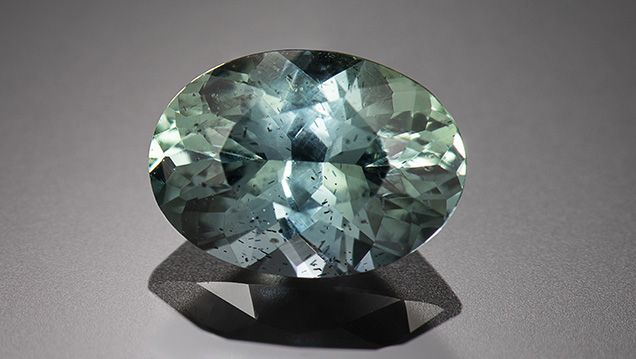
With the emergence of the “alternative bridal market,” Holstein and Moncada see designers choosing to work with colored stones instead of diamonds. In these cases, they work with a large supply of corundum. While they carry fine classic and antique blue sapphire (figure 2), their clientele gravitates toward softer blues, teals, and greens (figure 3); Montana and Australian bi- and parti-color sapphire are also popular. Holstein would like to see a move toward spinel and garnets by their bridal clients.
Perpetuum is the only company to achieve the SCS Recycled Gemstone Standard, a third-party certification for 100% post-consumer recycled diamonds and gemstones. The SCS annually audits all aspects of a business to ensure it is a responsible source before awarding this certification. A company must prove, for instance, that its environmental footprint decreases every year while recycled inventory increases annually. The latter has become difficult for Perpetuum, as they now carry recently mined Montana and Australian sapphire to meet their clients’ needs. Doing so has lowered their level of recycled gemstones to below 100%.
Holstein said he has never been able to separate the jewelry pieces he loves from the issues endemic to the industry. He has always been aware that the makings are “from someone else’s backyard.” He considers it his responsibility to engage in ethical, environmentally sustainable and responsible practices because they are better for the communities that mine and cut the metals and stones that help him make a living; this is at the core of his business practices. Perpetuum’s booth in Tucson allows him to meet with new and existing clients and educate them on these matters that are close to his heart.
Jennifer-Lynn Archuleta is the editor of Gems & Gemology.
The Tucson shows were busy for Perpetuum Jewels (New York and San Francisco), a wholesaler specializing in post-consumer recycled diamonds and colored stones in original, antique cuts. They also work with mine-to-market gemstones and estate jewelry. Co-founder Jared Holstein spoke to us about the importance of recycled gems to the industry (figure 1).
Perpetuum works mainly with designers and jewelry stores in the bridal market. The company originally sought to provide alternatives to newly mined material, focusing on stones cut before 1940. They are active on social media and with organizations such as the Women’s Jewelry Association and Ethical Metalsmiths, which drives traffic their way. Holstein and his partner, Jay Moncada, enjoy working with antique stones because each one is different. Rather than achieving a “mathematical ideal of what a stone should look like,” each is cut to different proportions and has a history and character all of its own. Holstein teaches his clients the progression from the first point cut (with eight facets) to today’s multifaceted cuts. While they have a good deal of stock for center stones, they also have antique melee for eternity bands and other pieces.
Loading video player...
Recycled gemstones from Perpetuum Jewels
Their clients seek the smallest possible environmental footprint—as Holstein points out, “Diamonds are the ultimate recyclable material, because they are so hard,” allowing them to be used in jewelry again and again—or choose, for other reasons, to avoid newly mined gems. Many simply love the appearance and mystique of large antique-cut diamonds. The oldest one in stock was a Peruzzi-cut diamond with a double-cut bottom and a triple-cut top; the diamond came from a Victorian ring that it clearly predated. Diamond’s hardness allows a long journey through many cuts and several mountings. Holstein explained, “I like to think that there is probably a modern brilliant, which was a transitional cut, which was an Old European cut, which was an old cushion, which was a Peruzzi, which was a Mazarin, which was a table cut, and which was a point cut.”
With the emergence of the “alternative bridal market,” Holstein and Moncada see designers choosing to work with colored stones instead of diamonds. In these cases, they work with a large supply of corundum. While they carry fine classic and antique blue sapphire (figure 2), their clientele gravitates toward softer blues, teals, and greens (figure 3); Montana and Australian bi- and parti-color sapphire are also popular. Holstein would like to see a move toward spinel and garnets by their bridal clients.
Perpetuum is the only company to achieve the SCS Recycled Gemstone Standard, a third-party certification for 100% post-consumer recycled diamonds and gemstones. The SCS annually audits all aspects of a business to ensure it is a responsible source before awarding this certification. A company must prove, for instance, that its environmental footprint decreases every year while recycled inventory increases annually. The latter has become difficult for Perpetuum, as they now carry recently mined Montana and Australian sapphire to meet their clients’ needs. Doing so has lowered their level of recycled gemstones to below 100%.
Holstein said he has never been able to separate the jewelry pieces he loves from the issues endemic to the industry. He has always been aware that the makings are “from someone else’s backyard.” He considers it his responsibility to engage in ethical, environmentally sustainable and responsible practices because they are better for the communities that mine and cut the metals and stones that help him make a living; this is at the core of his business practices. Perpetuum’s booth in Tucson allows him to meet with new and existing clients and educate them on these matters that are close to his heart.
Jennifer-Lynn Archuleta is the editor of Gems & Gemology.