
Conversation with Color Source Gems
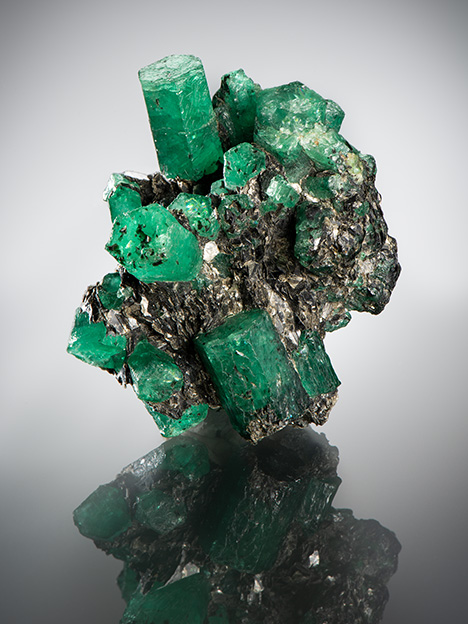
Rough emerald crystals in a black host rock (figure 1) at the Color Source Gems booth stood out against the AGTA show’s variety of cut stones and jewelry. Moshe Chalchinsky, president of New York–based Color Source, first admired the specimen on a supplier’s desk during a buying trip to Brazil. Later, upon receiving the shipment of emeralds he had purchased, he was surprised to find the rough among them. For more than 30 years, it has accompanied him to every show. “It’s like a mascot, a good luck charm,” said Rachel Chalchinsky, his wife and the company’s executive vice president. Although many have wanted to buy the emerald, it is not for sale.
While the emerald rough is their mascot, Color Source Gems has traditionally specialized in ruby, sapphire, and emerald (cut stones and jewelry). Moshe said that the current trend is more affordable gems, so they are branching out into tsavorite, spinel, and rhodolite. This year spinel was very popular—especially gray spinel, according to Rachel—and visitors were particularly drawn to the grape-like purple of their rhodolite garnets. Large pieces are harder to move, Moshe said. On a recent trip to Sri Lanka and Bangkok, he bought stones mostly between 1 and 5 carats.
Rachel said the gemstones they look for—clean, well cut, and well defined, with beautiful, consistent color—have become less available and more expensive. They stick to classic jewelry designs such as three-stone rings and tennis bracelets. Moshe said the market has changed because jewelry is often sold on memo now, which is not easy to compete with. They have begun focusing more on stones; two of their sons have joined the business and are also more interested in stones than jewelry.
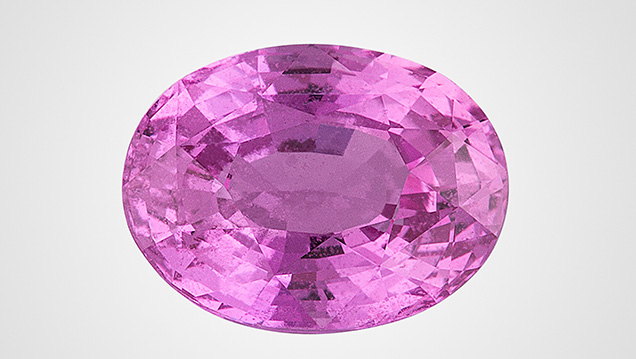
Rachel sees social media, primarily Instagram, as a major force in the demand for colored stones. Instagram influencers, she said, are increasing the desire for stones people may not have been aware of, like Malaya garnet. People want something different now, a little out of the box, according to Moshe. Rachel noted that there’s a big trend toward parti-color and fancy-color sapphires (figure 2) because they are different from traditional sapphire.
While Rachel is the fourth generation of a family in the industry, Moshe was new to the trade 35 years ago. After coming to the United States from Israel, he studied marketing and then sold insurance. He played soccer with people in the jewelry industry, one of whom invited Moshe to work for him. “I was running on 47th Street, up and down, knocking on doors,” he said. In the mid-1980s, he founded MCR Gems (renamed Color Source Gems in 2015). Moshe first came to Tucson more than 20 years ago.
Asked what’s important to him from day to day, Moshe said, “It’s about service….and trust. And I always treat my suppliers the right way.” Rachel added that Color Source has had some of the same suppliers for over 30 years.
“We can’t say no to anybody,” one of Moshe’s sons told him recently. “If it exists, tell them ‘I’ll find it for you.”
.jpg "YMAL GIA Ed")


