
In the previous issue of Gems & Gemology, Dr. James Shigley’s editorial provided a thoughtful retrospective on the journal’s evolution over its 90-year history. This editorial offers a glimpse into the future of gemology, as illuminated by three groundbreaking feature articles in this Fall 2024 issue.
“From diamond cut evaluation to cutting-edge technological advancements, these articles highlight exciting transformations on the horizon.”
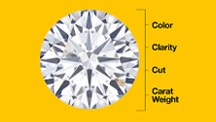
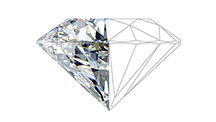
In the lead article, GIA’s Dr. Ilene Reinitz and fellow researchers present a paradigm-shifting approach to assessing the cut of oval-, pear-, and marquise-shaped diamonds. By combining rigorous research methods—including a large-scale international survey of observers over several years and the use of 3D modeling and virtual facet maps to analyze light behavior in diamonds—the authors lay the groundwork for implementing a useful cut grading system for fancy-shaped diamonds.
Next, Dr. Matthew Hardman and GIA colleagues harness the power of machine learning algorithms to identify gemstones, determine their provenance, and detect treatments with remarkable accuracy and speed. Through meticulous testing and validation, they achieved error rates of less than 5% and a substantial reduction in indeterminate classifications. This pioneering work establishes machine learning as an effective tool to augment traditional microscopic, spectroscopic, and geochemical methods. As the global gemstone market navigates the complexities of treated and laboratory-grown products, this technology could be vital in maintaining the industry’s integrity and consumer confidence.
Finally, GIA’s Michael Magee explores the transformative potential of artificial intelligence in jewelry design. Magee systematically assesses five leading generative AI tools, demonstrating their ability to create stunningly realistic and diverse jewelry designs from simple text and image prompts. The article also addresses the emerging ethical, legal, and regulatory concerns surrounding the proliferation of AI-generated jewelry designs. But even as AI technology advances, the article reminds us that humans are still indispensable in conveying the stories of jewelry and gemstones.
From diamond cut evaluation to cutting-edge technological advancements, these articles highlight exciting transformations on the horizon. The use of machine learning and artificial intelligence in gemology will continue to advance and accelerate in the coming years. Deep mathematics is integral to GIA’s work around revolutionizing the approach to fancy cut grading. As my longtime colleague Dr. Shigley noted in the Summer 2024 issue’s editorial, advanced scientific techniques are now commonly used in gemological laboratories. He also wrote that sophisticated instruments will become more portable and accessible. But advanced technology alone won’t solve all identification challenges—existing instruments and techniques will remain vital in maintaining the quality of the data.
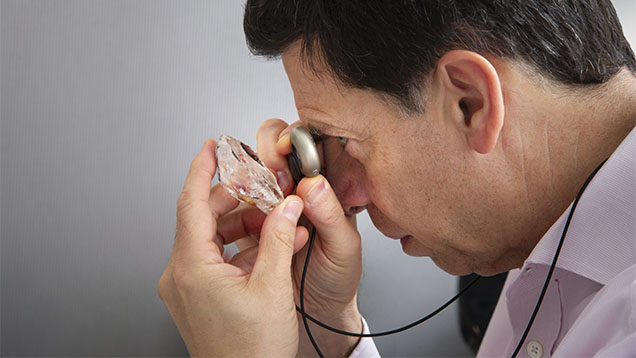
While technology marches on, I believe we must continue to look backward. During his tenure as a Harvard professor, the well-known historian of business and strategy Alfred D. Chandler routinely asked his classes and colleagues, “How can you know where you’re going if you don’t know where you have been?” Fundamental observational gemology will be as important in the future as it has been in the past, not only as a check and balance with the proliferation of new instruments, AI, and machine learning, but also for the storytelling of gems. As the dynamic evolution of gemology continues, Gems & Gemology remains committed to bridging tradition and innovation.
In the previous issue of Gems & Gemology, Dr. James Shigley’s editorial provided a thoughtful retrospective on the journal’s evolution over its 90-year history. This editorial offers a glimpse into the future of gemology, as illuminated by three groundbreaking feature articles in this Fall 2024 issue.
“From diamond cut evaluation to cutting-edge technological advancements, these articles highlight exciting transformations on the horizon.”
In the lead article, GIA’s Dr. Ilene Reinitz and fellow researchers present a paradigm-shifting approach to assessing the cut of oval-, pear-, and marquise-shaped diamonds. By combining rigorous research methods—including a large-scale international survey of observers over several years and the use of 3D modeling and virtual facet maps to analyze light behavior in diamonds—the authors lay the groundwork for implementing a useful cut grading system for fancy-shaped diamonds.
Next, Dr. Matthew Hardman and GIA colleagues harness the power of machine learning algorithms to identify gemstones, determine their provenance, and detect treatments with remarkable accuracy and speed. Through meticulous testing and validation, they achieved error rates of less than 5% and a substantial reduction in indeterminate classifications. This pioneering work establishes machine learning as an effective tool to augment traditional microscopic, spectroscopic, and geochemical methods. As the global gemstone market navigates the complexities of treated and laboratory-grown products, this technology could be vital in maintaining the industry’s integrity and consumer confidence.
Finally, GIA’s Michael Magee explores the transformative potential of artificial intelligence in jewelry design. Magee systematically assesses five leading generative AI tools, demonstrating their ability to create stunningly realistic and diverse jewelry designs from simple text and image prompts. The article also addresses the emerging ethical, legal, and regulatory concerns surrounding the proliferation of AI-generated jewelry designs. But even as AI technology advances, the article reminds us that humans are still indispensable in conveying the stories of jewelry and gemstones.
From diamond cut evaluation to cutting-edge technological advancements, these articles highlight exciting transformations on the horizon. The use of machine learning and artificial intelligence in gemology will continue to advance and accelerate in the coming years. Deep mathematics is integral to GIA’s work around revolutionizing the approach to fancy cut grading. As my longtime colleague Dr. Shigley noted in the Summer 2024 issue’s editorial, advanced scientific techniques are now commonly used in gemological laboratories. He also wrote that sophisticated instruments will become more portable and accessible. But advanced technology alone won’t solve all identification challenges—existing instruments and techniques will remain vital in maintaining the quality of the data.
While technology marches on, I believe we must continue to look backward. During his tenure as a Harvard professor, the well-known historian of business and strategy Alfred D. Chandler routinely asked his classes and colleagues, “How can you know where you’re going if you don’t know where you have been?” Fundamental observational gemology will be as important in the future as it has been in the past, not only as a check and balance with the proliferation of new instruments, AI, and machine learning, but also for the storytelling of gems. As the dynamic evolution of gemology continues, Gems & Gemology remains committed to bridging tradition and innovation.