
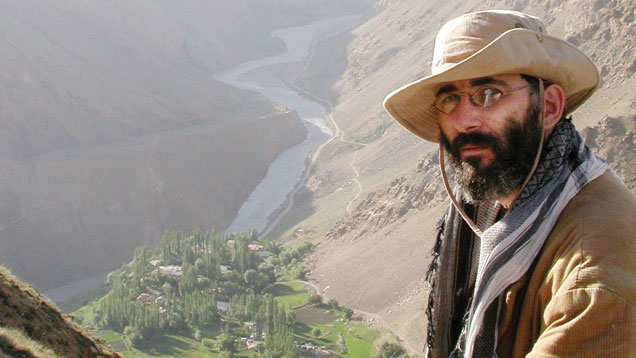
Vincent Pardieu (B.Sc., G.G.A., GIA GG), GIA Supervisor of Field Gemology in Thailand, is somewhat of a legendary figure. After working for ten years as a tour guide in Southeast Asia, he decided to pursue his interest in gems and earned his GIA GG. Pardieu has made numerous expeditions to some of the most remote corners of the world to chronicle the mining, trading, and production of gems. His discoveries enrich GIA course materials.
Were you always interested in gems?
I was always interested in nature, and my love for gems grew slowly over the years. I began to realize that gems belonged to a larger world; they are not just pretty little things. They touch everything: art, history, chemistry, and geology.
Any favorite places you’ve visited?
Going to Vietnam in search of a ruby mine. The landscape was so beautiful it looked like it could have been in a movie. There were vast stretches of rice fields, jungles, and bamboo groves.
Thoughts about your GIA education?
My education from GIA has been extraordinarily helpful. It has been a real asset that has helped me throughout my career. The courses were quite comprehensive, and I learned how to properly identify gemstones – a skill I use daily.
Why is it important to get a specimen from a mine?
GIA has to do its homework to be able to identify the origin of gemstones, and this requires having a reference sample. The best way to get a reference stone is to go to the source.
What is it like at a mining site?
The atmosphere is wonderful – it’s filled with rumors, expectations, and excitement. You have thousands of miners thinking, “This is my chance to become a millionaire!” Some poor diggers will find a beautiful stone and become rich. Some rich businessmen will become poor because they can’t tell naturals from synthetics, and will be tricked into buying imitations.
Any other interesting stories?
The first time I took the 20-stone exam at GIA, I failed it. That was a good thing. When you fail an exam like this, you remember that you don’t know everything. You learn not to be over-confident.
Do you have any advice for students who want to have a career like yours?
Believe in yourself. Just go do it.
Vincent Pardieu (B.Sc., G.G.A., GIA GG), GIA Supervisor of Field Gemology in Thailand, is somewhat of a legendary figure. After working for ten years as a tour guide in Southeast Asia, he decided to pursue his interest in gems and earned his GIA GG. Pardieu has made numerous expeditions to some of the most remote corners of the world to chronicle the mining, trading, and production of gems. His discoveries enrich GIA course materials.
Were you always interested in gems?
I was always interested in nature, and my love for gems grew slowly over the years. I began to realize that gems belonged to a larger world; they are not just pretty little things. They touch everything: art, history, chemistry, and geology.
Any favorite places you’ve visited?
Going to Vietnam in search of a ruby mine. The landscape was so beautiful it looked like it could have been in a movie. There were vast stretches of rice fields, jungles, and bamboo groves.
Thoughts about your GIA education?
My education from GIA has been extraordinarily helpful. It has been a real asset that has helped me throughout my career. The courses were quite comprehensive, and I learned how to properly identify gemstones – a skill I use daily.
Why is it important to get a specimen from a mine?
GIA has to do its homework to be able to identify the origin of gemstones, and this requires having a reference sample. The best way to get a reference stone is to go to the source.
What is it like at a mining site?
The atmosphere is wonderful – it’s filled with rumors, expectations, and excitement. You have thousands of miners thinking, “This is my chance to become a millionaire!” Some poor diggers will find a beautiful stone and become rich. Some rich businessmen will become poor because they can’t tell naturals from synthetics, and will be tricked into buying imitations.
Any other interesting stories?
The first time I took the 20-stone exam at GIA, I failed it. That was a good thing. When you fail an exam like this, you remember that you don’t know everything. You learn not to be over-confident.
Do you have any advice for students who want to have a career like yours?
Believe in yourself. Just go do it.