
Large Natural Quahog Pearl
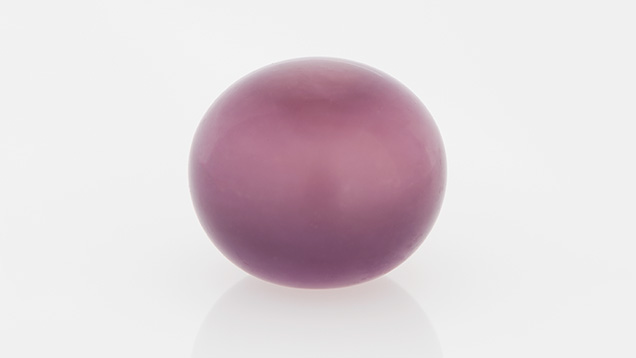
Real-time microradiography revealed a tight internal structure, a common characteristic of certain natural non-nacreous/porcelaneous pearls. Raman spectroscopy using 514 nm laser excitation (figure 2) showed characteristic aragonite peaks at 702, 706, and 1086 cm–1, as well as 1130 and 1520 cm–1 peaks related to a mixture of polyenic (polyacetylenic) compounds, the natural pigments responsible for its purple color, as previously observed in similar pearls (Winter 2008 GNI, pp. 374–375). The characteristic natural purple color and non-nacreous porcelaneous appearance indicated a pearl from the bivalve mollusk Mercenaria mercenaria (belonging to the Veneridae family), also referred to as the “northern quahog.”
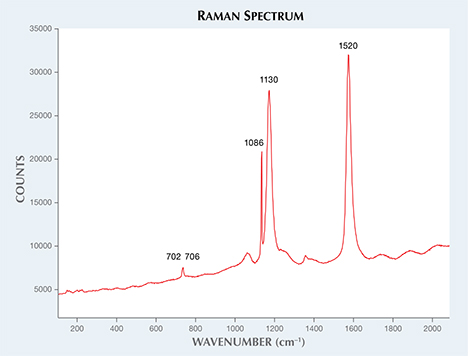
Figure 2. The quahog pearl’s Raman spectrum showed the typical aragonite peaks
seen in most pearls, together with 1130 and 1520 cm–1 peaks related to a natural
coloring compound.
Quahogs are native to the Atlantic shores of North America from Canada to Georgia, especially on the coast of the New England states, and can also be found along California’s Pacific coast. They can produce non-nacreous porcelain-like pearls, and their shells typically exhibit an uneven white and purple interior color (figure 3). Quahog pearls may occur in a variety of colors ranging from white to brown and from faint pinkish purple to dark purple. Like other natural pearls, quahog pearls are rarely spherical. Button shapes with flat bases are most often encountered.seen in most pearls, together with 1130 and 1520 cm–1 peaks related to a natural
coloring compound.
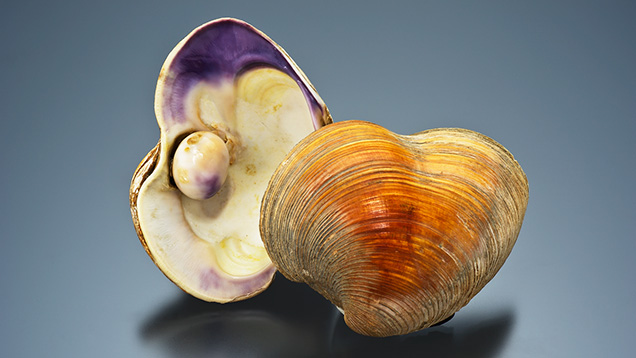
Figure 3. This quahog shell from the eastern coast of the United States has a naturally attached pearl. Photo by Robert Weldon.
Natural northern quahog pearls are often submitted to GIA labs. Most are below 10 carats with a flat-based button shape, usually with a dark or light purple color, and tales of their accidental discovery while eating clams are not uncommon. This quahog pearl’s large size, clean surface, fabulous luster, near-round shape, and evenly distributed rich color combine to make it an exceptionally fine and rare example of its type..jpg "YMAL GIA Ed")


