
◂ BACK TO GEM ENCYCLOPEDIA
Pearl
Perfect shining spheres. Lustrous baroque forms. Seductive strands, warm to the touch. Pearls are simply and purely organic.

See Gem As
Tools
Research
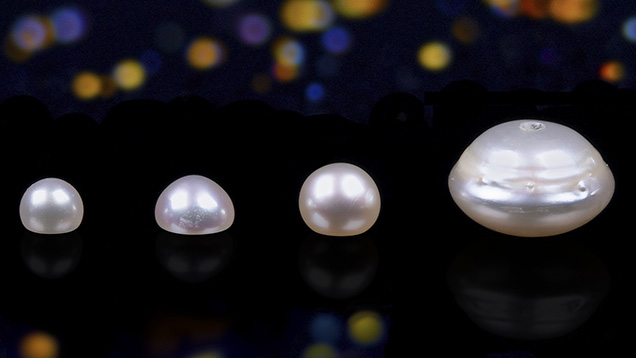
Fine Linear Structures in Non-Bead Cultured Pearls
Analysis of internal structures in non-bead cultured pearls submitted to GIA’s Mumbai laboratory.
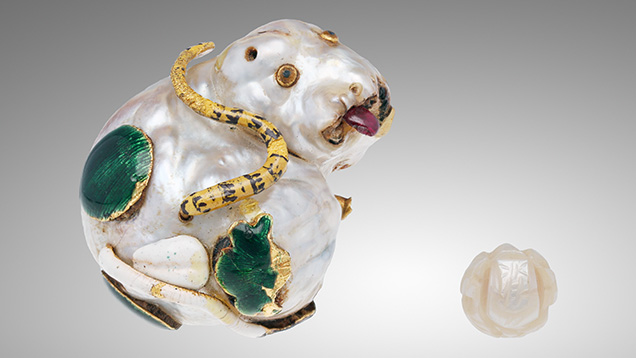
Two Pearls of Indian Cultural Significance
Two pearls representing Indian deities were recently examined in the Mumbai laboratory.
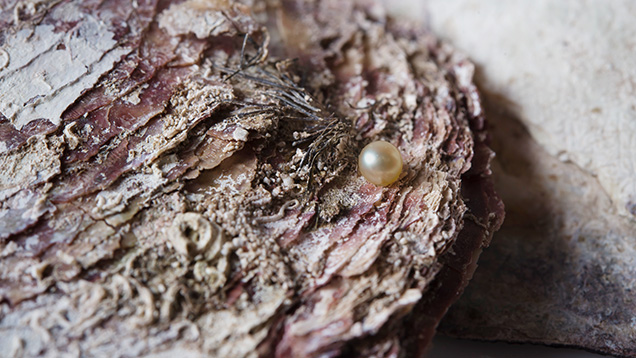
An Unusual Metallic Core in a Natural Pinctada radiata Pearl from Kuwait
Examination of natural pearls from Kuwait reveals one with a suspected metal oxide at the core.
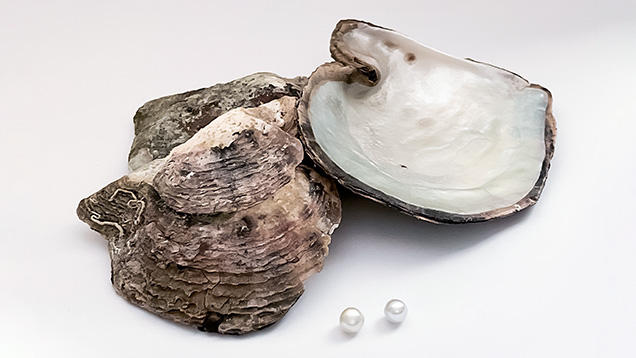
Pinctada radiata Atypical Bead Cultured Pearls from the UAE
GIA’s Mumbai laboratory reports on pearl samples from a culturing experiment by the Suwaidi Pearl Farm in the UAE.
Exceptionally Rare Pearls from ECIJA
An impressive variety of natural, wild, nacreous, and non-nacreous pearls were on display at the GJX show.
Sixth Annual Gianmaria Buccellati Foundation Award Winner
A graduate of GIA’s Jewelry Design program in London is the recipient of the 2022 Gianmaria Buccellati Foundation Award.
Brenda Smith Jewelry Designs
Award-winning jewelry designer Brenda Smith shares some of her creations at the AGTA GemFair in Tucson.
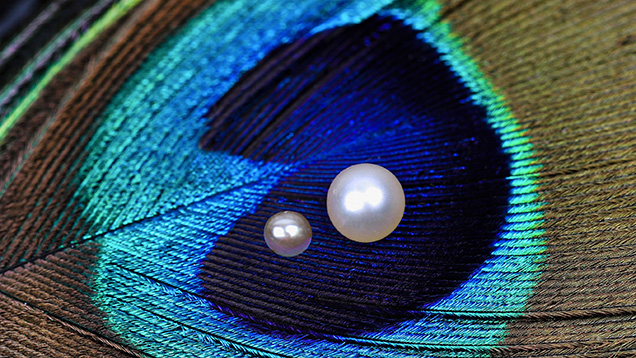
Microscopic Shells in Natural Pearls from Pinctada radiata
Two pearls from Bahrain containing minute shells are examined at GIA’s Mumbai laboratory.
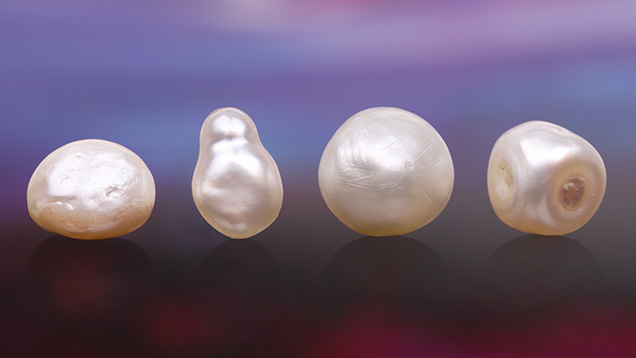
“Atypical Beads”: Variations of Two Types of Nuclei
Four atypical bead cultured pearls with variations on two types of nuclei are examined in the Mumbai laboratory.
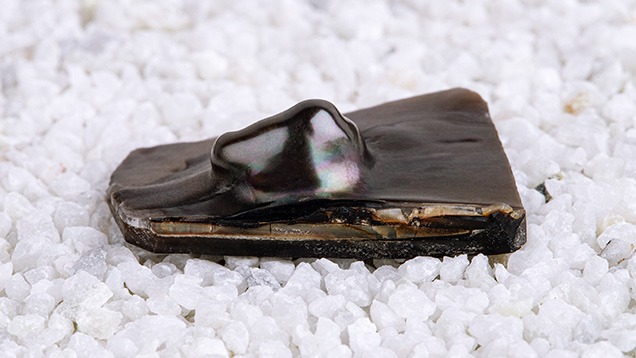
A Gastropod Shell in a Unique Shell Blister
GIA’s Mumbai laboratory encounters a unique example of a shell blister encompassing a gastropod shell.

Bright Orange Sapphire from Greenland
A transparent bright orange sapphire from Greenland stands out at the AGTA show in Tucson.
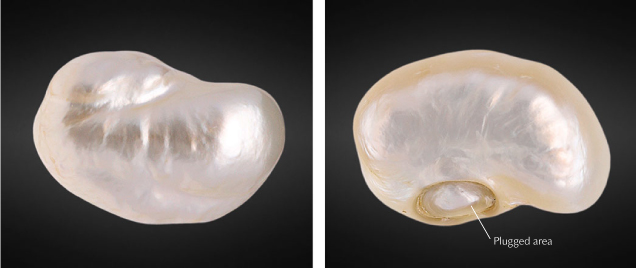
A Partially Hollow Natural Blister Pearl Filled with Foreign Materials
A very large baroque white pearl is further examined in the Mumbai laboratory due to its suspicious heft.