
See Gem As
Tools
Research
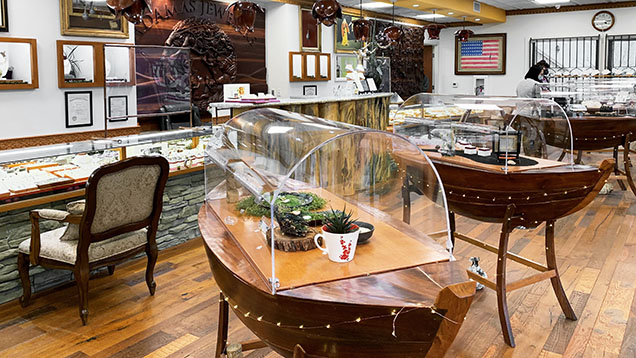
Never Stop Innovating: Gem Artist Chi Huynh
Profiles a groundbreaking gem artist on a quest to bring new concepts, techniques, and products to the industry.
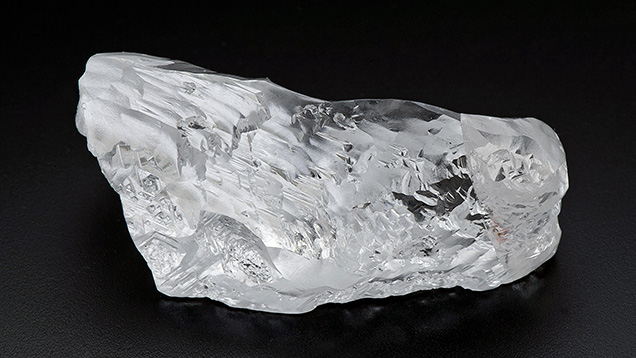
Methods and Challenges of Establishing the Geographic Origin of Diamonds
Examines the current available means of determining the geographic origin of gem-quality diamond, which are based largely on trace element and isotopic characteristics. For now, no method exists for determining the provenance of a random individual diamond.
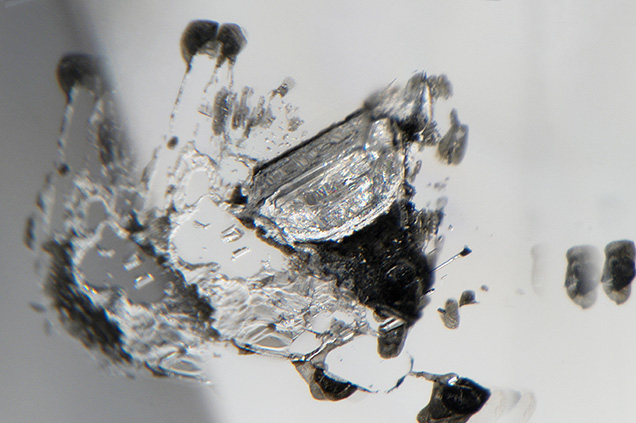
Breyite Inclusion in Diamond
A breyite inclusion suggests the sublithospheric origin of a diamond examined in GIA’s New York laboratory.

Smithsonian’s Great American Diamonds Exhibit
Two impressive diamonds from Arkansas and Colorado are featured in the Great American Diamonds exhibit at the Smithsonian’s National Museum of Natural History.

Natural Diamond with Extensive Network of Etch Channels
Numerous etch channels are observed in a 5.19 ct type IIa natural diamond.

A Look at Diamonds and Diamond Mining in Guyana
Reports on diamonds from Guyana’s alluvial deposits, including mining history and practices.

Deep-Focus Earthquakes: The Heartbeat of a Diamond Factory?
The first installment of this column explores the potential role of modern-day deep-focus earthquakes on diamond growth.
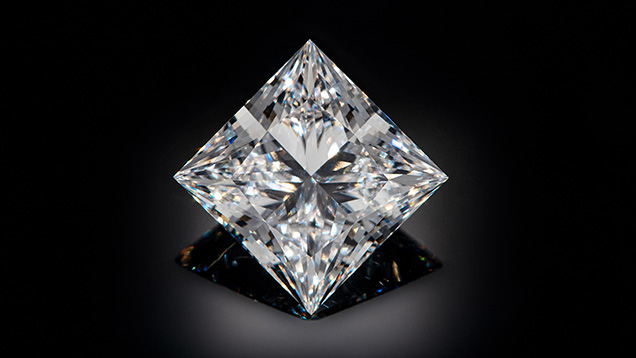
New Record Size for CVD Laboratory-Grown Diamond
The New York laboratory reports on a new record size for CVD laboratory-grown diamond.
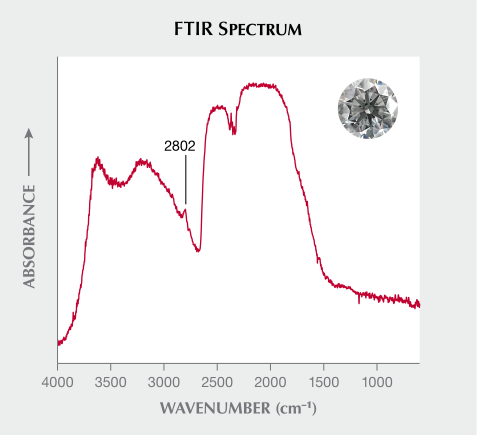

The Type IIb De Beers Cullinan Blue Diamond
GIA’s New York laboratory reports on a 15.10 ct (17.47 × 11.53 × 7.94 mm) Fancy Vivid blue cut-cornered rectangular step cut named the De Beers Cullinan Blue diamond.
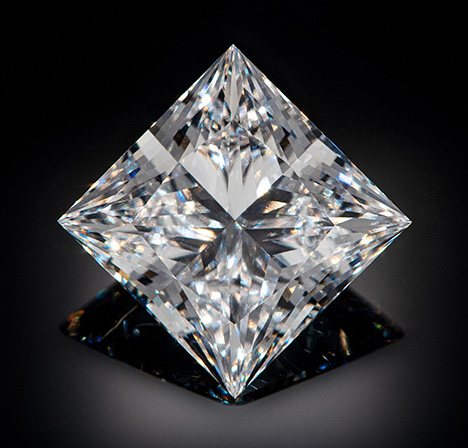
New Record Size for CVD Laboratory-Grown Diamond
GIA’s New York laboratory reports a new record size for CVD laboratory-grown diamond.

Measurement and Characterization of the Effects of Blue Fluorescence on Diamond Appearance
Using customized, image-based measurement systems to quantify the effect of fluorescence on the color, brightness, and transparency of gem diamonds viewed in both face-up and table-down orientations.