
Research Article Search Results
Quench-Crackled Dyed Blue Chalcedony Resembling Larimar
Raman spectroscopy confirms sea-blue beads with a similar appearance to Larimar are actually quench-crackled chalcedony.
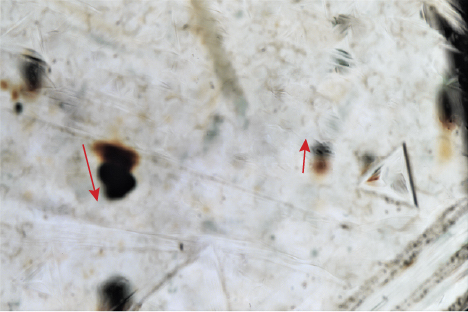
Multiple Radiation Stains Suggest Interesting Geological Residency
A rough diamond crystal weighing 4.05 ct was observed with radiation staining on its surface.
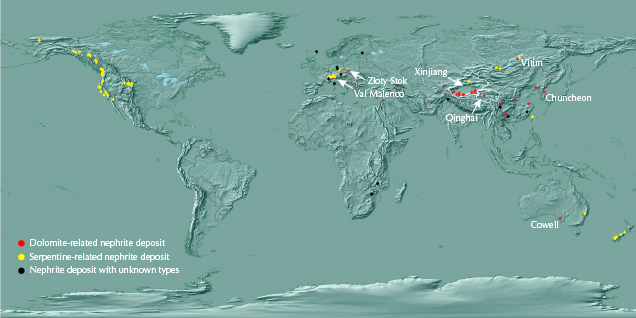
Hydrogen and Oxygen Stable Isotope Ratios of Dolomite-Related Nephrite: Relevance for Its Geographic Origin and Geological Significance
Examines the effectiveness of hydrogen and oxygen isotopes in discriminating dolomite-related nephrites from the four most important occurrences worldwide.
Marble Imitation of Jadeite Rough
In recent decades, jadeite prices have risen dramatically. Driven by profit, a variety of imitations are found in the jadeite jewelry market.
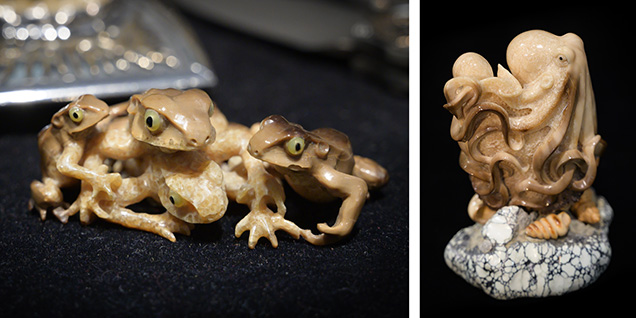
Fossil Ivory Update with Lee Downey
Lee Downey, owner of Artifactual (Tucson, Arizona), spoke with us in early 2020 about his 35 years in the fossil ivory carving trade and the impact of ivory bans on his business.
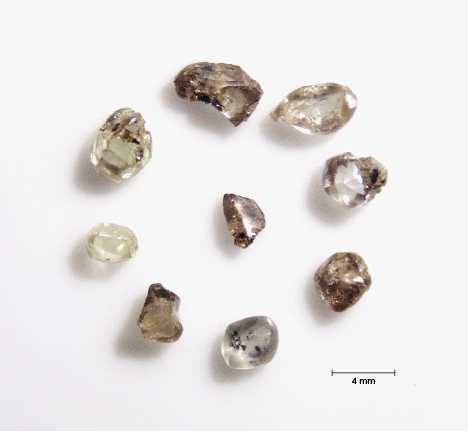
Finders, Keepers: Field Trip to Crater of Diamonds, USA
There’s only one place on earth where the general public can prospect for diamonds directly from a primary kimberlite pipe: Crater of Diamonds State Park.
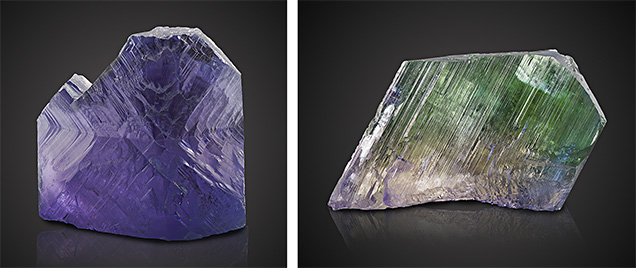
The “Fragility of the Eternal” Kunzite: Origin, Cutting, and Identification
A master gem carver bases his latest design off a stunning stained glass window when attempting the world’s largest known cut kunzite.
Occurrence of Petrified Woods in the Russian Far East: Gemology and Origin
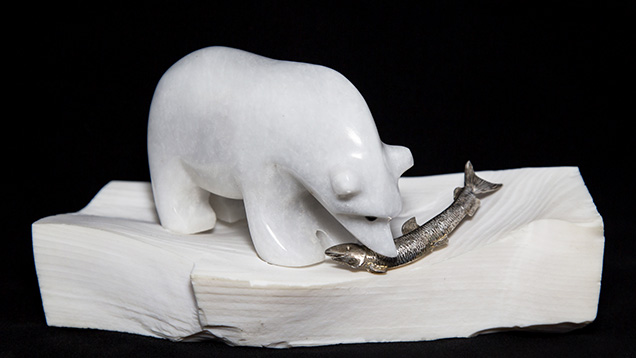
Scientists in Russia construct an origin story through the analysis of petrified wood popularly used in the souvenir trade.
Greenish Blue Glass Imitating Gem Silica
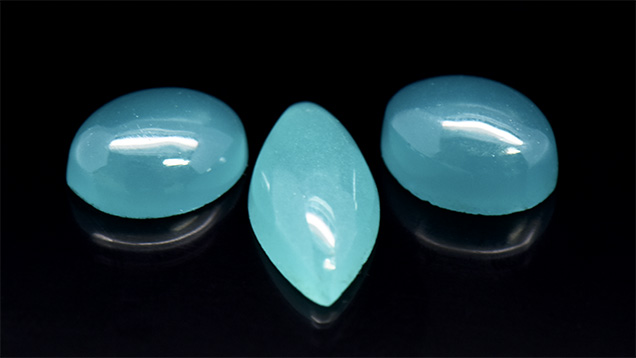
Gem silica, also known as “chrysocolla chalcedony,” is considered the most valuable variety of chalcedony.
Purplish Pink Diaspore Reportedly from Afghanistan
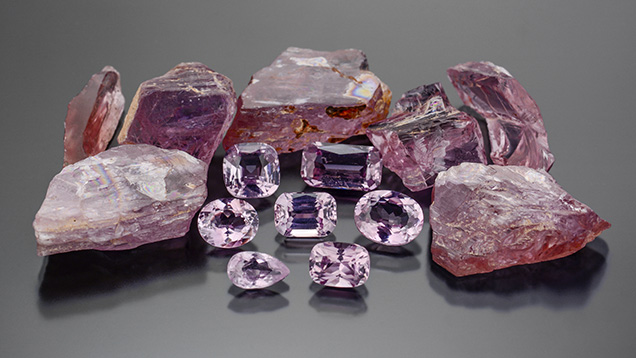
Diaspore, an orthorhombic aluminum oxide hydroxide mineral with the formula AlO(OH), is a relative newcomer to the jewelry scene, with some stones possessing a captivating ability to change color between pale green, yellow, pink, and purple when viewed in different sources of light.
Investigations into Corundum and Beryl Color, Jade Artistry, the Chivor Emerald Mine’s History, and Swiss Rhodonite…
An overview of the Spring 2020 Gems & Gemology content.

Diamonds Are Not Forever! Diamond Dissolution
Violent kimberlite eruptions impact the surface features of diamonds, which can give scientists useful information about how diamonds react with the fluids in the mantle.