
Lapis Lazuli
Lapis is a beautiful rock; an aggregate of several minerals, mainly lazurite, calcite, and pyrite.
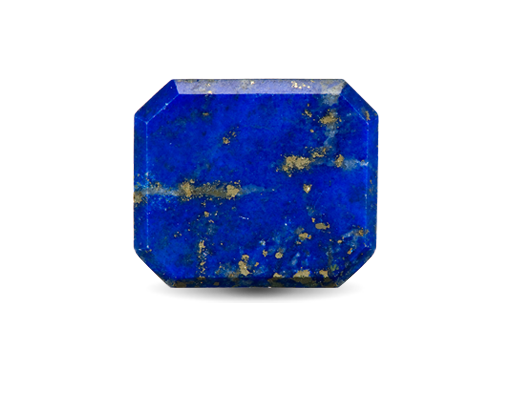
Overview
ABOUT LAPIS LAZULI
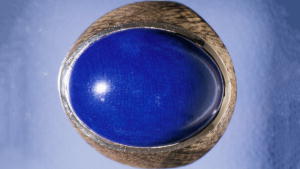
This ancient rock is an aggregate of several minerals. The three major minerals that comprise lapis are lazurite, calcite, and pyrite. The rock can also contain lesser amounts of diopside, amphibole, feldspar, or mica. Lazurite is the ingredient responsible for producing the gem’s most prized color—bright royal blue.
ANCIENT
Lapis was treasured by the ancient civilizations of Mesopotamia, Egypt, China, Greece, and Rome.
Glitter
Golden flecks of pyrite create a sparkle in lapis lazuli.
Marco Polo
In 1271, Marco Polo described ancient Bactria’s lapis mines.
FACTS
Mineral: Rock
Chemical composition: An aggregate
Color: Greenish blue to violetish blue
Refractive index: 1.500, sometimes 1.670
Birefringence: None
Specific gravity: 2.75 (+/- 0.25)
TREATMENTS
There are a number of processes used to alter the color, apparent clarity, or improve the durability of gems.
SYNTHETICS
Some gemstones have synthetic counterparts that have essentially the same chemical, physical, and optical properties, but are grown by man in a laboratory.
IMITATIONS
Any gem can be imitated—sometimes by manmade materials or by natural materials chosen by man to impersonate a particular gem.
WHY WE LOVE THIS GEMSTONE

1
EXQUISITE COLOR
From ancient times to the present, many civilizations have prized lapis lazuli for its exquisite deep blue color.
2
6,500 YEARS
Scholars of ancient civilizations believe that the link between man and lapis lazuli stretches back beyond 6,500 years.
3
ULTRAMARINE
Renaissance painters used lapis to make “ultramarine” blue, an expensive pigment of unrivaled brightness and stability.
QUALITY FACTORS
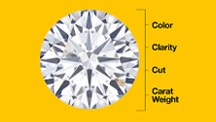
Lapis lazuli is valued for its dark blue to violetish blue color.
COLOR
The gem’s most-prized color is a uniform dark blue to violetish blue, without any visible calcite.
CLARITY
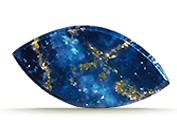
Top-quality lapis can display small, attractively distributed, gold-colored flecks of pyrite.
CUT
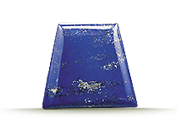
Lapis is typically cut into cabochons, beads, inlays, or tablets.
CARAT WEIGHT
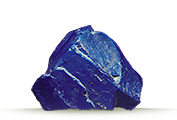
Lapis rough can be large enough to fashion into decorative carvings.
LAPIZ LAZULI QUALITY FACTORS: THE COMPREHENSIVE GUIDE
Research
Explore sources, gemological research, and the role of gems in history.
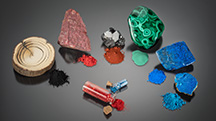
Gems on Canvas: Pigments Historically Sourced from Gem Materials
Britni LeCroy , Nov 11, 2022
RECOMMENDED READING
Colored Gemstones: The Antoinette Matlins Buying Guide
Antoinette L. Matlins
.png "reading")
Gemstone Buying Guide: How to Evaluate, Identify, Select & Care for Colored Gems
Renée Newman
Lapis lazuli: in pursuit of a celestial stone
Searight, Sarah