
◂ BACK TO GEM ENCYCLOPEDIA
Turquoise
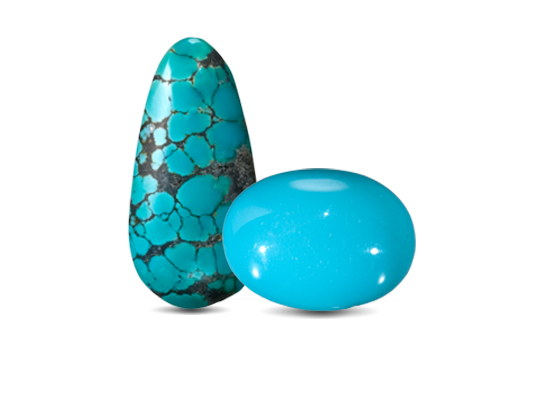
Azure sky, robin’s egg blue: Vivid shades of turquoise define the color that’s named after this gem.
See Gem As
Tools
Research
Turquoise Description
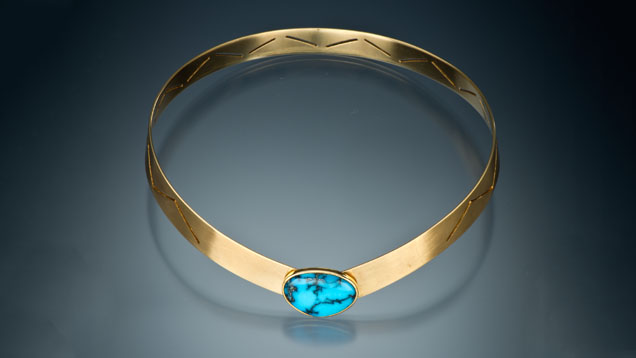
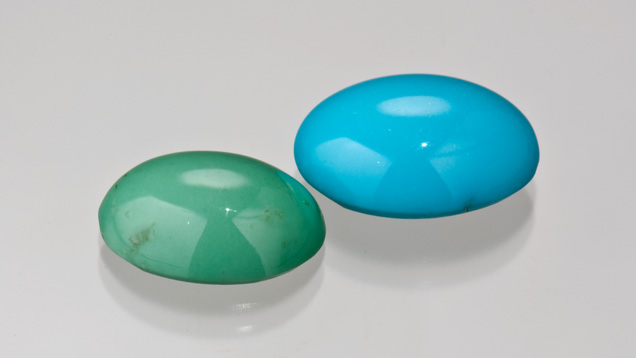
Turquoise might lack the sparkle and clarity of transparent colored gemstones like ruby, emerald, and sapphire, but its multi-layered history and soul-satisfying color make it a desirable gem. Its color can range from dull greens to grass greens to a bright, medium-toned, sky blue
Turquoise Quality Factors
Typically, turquoise is judged on three basic quality factors: color, texture and the presence or absence of matrix. Learn more about turquoise and what makes this gem so sought after!
Abstracts; Winter 1991
This article, from the Winter 1991 issue of Gems & Gemology, is a compilation of abstracts of important gemology-related articles published outside of Gems & Gemology.
Turquoise Planet Earth
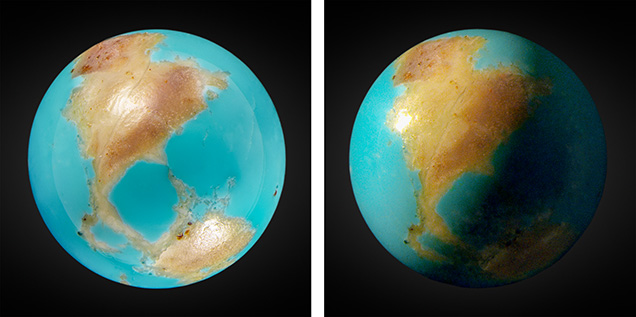
A sphere of Armenian turquoise with natural brown matrix material mimics planet Earth.
Polymer-Impregnated Turquoise
A large “Persian” turquoise cabochon was impregnated with a material that was also present in cavities on its base.

Turquoise-Rock Crystal Composite
Examination of a faceted rock crystal backed by a slice of turquoise—an obvious but unusual combination of gem materials.
A Historic Turquoise Jewelry Set Containing Fossilized Dentine (Odontolite) and Glass
Investigating a set of six antique brooches set with diamonds and light blue cabochons.