
Amber
Amber is nature’s time capsule. This fossilized tree resin contains remnants of life on earth millions of years ago.

Buyer's Guide
Amber can be white, yellow, and orange to reddish brown. Transparent amber is more valuable than cloudy material. However, interesting plant or animal inclusions add to the value of any amber specimen.
FIND A JEWELER
Use your zip code to find a jeweler near you with GIA reports and GIA-trained staff.
FIND A REPORT
Verify the information on your report matches what is archived in the GIA report database.
What To Look For
COLOR CAN BE AN IMPORTANT QUALITY FACTOR FOR AMBER
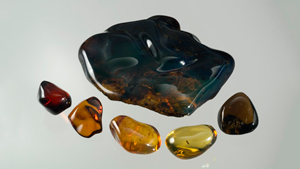
Amber comes in more colors than just yellow and golden. It might also be white, yellow, and orange to reddish brown. Connoisseurs value reddish amber more than golden amber. Rare pieces can even be blue or green. Pieces which show an attractive bluish or greenish fluorescence can be highly valuable.
CLARITY IS MORE IMPORTANT IF THERE ARE INTERESTING INCLUSIONS
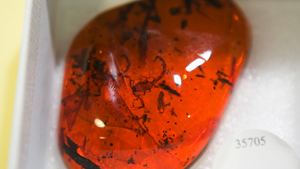
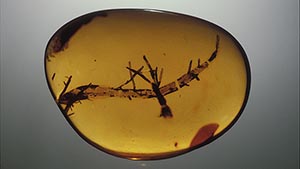
Although transparent amber is more valuable than cloudy material, an interesting plant or animal inclusion adds to the value of an amber specimen. Treatment can clarify cloudy amber somewhat. The resulting amber sometimes exhibits crack-like circular marks called sun spangles.
CARAT WEIGHT ALLOWS FOR PRECISE MEASUREMENTS
Amber is surprisingly light: in fact, it will float in a saturated salt solution—but not in ordinary seawater. This makes it suitable for large beads or pendants that are still comfortable to wear despite their size.
CUT IS TYPICALLY LESS IMPORTANT FOR AMBER
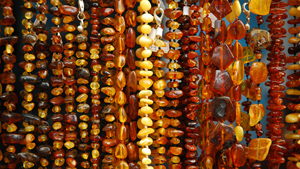
Most amber is polished in free-form shapes, cabochons, beads or might be carved. In rare cases, very transparent material might be faceted for collectors.
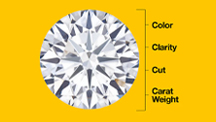
AMBER QUALITY FACTORS: THE COMPREHENSIVE GUIDE
TIPS & ADVICE
1. Be bold with amber.
Amber’s light weight makes it the perfect choice for large earrings and chunky bead necklaces-
even dramatically-scaled designs are still comfortable to wear.
2. Keep amber away from heat.
Amber can melt or burn in high temperatures. Don’t store amber on top of electronics or in
strong light. It’s normal for amber to darken over time, and heat and light can accelerate the
process.
3. Be wary of perfect-looking insect inclusions.
The insects in amber are millions of years old and generally aren’t perfect. Amber imitations
with modern insects or other types of small animals inside are very common.
4. When in doubt, get a lab report.
For a significant purchase an independent laboratory report can confirm that the amber you are
buying is natural and that an inclusion has not been added later.
5. Amber that’s a bright green is a treated material.
The bright yellow green color of “green amber” is a result of heat and pressure treatment.
The final product is valued accordingly.
6. Ambroid, pressed amber, consolidated amber
or reconstructed amber is a composite.
When small pieces of amber are pressed and bonded together under heat and pressure to
make larger pieces, the result is marketed as pressed or reconstructed amber, which sells for
less than non-consolidated pieces.
Questions & Answers
FIND OUT MORE
Amber: Questions & Answers
Caring for Your Amethyst
Keep your amethyst beautiful by following simple care and cleaning guidelines.
DURABILITY

CARE AND CLEANING

TREATMENT
FIND OUT MORE
Amber: The Complete Guide on Caring for your Amber