
Research Article Search Results
10 Tips to Boost Your Career
Joel Schechter, CEO of Honora, shared the key attributes his father, Stanley Schechter, taught him to look for in an exemplary employee - loyalty, honesty, respect and attention to detail - at GIA’s 2009 mini Jewelry Career Fair held in Las Vegas.
Summer 2009 G&G Lab Notes
The “Type” Classification System of Diamonds and Its Importance in Gemology
Knowledge of type allows gemologists to better evaluate if a diamond might be treated or synthetic, and whether it should be sent to a laboratory for testing.
Purplish Pink Spinel from Tajikistan: Before and After Cutting
In November 2008, the Bangkok laboratory was fortunate to have an opportunity to briefly examine seven stones that the client had faceted from this parcel.
Ruby and Sapphire Production and Distribution: A Quarter Century of Change
During the past 25 years, the corundum market has been transformed from one of medium to high-priced gems to one that encompasses nearly all price ranges.
Rubies and Sapphires from Winza, Central Tanzania
Since late 2007, rubies and sapphires have been mined by hand methods from both eluvial and primary deposits at Winza in central Tanzania.
Color Grading “D-to-Z” Diamonds at the GIA Laboratory
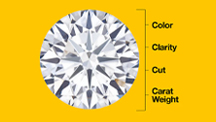
This article discusses the history and ongoing development of GIA's color grading system, and explains how its laboratory applies it.
The Color Durability of “Chocolate Pearls” by Ballerina Pearl Co.
Seven Chocolate Pearls supplied by Ballerina Pearl Co. and 12 untreated Tahitian cultured pearls (for comparison) were exposed to conditions of consumer care and wear.
Gota de Aceite: Nomenclature for the Finest Colombian Emeralds
The finest and rarest emeralds are sometimes said to have an optical effect called gota de aceite.
A History of Diamond Treatments
An Examination of the Napoleon Diamond Necklace
Napoléon Bonaparte gave an extraordinary diamond necklace to his empress, Marie-Louise, in 1811.
Latest-Generation CVD-Grown Synthetic Diamonds from Apollo Diamond Inc.
High-quality CVD-grown diamonds, comparable in color and clarity to natural diamonds, can be identified using a combination of gemological and spectroscopic properties.