
ABSTRACT
The cut quality of a diamond profoundly influences its allure and plays a crucial role in determining its value. This discussion examines the evolution of cut-quality grading and its status. For a long time, it was widely believed that a well-cut diamond maximized the return of light, enhancing its beauty. Proportions were meticulously modeled and calculated to achieve optimal light reflection and refraction. This assumption accounts for only a portion of the phenomena observed. The human visual system processes information in a highly complex manner, often exceeding the scope of straightforward predictive models. The brightness and attractiveness of a diamond depend not only on the quantity of light it returns but also on the intricate contrast patterns created by the virtual facets resulting from the numerous reflections within the diamond, particularly in movement. As we will explore, the interplay of these factors has led to a deeper understanding and more nuanced grading of a diamond's cut quality.
Diamond cut grades are a method used by jewelers and manufacturers to evaluate the quality of a diamond’s proportions, symmetry, and polish, often without seeing the diamond in person, but it helps ensure a high-quality finished product once the diamond is set. Poor proportions, symmetry, or polish result in dull or unattractive diamonds. Assessing diamond cut quality helps jewelers buy diamonds that consumers will prefer. Understanding those systems helps manufacturers make wise decisions in diamond purchases for their collections.
This article summarizes efforts to assign a quality grade for how well diamonds are cut, highlighting several paradigm shifts in static assessment methods prior to the emergence of the two paradigms of the past 70 years. The focus is on modern scientific advances in the perception and application of 3-D modeling in movement and the resulting assessment, on the contemporary complexity of assigning quality grades for how well diamonds are cut, and an overview of potential solutions under study.
INTRODUCTION
Cutting transforms the material properties of diamond into the appearance aspects of gemstones. Exceptional cutting, with attention to optimal proportions, profoundly influences a diamond's brilliance and overall allure, thereby playing a crucial role in determining its value. For the last 150 years, it has been widely believed that a well-cut diamond maximizes the return of light, enhancing its beauty. The most highly valued aspects of diamond gemstones (and jewelry) have evolved as the conditions for wearing diamonds have changed. Lighting environments altered with the introduction of fluorescent lighting in the 1930s, and by 1950, diffuse lighting had become the standard viewing environment for diamonds. Before that, lighting was primarily single-point lighting (e.g., light bulbs, lanterns, candles). Over the past 70 years, proportions have been increasingly meticulously modeled and calculated to achieve optimal light reflection and refraction.
Historically, the pursuit of diamond cut grading sought a simple, short final grade. As specific proportions played a larger role, the goal of reporting cut assessment as a grade relied on a summary of numerical or measurable data.
Summarizing by a single cut grade had its roots in the oversimplified two-dimensional view of ray tracing introduced by Cattelle,1 Smith,2 and Whitlock,3 and embraced by Tolkowsky.4 However, most light traverses a three-dimensional path through the round brilliant cut, with partial reflection and partial loss at each facet interaction and numerous opportunities for the creation of dispersion. For decades, we had a two-dimensional perspective on diamonds, which would then be translated into single-grade summaries.
This limited approach could not account for differences in personal preference for the appearance variations within a single cut grade. In 2005, the Gemological Institute of America (GIA) tried to capture (in its new round brilliant cut grading system) “within each grade category those diamonds that, in general, most individuals would consider better in appearance and cut quality than diamonds in the next lower category.”5 Going forward, a more useful cut grading system should incorporate appearance factors that strongly affect human perception of brilliance and sparkle, including motion-related differences. Such factors are particularly important when assessing the cut quality of fancy shapes and their many faceting arrangements.
BEGINNING ASSUMPTIONS: MIMICKING THE OPTIMAL DIAMOND CRYSTAL
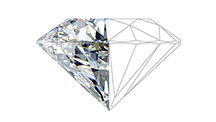
The art of diamond cutting, which transforms rough stones into visually stimulating works of art, has been guided by evolving assumptions since its inception. Diamond octahedra had been set into jewelry, point-up, and those points were then broken by wear. Early diamond cutters began by repairing these to mimic the natural octahedral shapes of diamond crystals. Cutting exactly parallel to a diamond’s natural octahedral faces (Figure 1) was impossible because these planes represent the direction of greatest hardness within the crystal lattice. To work around this, cutters had to adjust the angle of their repair slightly. The resulting “point cut” diamonds had points intentionally made slightly shallower (and, when the outer edge was broken, taller) than the actual apex of a natural octahedral crystal. By carefully adjusting the angles of the octahedral shape, they could polish each face while preserving the optical illusion of a naturally perfect diamond crystal, thereby maximizing weight retention. Through it all, cutters tried to retain as much of the octahedron’s outline as possible, maximizing the apparent size of the finished gem (today we call this ‘spread'). Early standards of cut quality were based on how closely the finished diamond resembled a highly polished, natural octahedron, with further value judged by carat weight, color, and clarity. The pursuit of an ‘ideal cut’ has captivated diamond cutters for centuries—well before terms like ‘brilliant’ were used to describe such expertly finished stones. Even with modern manufacturing improvements, the need to avoid the most resistant planes during polishing persists.
THE FIRST PARADIGM SHIFT IN ASSUMPTIONS: CREATING SPARKLE
As diamond-polishing wheels gained speed in the 1500s by a crank, treadle, waterpower, and later steam,6 resulting in faster polishing, experimentation with cutting styles ramped up to maximize their dazzle. As early as 1572, there was a direct link between a diamond's value and its weight, cutting quality, color, and clarity as noted by Joan Arpice de Villafan,7 an assayer for the Spanish royal mints in Madrid and Segovia.
By the late 1600s, the method of cutting diamonds had evolved further. This was because diamonds with more facets sparkled more in the candlelight of grand ballrooms, where all high society could take notice. Cutters created more complex shapes to take advantage of the new popular lighting environment, rather than the usual octahedral outline. These latest cuts included a central, flat facet on top (the table). This design helped prevent chipping at the top point and introduced a new approach: capturing light and making the diamond sparkle through internal reflections. That shift in assumptions rode the glut of newly discovered diamonds in Brazil, with over a million carats of goods8 entering Europe in the mid-1700s, transforming the market as anyone with wealth and status sought these sparkling baubles. This desire for sparkle spurred further innovation. Initially, experimentation was extensive, with cutters testing a variety of novel facet arrangements and proportions.9
Soon, symmetry, proper angles, facet lengths, table, and culet size were required, as outlined by David Jeffries, published in London in 1750.10 In his seminal work on diamond cutting, he established a new standard for the trade. The new standard was the ‘brilliant’ (Figure 2), which initially had no shape name prefacing it, since the 58 facets were cut to follow the crystal's outline, and specific proportions and angles were thought to yield an optimal appearance with fire. Remember that these were primarily worn at lavish social gatherings beneath vast arrays of candle-studded candelabras and chandeliers (thousands of candles). With the growing number of additional facets, the fire and sparkle that reflected from these gems as they twirled around in the ballrooms were dazzling and highly sought after.
The most common brilliant by then was a squarish cushion (that we call ‘old mine’ today and precursor to the cushion⁸), which followed the outline of the most common crystal shape, the octahedron, and was thus an efficient use of the most common rough material. However, Jeffries also shows 58-facet line diagrams for a round, a squat oval, and a squat pear. All were called ‘brilliant’ without the shape-name we use today, reflecting the diversity of forms encompassed by this new cutting philosophy. Today, we might refer to these as ‘mine-cut’ when referring to the squarish cushions, and ‘mine-cut’ ovals, or pears.
Jeffries stated that the best angles for the brilliant were 45 degrees for both the crown and pavilion, with a 20% culet size and a 40% table. He argued that diamonds that didn’t conform to these proportions had lower value and provided numerical tables in his book for pricing based on color, clarity, cut quality, and carat weight. Along with extremely short pavilion halves (roughly 30% in length), these diamonds produced considerable fire in the incandescent candlelit ballrooms. However, they were sorely lacking in beauty under all other lighting conditions, as singular light sources didn’t create the amazing sparkle that thousands of candles did. The very different proportions (compared to today’s proportions) and angles would die under today’s office lighting.11
However, all was for naught. The diamond-cutting industry had no incentive to adhere to those proportions. By the early 1800s, cutters prioritized maximizing yield by weight; rather than spending time carefully shaping a diamond into a well-proportioned rough stone, they aimed to retain as much weight as possible from all crystals, even imperfect or damaged ones.12 At the same time, because more people who didn’t attend the big galas wore diamonds, diamonds were worn in more common lighting and outside during the day. The results ranged from odd outlines to shallow or very deep proportions. People wanted diamonds, and the ballroom beauty was no longer a criterion for most. Most of those poorly cut diamonds were recut by the 20th century. Economic factors rather than aesthetic considerations drove the shift in cutting philosophy during the 19th century.
This evolution of diamond cutting reflects changing assumptions, changing priorities, and technological advancements. Each era has left its mark on the diamond-cutting industry, from the fire-focused cuts of the 17th century for high-society events to the weight-driven cuts of the 19th century for the common people. As we move forward, observe how cutting techniques continue to adapt to new lighting and manufacturing technologies, as well as accompanying shifts in consumer preferences.
THE SECOND PARADIGM SHIFT: OPTIMAL PROPORTIONS
The late 19th century witnessed a paradigm shift in the understanding of optimal diamond proportions, catalyzed primarily by Henry D. Morse's diamond cutting work in Boston in the 1870s. Using a goniometer, Morse determined a set of angles and proportions that maximize the brilliance of diamonds. His shop foreman's concomitant development of the first bruting machine facilitated the practical implementation of Morse’s derived proportions into a purely round outline. Initially termed the "Boston Cut," Morse's cutting style would subsequently be referred to as the "American Cut," "Scientific Cut," and ultimately the "Ideal Cut" by the early 20th century. This evolution in nomenclature paralleled a refinement in the recommended proportions, with American diamond cutters advocating pavilion angles of 40° to 42° and crown angles of 35° to 37° by the early 1900s, before the publication in 1919 of Marcel Tolkowsky's influential book Diamond Design.11
The dissemination of Herbert Whitlock’s 1917 two-dimensional ray tracing and Frank Wade's 1915 articles in the Jewelers’ Circular Keystone magazine (and Wade’s 1916 book, Diamonds: A Study Of The Factors That Govern Their Value) played a pivotal role in popularizing the specific angles of 41° and 35°.13 Tolkowsky's later work (1919), which modified the previously assumed table size, further solidified the new consensus regarding optimal proportions, first in the American market and then in Europe, with Wade and others endorsing Tolkowsky’s revised assumptions.11
Central to this transformative period was the concept, popularized by Morse, that a well-proportioned diamond maximizes the return of light through the crown facets, thereby enhancing its aesthetic appeal. This principle laid the foundation for subsequent calculations by Wade, Whitlock, Tolkowsky, and others to determine the proportions optimal for light reflection and refraction. Some still claim that “Tolkowsky’s math was right on target,” as if he were a prophet rather than aggregating the practical wisdom of his time.
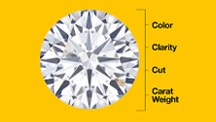
The shift in diamond-cutting assumptions, catalyzed by Morse's foundational research and subsequently refined by Tolkowsky and Wade, yielded a profound and enduring influence on the art and science of diamond cutting. In the United States, beginning in the 1930s, the GIA and the American Gem Society (both established by Robert Shipley with the explicit mission of advancing ethical jewelry practices and gemological education) disseminated knowledge about the Ideal Cut and the Four Cs of diamond valuation: carat, cut, color, and clarity. As the “Four Cs” paradigm (introduced by Shipley in the 1940s) gained prominence, a commensurate need emerged to systematically grade a diamond's cut quality with the same rigor applied to its color and clarity grades.11
THE THIRD PARADIGM SHIFT: ASSESSING OR GRADING CUT QUALITY BEGINS
The modern fluorescent lamp, which brought diffused office lighting into the workplace, was developed through collaborative research at General Electric in the early 1930s by George Inman, Richard Thayer, and colleagues. It emerged as a practical lighting solution by 1934 and was introduced to the public in 1938, gaining widespread attention at the 1939 World's Fair for its energy efficiency. Quiet demonstrations to engineering societies and the U.S. Navy paved the way for a public launch by GE and Westinghouse at major expositions in 1939, quickly followed by competitors. The demands of wartime production further spurred adoption, and by 1951, fluorescent technology had eclipsed incandescent lighting as the primary source of artificial illumination in the United States. This shifted the perception of diamond appearance from a primary focus on fire to an emphasis on appearance in offices and other settings.14
Richard Liddicoat, who would soon assume the role of executive director at GIA, pioneered a novel approach to diamond grading at the institute in 1952, thereby instigating another paradigm shift in prevailing assumptions. His contributions included standardizing diamond color grading with the introduction of the D-Z color scale, a more nuanced clarity grading system achieved by subdividing the VVS, VS, SI, and Imperfect categories, and establishing the inaugural cut-evaluation methodology. Liddicoat unveiled this comprehensive diamond grading framework at the 1952 American Gem Society (AGS) Conclave, an annual educational gathering of professionals in the field, where he explained techniques for analyzing proportions, assessing cut quality, and determining corresponding value deductions for subpar cuts. This new approach piggybacked on the change in lighting that had occurred.11
Buoyed by the positive reception of his system, Liddicoat endeavored to further refine it. Consequently, GIA commenced its inaugural diamond grading courses in early 1953, with a curriculum emphasizing proportion grading, weight estimation, and supervised diamond grading. These programs proved immensely successful. By teaching it to a growing number of industry students, Liddicoat's system, bolstered by market research and collaborative efforts with AGS member suppliers, played an instrumental role in standardizing diamond grading and valuation across the industry. As Liddicoat reflected, "The fact that we had a diamond grading system that arrived at a specific price appealed to the small retailer."15
This revolutionary, innovative approach and system represented a watershed moment in the field. Retailers, who had long been embattled against misrepresentation by competitors, whether due to ignorance or dishonesty, finally had the tools (i.e., practical grading procedures, viewing environments, color masterstones, and grading criteria) to articulate the rationale for the pricing disparities in their diamonds. They also acquired the professional knowledge to educate their customers about the new system.
The response from AGS members was overwhelmingly positive, with demand for the courses exceeding the available supply. As news of the programs spread, other jewelers began enrolling in GIA and subsequently aligned themselves with AGS.16 In the 1870s, Morse had stated, “Shopping for diamonds by the carat is like buying a racehorse by the pound.”11 GIA’s curriculum had changed that, and it was no longer the case.
GIA’s courses proved highly successful in educating jewelers and imparting comprehensive product knowledge, attracting De Beers's attention by 1955. Recognizing the potential benefits of involvement with the GIA's program, De Beers donated 1,500 carats of rough diamonds to support the institute's educational endeavors. Many of these diamonds were subsequently cut by Lazare Kaplan, a member of AGS and an early advocate of Ideal cutting principles.15 By 1955, former students were flooding GIA with requests to verify the work on diamonds they were grading in their stores, and GIA issued its first diamond grading reports through its Gem Trade Laboratory in New York.11 As the number of jewelers utilizing the GIA system without joining the AGS increased, concerns arose regarding the potential erosion of the AGS's distinctiveness. In response, the AGS and GIA decided to develop a unique grading system for AGS members. The AGS's Diamond Standards Committee (DSC) was tasked with conceptualizing and implementing this new system.17
By the 1960 AGS Conclave, the DSC had made substantial progress, reporting on the establishment of standardized terminology for diamond quality. The committee announced that cutting, color, and clarity would be assessed on a scale of "0" to "10", with "0" denoting the highest quality. Under the guidance of GIA's Richard Liddicoat, the DSC refined color and clarity standards, shared them at the 1961 AGS Conclave, and continued to develop cut-grading criteria and an operational manual for its members.18 Through the following years, the DSC made further advancements, coordinating photographs and diagrams to illustrate key clarity characteristics by the 1963 Conclave. Liddicoat's adaptation of the GIA's cut assessment system laid the foundation for the AGS's cut grading methodology. Conclave sessions in 1963 and 1964 introduced attendees to novel approaches for estimating weight retention in cut grading, including the use of proportion screens that displayed the diamond's crown and pavilion silhouette, which helped determine relative cutting angles.19
Under the leadership of Al Woodill, Executive Director of AGS, the culmination of these efforts was announced in the February 1965 issue of Guilds: "One of the most important features of this year's AGS Conclave will be the introduction of the long-awaited Diamond Grading System."20 While Liddicoat’s results made it possible for him to coordinate the factors of carat weight, color, clarity, and cut quality, and to find a corresponding price relationship in the current market (a cut-evaluation system), AGS took it a step further by introducing the first cut grade for round diamonds (some within the AGS at the same time thought they shouldn’t introduce it until they could introduce a system for fancy-shaped diamonds21). Al Woodill then made the grading manual available AGS-wide in April 1966.
In the early 1980s, GIA revised how it taught its grading system (cut grades were not on Laboratory reports) for evaluating diamond cut quality, introducing a four-tier cut classification from Class 1 (the highest) to Class 4. Subsequently, David Atlas’s Accredited Gem Appraisers Laboratory (AGA) adopted a modified version of this cut assessment system, subdividing each GIA grade into two, resulting in categories such as Class 1A and 1B, 2A and 2B, 3A and 3B, as well as 4A and 4B.22
The industry’s renewed emphasis on diamond cutting quality and proportions led to increased demand for more accurate methods of measuring diamond proportions. In 1996, Russell Shor credited Sarine’s DiaMension® device, first released in 1992, for advancing this field. This non-contact measuring scanner provided precise data on a cut diamond’s angles and proportions, surpassing the accuracy of handheld devices and traditional shadow screens (proportionscopes). Shor described it as a “catalyst for the mass revolution” at the dealer level, enabling the "mass production of cut grades."23 He noted that this development allowed "mass make grading" to be extended to diamond manufacturers, empowering cutters to further refine their techniques, particularly for round brilliant diamonds.a
GIA’s initial reports presented basic proportion data obtained from non-contact measuring devices (table size and depth percentages).24 Meanwhile, the AGS pushed for the inclusion of cut grades in GIA’s reports for round diamonds. When their advocacy was unsuccessful, and with the advent of advanced measurement technology, the American Gem Society Laboratories (AGSL) was established in 1996 to meet what AGS saw as the growing demand for independent cut grading in jewelry industry laboratory reports.
GIA’s courses, AGA’s, and AGSL’s cut grading frameworks all relied on precise measurement of diamond proportions, with specific thresholds defining each grade. In 1998, Peter Yantzer, then director of AGSL, stated that the belief in "cut grading as the most important factor in diamond beauty" was a foundational principle of the relatively new American Gem Society laboratory.25 While factors such as symmetry and polish were considered in their grading, all cut grading systems remained fundamentally proportion-based, except for the system of Associated Gem Labs of Japan (discussed in the next section).
AGSL became the first laboratory to introduce cut-assessment standards based on non-contact devices (in line with AGS standards), providing cut grades specifically for the trade. Looking back, Brian Gavin praised this approach: “This proportion-based AGS system enjoyed much success and created a large pool of users, both foreign and domestic, who saw a need that AGS alone had filled. Other second-tier labs began to mimic AGS with their own “Ideal” grades, but their standards were too loose and not very credible, nor based on science.”25 These proportion-based cut grades continued until 2005, when AGSL moved to using visual assessment tools under Peter Yantzer’s leadership.
THE FOURTH PARADIGM SHIFT: UNLEASHING VISUAL ASSESSMENT TOOLS
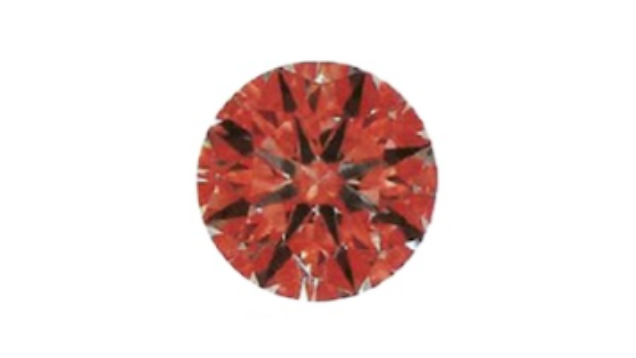
In the late 1970s, Professor Kazumi Okuda, a prominent figure in Japanese gemology, developed a technique for evaluating the appearance quality resulting from diamond cutting. The method involved attaching a red ring to the underside of a standard diamond loupe (or within the microscope). When a well-cut and proportioned round diamond is examined under these conditions, it displays a particular red and black pattern (Figure 6). In 1984, Dr. Goh Tsuyoshi Shigetomi and his colleague Kazuo Inoue asked Okuda to help design a more sophisticated improvement to Okuda’s design. Their company, Japan Diamond Mind (JDM), introduced a round brilliant-cut diamond grading system in 1988 and added a fifth parameter, which they called ‘reflectivity.’ They developed the FireScope®,26 an instrument designed to systematize this novel aspect of diamond evaluation. Using the FireScope®, JDM designed “Apollon Eight," an "ideal" round brilliant cut model that claimed to mandate perfect symmetry.27
When examining a diamond through a lens in the JDM’s FireScope®, the observed visual effects—such as color and pattern—offer valuable insight into the stone’s ‘optical performance’ (a term coined by Gilbertson in an article in Rapaport in 199628,b).
With perfect symmetry, the instrument revealed a black eight-arrow pattern on a nearly entirely red background, meeting JDM's standard for optimized reflectivity. It also demonstrated that minor deviations from perfect symmetry, such as variations in crown height or an off-center table, disrupt their idealized ‘reflectivity’ color pattern. The development of the FireScope and its variations marked the emergence of "hearts and arrows" patterns in diamond assessment. This evaluation system subsequently experienced rapid proliferation from the Japanese market into the United States and worldwide.23
By 1988, Shigetomi had added a computer-aided analysis system in Bangkok for cutting diamonds to exact proportions and stated, “…to have brilliance, it has to have well-balanced contrasts of light.”29 Inoue continued his research to achieve the right kind of "beauty," and in a 1999 article, he explained the underlying mathematics behind it.30 It is essential to understand what Shigetomi was unleashing. The human visual system processes visual information with a complexity that exceeds that of simple models. In evaluating diamonds, both their brightness and appeal are not determined solely by the amount of light reflected, but also by the detailed, dynamic contrast patterns created by multiple internal reflections (making virtual facets). This complexity suggests that earlier approaches to assessing diamond cut quality may have been incomplete without an understanding of certain aspects of visual perception.
Cognitive science has identified key rules governing the Visual Intelligence System (VIS), which interprets basic visual properties such as lines, color, brightness, contrast, and motion, factors that are central to optical illusions.31 These principles are directly relevant to our perception of diamond brightness. Diamonds captivate viewers through moving patterns of contrast, intense brightness, dullness, and darkness, which our VIS can interpret as brighter,32,c or more attractive, even when the actual reflected light remains unchanged. Understanding which contrast patterns most consistently enhance brightness perception is crucial for explaining why particular diamonds are more visually appealing. Note that individual preferences (taste) also influence which diamonds are considered desirable. This complexity challenges a common misconception in the jewelry industry: while light return can be measured instrumentally, these measurements do not fully capture what humans perceive when viewing the visual pattern of a diamond.
While Whitlock’s and Tolkowsky's two-dimensional mathematical modeling and ray-tracing considered only the 16 main facets and the table, the FireScope® and later iterations (hearts-and-arrows viewers, IdealScope®,33,d etc.) permitted a static face-up visual display of the optical performance of all 57 facets of the round brilliant. Red portions (later, other colors were used) seen within the diamond indicate areas where bright light is efficiently returned to the observer, contributing positively to the diamond’s overall brightness. In contrast, white areas reveal zones of light leakage, in which light escapes through the bottom pavilion of the diamond rather than returning to the viewer’s eye, thereby diminishing brilliance. Black regions correspond to reflections from the observer’s head and shoulders, which obstruct light sources (obscuration), and provide the source of the dark portion of the diamond’s contrast pattern seen in the FireScope®.
It is generally understood that a diamond that appears predominantly red in a FireScope®, returns more light to the viewer, indicating higher brightness and more efficient light return. Conversely, substantial white or black areas suggest poor cutting quality and reduced visual appeal. Lastly, JDM and hearts-and-arrows purists postulated that, in addition to the excellent proportions indicated by the red areas, excellent symmetry is evident in a particular distribution of red and black regions, featuring a central eight-pointed black star, which signifies optimal light management within the diamond. This eventually led to Associated Gem Labs of Japan unveiling its AGL “Triple Excellent” cut grade report in 1994 (the first use of the term “Triple Excellent”).25
Others began experimenting with what this type of device could reveal to the trade about the quality of a round diamond's cut. Noted among them are Garry Holloway, who first used the FireScope® in 1984,33 and Al Gilbertson, who first used the FireScope® in the early 1990s (brought to the US by Richard von Sternberg). Gilbertson and Craig Walters discussed the FireScope-type image in a Rapaport article in 199628 and further in Modern Jeweler in 199734. Gilbertson transitioned into using multiple colored rings.e He shared some of that initial research at ISA's 19th Annual Conference on March 24, 1998, in San Diego, California35 at the GIA's 1999 International Gemological Symposium in the fall of 1999,36 and at GemKey magazine website’s roundtable on diamond cut quality evaluation. Gilbertson was a member of the AGS’ Cut Task Force (members included Peter Yantzer, Gabi Tolkowsky, Craig Underwood, and Al) and shared his research with them in confidence. By the end of 1999, Gilbertson had offered the patent (co-owned by Richard von Sternberg of EightStar Diamond Co.) for the colored ring version to AGS, which they purchased and then modified to become ASET (see the Understanding the ASET and AG Environments Box for descriptions).
At GIA’s 1999 Symposium, Gilbertson talked about the new paradigm shift and how “Computer-aided mapping helps the cutter understand how to use a combination of angles to minimize light leakage… The efficiency with which a diamond returns light to the viewer is also a measure of the precision of its cutting… Such analysis enables a new understanding of diamond cut, by letting light speak for itself.”37
GemKey magazine’s website hosted a roundtable on the evaluation of diamond cut quality that began in late 1999. The Paul Halewa-moderated forum ran until early 200038 with a ‘who’s who’ of cut research at the time: some of them were: Peter Yantzer, director of AGSL; Sergey Sivovolenko, Moscow State University; Brian Gavin of Apha Inc.; Michael Cowing of ACA Gem Lab; Richard von Sternberg of EightStar Diamond; David Atlas of Accredited Gem Appraisers; and Al Gilbertson of Gem Profiles. During the roundtable, Sergey Sivovolenko (December 1999) privately contacted Gilbertson and requested that the AG virtual environment be included in DiamCalc.f
While AGS, GIA, and Sivovolenko’s Octonus were conducting research on ray-tracing results and their relationship to appearance aspects, Holloway developed and patented HCA (Holloway Cut Advisor).39 His system was introduced in 2000, and a portable Ideal-Scope was released in 2001, facilitating the transition of the FireScope concept to a more portable cone-shaped scope. Holloway traces his research using the FireScope and GilbertsonScopeg via DiamCalc in a 2001 paper (published as a webpage) that discussed the application of the IdealScope as an elimination tool for selecting diamonds.35 He stated that his aim was “… to simplify the complex variables and issues involved in describing and rating the visual appearance of the performance of diamonds in a comparative manner.”40 Early final scores from HCA were totaled in a “Total Visual Performance” score.25 The Total Visual Performance score was removed from HCA years later.
In 2000, Gilbertson joined GIA’s cut research team, while selling the patent to AGS. AGS used the tool to devise a new system. “…AGS made a major shift in June 2005. They jettisoned their old two-dimensional “Legacy” proportion system in favor of a completely new method. The new AGS three-dimensional Light Performance Grading System would use a measurement scan of a diamond (a three-dimensional mathematical file that yielded a ‘wireframe’) and then use optical ray-tracing software to evaluate this three-dimensional model. AGSL then developed a tool to judge light performance called ASET, an acronym for Angular Spectrum Evaluation Tool, a simpler version of the GilbertsonScope.”25
UNDERSTANDING THE ASET AND AG ENVIRONMENTS |
The ASET and GilbertsonScope (AG) lighting environments use color-coded hemispheres to analyze diamonds, developed in 2004 (ASET) and 1998 (AG). Comparing the 3-color ASET and 5-color AG views of the same stone, the two methods separate incoming light by angle in slightly different ways. For instance, the ASET shows specific details about the observer’s position (marked as blue in ASET and black to red in AG as the observer draws closer) and captures specific low-angle light entries. The ASET green section tracks light from 45° down to the horizon, whereas AG extends down from 40°, capturing low-angle light differently. Judging the five-color AG image by eye is more complex; therefore, ASET is more commonly used and will be discussed in greater detail. Still, both methods can reveal subtle differences, so using them together is valuable; sometimes one exposes differences that the other misses.
Understanding how these environments divide light helps you spot important details in diamond design. They also help predict visual contrast: AG maps non-obscured overhead light between 55° and 70°, whereas ASET maps it between 45° and 75°. At higher angles, light is usually obscured (blue in ASET), creating strong contrast with the bright overhead light (ASET’s red). Lower angles (green in ASET) show less brightness. Real-world head and neck shape and position aren’t included in these models, so actual obscuration varies over typical viewing distances of 14–20 inches. |
to illustrate how light enters the diamond from three different
angle ranges. In comparison, AG uses five colors for
a more detailed analysis. GIA
AGS AND GIA LAUNCH NEW PERFORMANCE-BASED CUT GRADING SYSTEMS
The American Gem Society Laboratory (AGSL) advanced diamond cut grading by implementing what they termed a “three-dimensional light performance model” for both round brilliants and various fancy shapes, contrasting with the GIA’s, which applies cut grading exclusively to round brilliants. In 2005, AGSL introduced the AGS Performance-Based cut Grade System, which evaluated diamonds for D-to-Z color and Flawless-to-I3 clarity using ray-tracing software that simulated 40,000 light rays on a 3-D wireframe model to evaluate the diamond’s light performance. The system employed the Angular Spectrum Evaluation Tool (ASET) to generate color-coded maps indicating angular light return (green: 0–45°, red: 45–75°, blue: 75–90°) for a static face-up evaluation. This assessment encompassed a holistic approach to eleven metrics of the diamond’s cut quality, including brightness, contrast, dispersion, light leakage, weight ratio, durability, girdle thickness, tilt (fisheye assessment at a specific tilt angle), culet attributes, and polish and symmetry. Cut grades are assigned on a 0–10 scale, where zero denotes an ‘Ideal’ cut with no deductions.41,42 At the end of 2022, AGS technology and intellectual property were acquired by GIA. AGS Ideal light performance reports are now available from GIA as an extension of GIA diamond grading reports.
The launch of GIA's diamond cut grading system for standard round brilliants began with a 2004 article.⁵ It details the research, grounded in both extensive computational light-path modeling and empirical human observation of a large assortment of round brilliant diamonds, that led to the development of the system. It evaluated brightness, fire, scintillation, finish, weight, and durability. GIA implemented its cut grading system for standard round brilliant diamonds in January 2006. This system offered an objective evaluation across five possible cut grades: Excellent, Very Good, Good, Fair, and Poor.
GIA’s assessment is based on seven components, distributed among three main domains: face-up optical appearance (including brightness, fire, and scintillation), design and craftsmanship (polish, symmetry, and weight ratio), and durability. It evaluates how a diamond interacts with light (in a static face-up position), the precision of its finishing, and potential vulnerabilities to damage.5
The GIA grading system was specifically developed to align visual distinctions in appearance with modeled appearance across five grade ranges. This approach yielded a broader range of proportion combinations within each cut grade category than many previous proportion-based grading systems. This range accommodated industry/consumer preferences for optimal diamond appearance across different world markets, and enabled better use (i.e., practical weight retention) of rough diamonds during manufacturing.
Before its launch, GIA undertook industry-wide educational programs to help manufacturers and retailers understand and become comfortable with this new round brilliant cut grading system. Shortly after GIA introduced this system, there was a marked decline in high-color, high-clarity diamonds, with poor visual appearance, as they could no longer be readily sold. Manufacturers quickly pivoted toward cutting better-looking diamonds, so everyone involved benefited.
The GIA system is restricted to D-to-Z color, Flawless-to-I3 clarity, and round brilliant diamonds. Cut grades are established using a model that incorporates multiple proportion combinations—rather than prescribing a single ideal set of measurements—allowing substantial variation among diamonds awarded the top grade. The lowest score among the seven components determines the overall grade, emphasizing the importance of holistic excellence in cut quality. Grading criteria were determined through extensive computer analysis of light performance and validated by over 70,000 human observations to ensure visual standards for diamonds.5 Using the AG environment, the analysis enabled researchers to map back to combinations of 6 rounded proportion parameters for easier cut planning and to build a lookup table for their grades. Notably, the scale omits the term “Ideal.”
OTHER PERFORMANCE-BASED APPROACHES |
Different groups use several cut-evaluation approaches, and opinions differ on which is best. Still, the main point of each of these systems is to give potential buyers a clearer picture of what they’re considering purchasing. The list of approaches here isn’t comprehensive. Note that the importance of assessing the influence of motion on diamond appearance has, until recently, been underestimated and mostly unaccounted for because of the technology available at the time the systems began. Some are beginning to include movement.
Cutwise.com The Cutwise team initially convened in 1998 for the Diamond Cut Research Project, an effort to make diamond evaluation more accessible and consistent for both experts and novices. Sergey Sivololenko (Octonus, Finland),h Garry Holloway (Holloway Diamonds, Australia), Janak Mistry (Lexus Softmac, India),i Yuri Shelementiev, PhD (Head of Laboratory, Moscow, University Gemological Center, Russia), as well as other researchers from MSU and Octonus, worked to create tools and to simplify the jargon around diamond performance. They have published several articles on the subject, advocating grading methods tuned to human vision.48 A result of their efforts is available at Cutwise.com. Cutwise employs proprietary, data-driven methodologies for diamond evaluation, using optical performance grading, 3D modeling, and high-resolution multimedia to develop standardized quality metrics. This system enables stakeholders (rough diamond sellers, manufacturers, brokers, retailers) to communicate objectively about diamond quality through quantifiable parameters. The Cutwise platform provides access to detailed visual and analytical datasets—including inclusion mapping and color analysis—while tools such as CutwiseLive enable users to verify digital representations against physical observations, supporting reliable remote assessment. Cutwise also provides embeddable widgets and programming interfaces for seamless integration with existing digital systems, streamlining data sharing and online trade processes. Comparative tools, such as the comparison widget, empower evidence-based selection by allowing direct evaluation of multiple stones’ optical and quantitative properties. Integration with planning systems enables manufacturers to model and compare polished outcomes from rough stones, optimizing production strategies through visual grading and market projections. Additionally, the platform offers educational content on diamond optics and assessment, promoting supply chain transparency and fostering stakeholder trust.43 Central to Cutwise’s technology is Optical Performance Evaluation (OPE), which quantitatively measures diamond aesthetics based on observable phenomena such as brilliance, fire, scintillation, and symmetry across all shapes. Employing proprietary algorithms and imaging, the platform captures video data and automates OPE calculations rooted in principles of human visual perception, including stereo vision. This enables consistent evaluation across different diamond shapes and sizes, reflecting real-world conditions. Images can be toggled between different lighting environments, including ASET. Cutwise is also adapting movement to their analysis. |
In the lower-left corner of this panel, a user can toggle between
environments for the primary large left view. The set of cues includes
ASET and various lighting types, such as spot lighting
(to better assess the fire potential) and rocking or tilting views.
With permission from Cutwise.com
GCAL44 GCAL Laboratory purchased Diamond Profile Laboratory and its direct assessment technology in 2003. “In 1996, the Diamond Profile Laboratory was the first lab to illustrate and grade light performance.”44 Diamond Profile Laboratory (by permission) used Gilbertson’s method (a variation of the AG environment) under Craig Walters, who was the laboratory director. GCAL assesses Light Performance in two categories: Optical Brilliance and Optical Symmetry. They provide cut grades for round, oval, princess, pear, marquise, and radiant shapes. The GCAL Cut Grade evaluates a diamond's ability to manage light by assessing ten factors grouped into Light Performance, Finish, and Proportions. The combined scores from these categories yield an overall Cut Grade, with "Ideal (100)" as the top rating. Optical Brilliance is quantified through a digital photograph taken under carefully controlled lighting to distinguish bright and dark regions. This image is processed using proprietary software to calculate both the brilliance percentage and the extent of light loss, ensuring an objective, repeatable measurement. Processed image overlays outline facets to accurately depict each diamond's unique cut. On the Optical Brilliance Analysis, white areas indicate light return, while blue areas indicate light loss. The degree of light return is measured and graded as Excellent, Very Good, Good, Fair, or Poor based on performance. Symmetry, critical in both natural and crafted forms, is assessed by analyzing the alignment and proportion of the diamond’s facets. The Optical Symmetry Analysis uses digital imaging under standardized lighting to reveal patterns of light return, consistently coloring all areas that return light at similar angles. This approach allows for direct assessment of a diamond's optical symmetry by measuring the consistency of facet angles. Because the evaluation is empirical rather than theoretical, each symmetry image is unique to the diamond analyzed. High symmetry is indicated by even, regular patterns, which reflect both the cutter’s skill and the diamond’s overall optical quality.
IGI IGI’s evaluation of fancy-shaped diamond cut quality follows a four-step process: First, polish and symmetry are graded through a microscope; only diamonds rated at least Very Good in both categories proceed to the next step. Second, while proportions alone do not determine cut grade for fancy shapes, diamonds falling within IGI’s historically optimal parameter ranges remain eligible for an Excellent grade (including length to width ranges). Third, shape-specific craftsmanship is examined, including analysis of bowties, girdle thickness, and other variables unique to each cut. Finally, a gemologist visually evaluates overall light return, rather than fire or scintillation, to ensure that the diamond meets or exceeds the threshold for Excellent. Only fancy shapes that satisfy all criteria, including demonstrating superior light return, are granted an Excellent overall cut grade.45
|
PREVIOUS LIMITATIONS
GIA's approach to grading round brilliants was too limited to work with fancy shapes. “Variation among just six parameters for the round brilliant led to more than 38 million proportion combinations to encompass the proportions typically encountered in diamond grading. Fancy shapes require many more parameters, leading to an astounding number of possible combinations.”46 A simple geometric description of a symmetrical faceting pattern for an oval—featuring eight bezels, four pavilion mains, and with no painting or digging out—needs 18 parameters. That’s three times as many as you’d need for a round brilliant. A pear shape with four mains needs 35 parameters to describe it. That's because the curves of the rounded and pointed sections can vary independently, and there's more flexibility in how the facets are placed. Fortunately, scanning devices can produce a unique 3D wireframe for each diamond. The wireframe clearly records even slight nuances of girdles and in the various facet arrangements, including angles, placement, and relative facet sizes. It becomes apparent that, as Dr. Ilene Reinitz recently stated, “Any predictive cut grading for fancy shapes must be based on a 3D representation of the diamond, such as the wireframe files produced by non-contact measuring devices.”46
Since end users make final purchasing decisions by observing diamonds in motion, functional grading systems should move towards incorporating observer-validated quantitative measurements of diamonds under dynamic conditions. These data should inform the development of more robust grading methodologies and useful supplementary reports about appearance subtleties. Current efforts by the GIA and other organizations are actively pursuing improvements in this direction. “This extensive investigation of light behavior opens a new page of understanding in the history of diamond cut grading. By entering the realm of the quantifiable, we are experiencing a paradigm shift in our thinking. The application of these insights allows us to see the cut of a diamond in its entirety, explain what we see, and evaluate it based on the merits of its performance.”35
At GIA, Jason Quick leads multifaceted research efforts with diverse teams toward a fancy-cut evaluation system aimed at serving all levels of the diamond trade. Dr. Jim Conant and Abhijith Prabhu are leading a team refining tools for assessing appearance aspects in motion to consistently match observations of fancy-shaped diamonds. Amanda Hawkes leads a team of observers that assesses diamonds in various environments to check the metrics being developed. Robust approaches for fancy shape recognition and symmetry evaluation are being refined and tested by Dr. Troy Blodgett and others. In addition, Brock Wilke is working toward manufacturer support by developing useful cut-design libraries and the infrastructure to support the evaluation of fancy-cut quality.
All of these analyses depend on the wireframe file, but for some diamonds, the measurement produces a wireframe that does not capture all visible crown and pavilion facets (or falsely renders some facets not seen on the stone). These issues hinder the use of the wireframe for assessing the stone's appearance and overall cut quality, but work continues to address and overcome them.
APPLICATION OF 3-D MODELING IN MOVEMENT AND RESULTING ASSESSMENT
Although evaluating fancy-shaped diamonds, coupled with the assessment of diamond-in-motion methods, is very difficult, there is also an increasing requirement to address individual taste preferences. These combined requirements make the challenge much more complex.
In 2005, the Gemological Institute of America (GIA) sought to include, “within each grade category those diamonds that, in general, most individuals would consider better in appearance and cut quality than diamonds in the next lower category.”5 In other words, diamonds within each grade range look better than those in the grade below, but within a grade, they may also look different from one another. Some may prefer certain appearances within a grade range, but a grading report doesn’t help consumers or traders understand the visual differences. This highlights the inherent subjectivity in evaluating diamond aesthetics. Many diamond cutters have expressed concern that a single, quantitative cut grade does not adequately represent the artistic and nuanced visual aspects of diamond cutting. To address this, a supplemental qualitative report could prove beneficial. Such a report would articulate the subtle visual differences among diamonds that may share a grade but differ in consumer preference (taste), thereby providing context and deeper explanation.
The principal challenge lies in clearly and accessibly deconstructing these factors, thereby enabling consumers to better recognize and articulate their preferences. Similar approaches have proven valuable in other taste-related disciplines, most notably in food science (e.g., creaminess, chunkiness, thickness),47 where nuanced, qualitative reporting enhances understanding of subjective quality and facilitates choice.
As a diamond rocks or rotates, its face-up contrast patterns move. The amount of light leakage and obscuration also changes. Some diamonds quickly develop greater leakage or dullness as they rotate, even those that appear excellent face-up. A system must not only account for changes and differences in appearance but also articulate them. For example, a system with a single grade does not address describing or comparing the brightness of a bowtie’s width, darkness, persistence, or prominence, or any of the other various pattern elements within fancy shapes, much less as the diamond moves. By breaking down and examining features such as crushed-ice patterns, total area, locations and size of crushed ice, symmetry of various repeating patterns and their persistence (or a need for persistence) with movement, contrast between zones, the size and strength of the bowtie effect, and dark or dull patches that move as you change your view, we can better understand what makes each diamond unique. Examining how the patterns change when the diamond is tilted or rotated also indicates how different facet arrangements and variations in the overall length-to-width ratio, as well as the angles and widths of specific facets, affect the observed patterns. Breaking down these taste issues clarifies differences in appearance and style, and end-users can better understand what makes each diamond unique.
Two Pear Shape Examples
Diamonds can exhibit different visual characteristics due to the various factors already mentioned. The top pair in Figure 9 is viewed under diffuse lighting, such as in an office. The second pair is viewed in an environment with lots of spot lighting (pinpoints of LEDs above). The third pair shows the related ASET map. Different types of lighting accent differences in appearance.
Classic patterns (diamond on the left), outline-specific variations of the radial style, are traditionally associated with rounded shapes such as oval, pear, and marquise cuts, particularly from the 1950s to around 2000.k These patterns are divided into three sectors. All incorporate a radial variation in the center at the culet and typically feature differing patterns along the wing to the tip of the pear and gather in the head of the pear. These pattern aspects are best appreciated in diffuse lighting or in diffuse lighting with nominal spot lighting.
Indistinct patterns (diamond on the right), by contrast, deliberately avoid pronounced contrast or dominant focal points, lack either bright, broad virtual facets or radiating patterns, and are not outline-dependent. The most effective indistinct patterns, although technically asymmetrical, achieve balance and a uniform distribution of bright points of reflected light, thereby maintaining visual equilibrium. Our VIS assesses the apparent visual weight of the components and their spatial arrangement. Even when the elements are not identical, they are organized to produce an overall impression of balance, fully distributed without a single focal point. The critical attribute of these designs is relatively equal visual emphasis across all components, resulting in a unified sense of organized complexity. In the jewelry trade, indistinct patterns of this nature are often referred to as crushed ice. Indistinct patterns, usually associated with crushed ice, typically exhibit a subtle contrast against which small spots of high contrast interrupt as bright flashes with movement. Crushed ice patterns are best appreciated with extensive spot lighting and nominal diffused lighting.
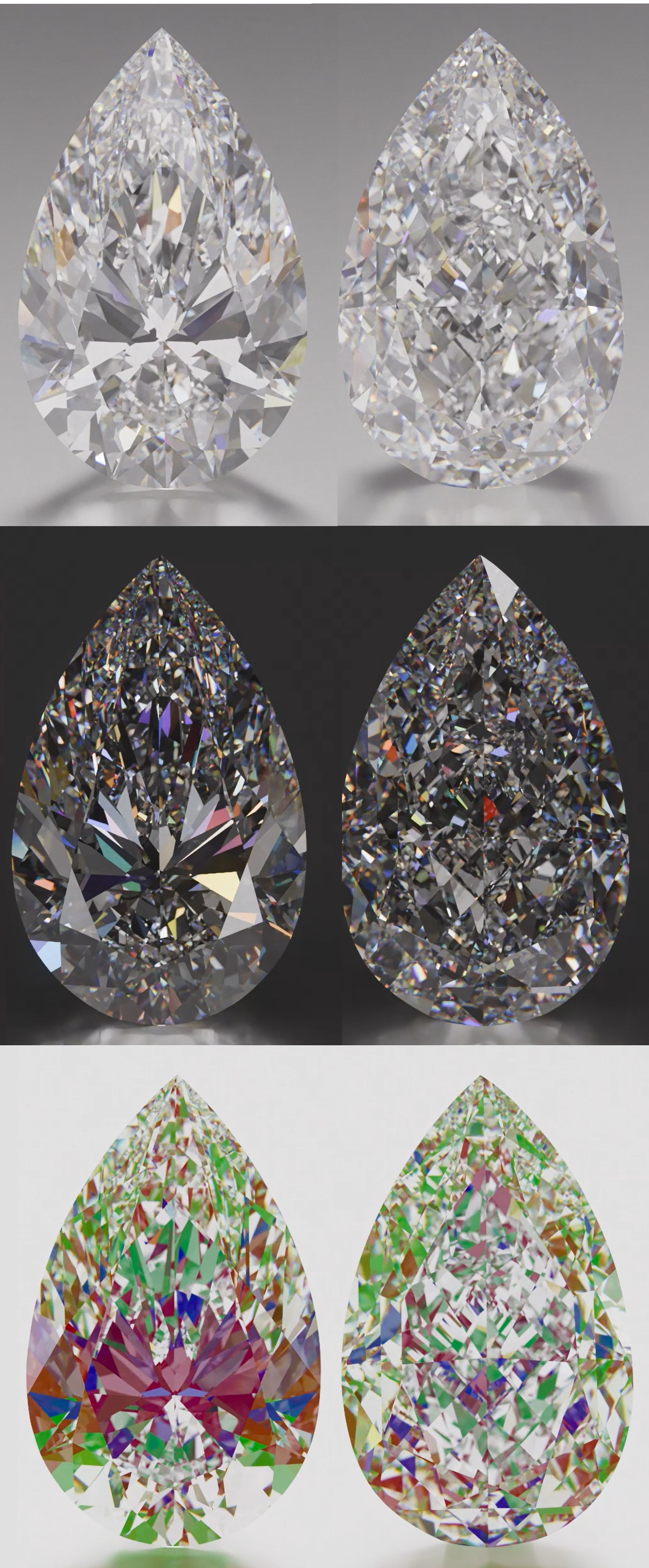
These indistinctly patterned diamonds become more unique when rotated and are among the factors that help end users make purchase decisions. The indistinct pattern of the diamond on the right remains equally sparkly through a 30-degree rotation. In contrast, the pattern in this classic pear (diamond on the left), when tilted to the left or right, exhibits substantially more light leakage (i.e., dullness) once tilted beyond 18 degrees. Depending on the angles used, the length-to-width ratio, and the facet arrangement, classic patterns can lose more or less light as the tilt increases. Part of describing a classic pattern involves discussing the persistence of the bowtie pattern, leakage, and the strength of brightness in the crushed ice areas of the point and head.
Rotating diamonds across various environments enables further evaluation using distinct metrics. These simulations yield dynamic digital representations of diamonds that capture and quantify critical optical parameters, including brightness, fire, and scintillation. Changes in leakage contrast patterns, brightness, fire, and scintillation can be analyzed and reported.
CONCLUSIONS
GIA is integrating 3D scanning and ray-tracing methodologies to establish an objective framework for evaluating the visual performance of fancy-shaped diamonds. This approach begins by generating an accurate, high-resolution 3D wireframe model for each diamond. Employing sophisticated software, GIA simulates the interaction of light with the diamond by tracing the trajectories of individual rays (or groups of rays, which reduces calculation time) within a meticulously constructed virtual lighting environment that replicates real-world conditions.
These simulations yield dynamic digital representations of diamonds that capture and quantify critical optical parameters, including brightness, fire, and scintillation. Crucially, these digital models are not static; they can be manipulated to mimic the diversity of motions observed in real diamonds, including rotations and tilts, as well as a wide range of lighting and viewing geometries. This enables GIA to systematically investigate how modifications in external conditions, such as the angle of illumination or the observer's perspective, influence a diamond's perceived aesthetic qualities.
By further integrating these simulated diamonds' movements into the ASET and other environments, the analysis moves beyond traditional linear metrics. Researchers can now examine intricate variations in patterning, directly compare virtual models with physical diamonds of analogous proportions, and more thoroughly account for subjective human visual preferences in their assessments. This iterative, model-based process facilitates a more holistic evaluation of a diamond’s visual performance, leading to the development of a cut grading system that is directly informed by empirically observed preferences and measured optical behavior, rather than by fixed, static proportion measurements. Ultimately, this methodology promises a robust, scientifically grounded foundation for correlating diamond cut quality with its visual performance as perceived by human observers.
The end product of a new GIA system will include tools, instructions, and examples to help the educated and trained jeweler guide a customer through a complex visual-taste buying process.
GLOSSARY
Bowtie Effect: A characteristic darkened region in the center of elongated diamonds, on occasion resembling the dark shape of a bowtie, such as in marquise-, oval-, or pear-shaped diamonds. It occurs when light obscured by the observer (from high angles) is channeled into the center by the faceting arrangement.
Brightness: The impression of white light a diamond reflects and sends back to the viewer. This effect originates from virtual facets, tiny surfaces within the stone, that can appear bright or dark depending on how they reflect the light. A diamond’s brightness depends on how well it can capture and return light from its surroundings, and on the arrangement and energy of the light that reaches the observer. A strong contrast among distinct bright and dark elements of the virtual facet pattern often makes a diamond appear brighter. See Contrast Pattern.
Classic Patterns: Variations of the radial style (see below) traditionally associated with oval, pear, and marquise cuts, particularly during the period from the 1950s to around 2000.These patterns are divided into three sectors. All incorporate a radial variation in the center of the Bowtie and typically feature differing CI patterns along the Wing to the Tip in the pear, along both wings, and in the tips of the marquise, as well as clustering in the two heads of the oval or the head of the pear.
Contrast Pattern: Refers to the way light and dark areas appear side by side in a diamond’s face-up view. Good contrast patterns feature bright and dark regions that are clearly distinct, well-balanced, and evenly distributed, making the pattern stand out to the eye. If the dark areas are too large, uneven, or oddly placed, the contrast pattern is less pleasing. When there’s only a slight difference between light and dark patches, or the patches are very small, the stone may look flat or dull.
Crushed Ice: Areas on a diamond that resemble crushed ice are composed of many tiny virtual facets. These small facets are typically found at the ends of a diamond but can also appear elsewhere, depending on the facet arrangement and proportions. With movement, these small facets twinkle, creating a lively, sparkling effect. They are subdivision of larger facets, reflected multiple times inside the diamond, like a hall of mirrors.
Indistinct Patterns: Characterized by the absence of strong contrast, dominant focal points, or dependence on shape outline. Instead, these patterns display a balanced, uniform distribution of bright reflection points, resulting in visual equilibrium throughout, prioritizing overall balance rather than symmetry or singular contrast prominence. These designs emphasize an organized complexity where no single component stands out. Commonly termed “crushed ice” in the trade, such patterns typically feature low overall contrast with numerous flashes of high brightness, in contrast to the pronounced bowties or obscured areas seen in radial or classic patterns.
Light leakage/Windowing: These terms refer to visible effects of incoming light that travels through the polished gemstone but does not return to the observer's eye, creating areas that appear dull or lifeless. Both "leakage" and "windowing" refer to losses in light return, though they differ in their focus. Leakage describes distributed or scattered areas not contributing to observable brilliance or fire. Windowing refers to concentrated areas where the observer can typically see through the diamond to the surface below it. Large windows or excessive leakage diminish a diamond’s appearance, but in some cases spots of leakage can contribute to contrast.
Obscuration: Refers to dark areas in a diamond gathering and reflecting light from the viewer, typically the dimmest spot in the diamond’s lighting environment. The observer's head, body, clothing, or hair casts a shadow or reflects in the diamond, making certain parts of the stone appear darker. The closer the observer is, or (in dimmer light) the darker their clothes or hair are, the more noticeable the obscuration becomes.
Radial Patterns: Characterized by virtual facets that emanate from a central point, resembling the spokes of a wheel or the petals of a flower, and have little to no crushed ice.
Scanning/Wireframes: Octonus’ Helium and Sarine’s DiaScan are examples of instruments used at GIA for diamond scanning and mapping, resulting in precise 3D wireframes of polished diamonds. These wireframes serve as detailed digital models that capture the precise angles and geometric relationships of each facet and their shared edges. Such wireframes are essential for examining a diamond’s proportions and symmetry, and for calculations to assess its cut quality and optical performance.
Scintillation: Occurs when diamonds move (or the observer or light-source moves); the pattern of brightness and contrast comes alive, producing both dramatic flashes and small sparkles. As virtual facets change quickly from light to dark they create a noticeable sparkling effect, especially when catching point light sources and producing fire. These rapid shifts in illumination give diamonds their lively, flickering appearance, with sharp bursts and pinpoints of light scattered across the stone. It is brightness and fire in motion.
Virtual Facet: A virtual facet is an optical effect in diamonds, in which the actual facets, such as those on the crown, pavilion, and girdle, appear to subdivide into many smaller polygons due to repeated reflections within the stone (like a hall of mirrors or a kaleidoscope). These virtual facets aren’t real; they’re created when light bounces back and forth inside the diamond, dividing the original facets so they seem to splinter and multiply. The result is a tessellated, mosaic-like pattern perceived by the eye, resembling facets produced by the interplay of light and geometry within the diamond.
Windowing: See light leakage.
Shared by GIA with permission from The Jewelry Symposium.

Originally Published in The Jewelry Symposium, for the Advancement of Jewelry Manufacturing Technology, 2026; Publisher: The Jewelry Symposium, pp. 151–186.
ABSTRACT
The cut quality of a diamond profoundly influences its allure and plays a crucial role in determining its value. This discussion examines the evolution of cut-quality grading and its status. For a long time, it was widely believed that a well-cut diamond maximized the return of light, enhancing its beauty. Proportions were meticulously modeled and calculated to achieve optimal light reflection and refraction. This assumption accounts for only a portion of the phenomena observed. The human visual system processes information in a highly complex manner, often exceeding the scope of straightforward predictive models. The brightness and attractiveness of a diamond depend not only on the quantity of light it returns but also on the intricate contrast patterns created by the virtual facets resulting from the numerous reflections within the diamond, particularly in movement. As we will explore, the interplay of these factors has led to a deeper understanding and more nuanced grading of a diamond's cut quality.
Diamond cut grades are a method used by jewelers and manufacturers to evaluate the quality of a diamond’s proportions, symmetry, and polish, often without seeing the diamond in person, but it helps ensure a high-quality finished product once the diamond is set. Poor proportions, symmetry, or polish result in dull or unattractive diamonds. Assessing diamond cut quality helps jewelers buy diamonds that consumers will prefer. Understanding those systems helps manufacturers make wise decisions in diamond purchases for their collections.
This article summarizes efforts to assign a quality grade for how well diamonds are cut, highlighting several paradigm shifts in static assessment methods prior to the emergence of the two paradigms of the past 70 years. The focus is on modern scientific advances in the perception and application of 3-D modeling in movement and the resulting assessment, on the contemporary complexity of assigning quality grades for how well diamonds are cut, and an overview of potential solutions under study.
INTRODUCTION
Cutting transforms the material properties of diamond into the appearance aspects of gemstones. Exceptional cutting, with attention to optimal proportions, profoundly influences a diamond's brilliance and overall allure, thereby playing a crucial role in determining its value. For the last 150 years, it has been widely believed that a well-cut diamond maximizes the return of light, enhancing its beauty. The most highly valued aspects of diamond gemstones (and jewelry) have evolved as the conditions for wearing diamonds have changed. Lighting environments altered with the introduction of fluorescent lighting in the 1930s, and by 1950, diffuse lighting had become the standard viewing environment for diamonds. Before that, lighting was primarily single-point lighting (e.g., light bulbs, lanterns, candles). Over the past 70 years, proportions have been increasingly meticulously modeled and calculated to achieve optimal light reflection and refraction.
Historically, the pursuit of diamond cut grading sought a simple, short final grade. As specific proportions played a larger role, the goal of reporting cut assessment as a grade relied on a summary of numerical or measurable data.
Summarizing by a single cut grade had its roots in the oversimplified two-dimensional view of ray tracing introduced by Cattelle,1 Smith,2 and Whitlock,3 and embraced by Tolkowsky.4 However, most light traverses a three-dimensional path through the round brilliant cut, with partial reflection and partial loss at each facet interaction and numerous opportunities for the creation of dispersion. For decades, we had a two-dimensional perspective on diamonds, which would then be translated into single-grade summaries.
This limited approach could not account for differences in personal preference for the appearance variations within a single cut grade. In 2005, the Gemological Institute of America (GIA) tried to capture (in its new round brilliant cut grading system) “within each grade category those diamonds that, in general, most individuals would consider better in appearance and cut quality than diamonds in the next lower category.”5 Going forward, a more useful cut grading system should incorporate appearance factors that strongly affect human perception of brilliance and sparkle, including motion-related differences. Such factors are particularly important when assessing the cut quality of fancy shapes and their many faceting arrangements.
BEGINNING ASSUMPTIONS: MIMICKING THE OPTIMAL DIAMOND CRYSTAL
The art of diamond cutting, which transforms rough stones into visually stimulating works of art, has been guided by evolving assumptions since its inception. Diamond octahedra had been set into jewelry, point-up, and those points were then broken by wear. Early diamond cutters began by repairing these to mimic the natural octahedral shapes of diamond crystals. Cutting exactly parallel to a diamond’s natural octahedral faces (Figure 1) was impossible because these planes represent the direction of greatest hardness within the crystal lattice. To work around this, cutters had to adjust the angle of their repair slightly. The resulting “point cut” diamonds had points intentionally made slightly shallower (and, when the outer edge was broken, taller) than the actual apex of a natural octahedral crystal. By carefully adjusting the angles of the octahedral shape, they could polish each face while preserving the optical illusion of a naturally perfect diamond crystal, thereby maximizing weight retention. Through it all, cutters tried to retain as much of the octahedron’s outline as possible, maximizing the apparent size of the finished gem (today we call this ‘spread'). Early standards of cut quality were based on how closely the finished diamond resembled a highly polished, natural octahedron, with further value judged by carat weight, color, and clarity. The pursuit of an ‘ideal cut’ has captivated diamond cutters for centuries—well before terms like ‘brilliant’ were used to describe such expertly finished stones. Even with modern manufacturing improvements, the need to avoid the most resistant planes during polishing persists.
THE FIRST PARADIGM SHIFT IN ASSUMPTIONS: CREATING SPARKLE
As diamond-polishing wheels gained speed in the 1500s by a crank, treadle, waterpower, and later steam,6 resulting in faster polishing, experimentation with cutting styles ramped up to maximize their dazzle. As early as 1572, there was a direct link between a diamond's value and its weight, cutting quality, color, and clarity as noted by Joan Arpice de Villafan,7 an assayer for the Spanish royal mints in Madrid and Segovia.
By the late 1600s, the method of cutting diamonds had evolved further. This was because diamonds with more facets sparkled more in the candlelight of grand ballrooms, where all high society could take notice. Cutters created more complex shapes to take advantage of the new popular lighting environment, rather than the usual octahedral outline. These latest cuts included a central, flat facet on top (the table). This design helped prevent chipping at the top point and introduced a new approach: capturing light and making the diamond sparkle through internal reflections. That shift in assumptions rode the glut of newly discovered diamonds in Brazil, with over a million carats of goods8 entering Europe in the mid-1700s, transforming the market as anyone with wealth and status sought these sparkling baubles. This desire for sparkle spurred further innovation. Initially, experimentation was extensive, with cutters testing a variety of novel facet arrangements and proportions.9
Soon, symmetry, proper angles, facet lengths, table, and culet size were required, as outlined by David Jeffries, published in London in 1750.10 In his seminal work on diamond cutting, he established a new standard for the trade. The new standard was the ‘brilliant’ (Figure 2), which initially had no shape name prefacing it, since the 58 facets were cut to follow the crystal's outline, and specific proportions and angles were thought to yield an optimal appearance with fire. Remember that these were primarily worn at lavish social gatherings beneath vast arrays of candle-studded candelabras and chandeliers (thousands of candles). With the growing number of additional facets, the fire and sparkle that reflected from these gems as they twirled around in the ballrooms were dazzling and highly sought after.
The most common brilliant by then was a squarish cushion (that we call ‘old mine’ today and precursor to the cushion⁸), which followed the outline of the most common crystal shape, the octahedron, and was thus an efficient use of the most common rough material. However, Jeffries also shows 58-facet line diagrams for a round, a squat oval, and a squat pear. All were called ‘brilliant’ without the shape-name we use today, reflecting the diversity of forms encompassed by this new cutting philosophy. Today, we might refer to these as ‘mine-cut’ when referring to the squarish cushions, and ‘mine-cut’ ovals, or pears.
Jeffries stated that the best angles for the brilliant were 45 degrees for both the crown and pavilion, with a 20% culet size and a 40% table. He argued that diamonds that didn’t conform to these proportions had lower value and provided numerical tables in his book for pricing based on color, clarity, cut quality, and carat weight. Along with extremely short pavilion halves (roughly 30% in length), these diamonds produced considerable fire in the incandescent candlelit ballrooms. However, they were sorely lacking in beauty under all other lighting conditions, as singular light sources didn’t create the amazing sparkle that thousands of candles did. The very different proportions (compared to today’s proportions) and angles would die under today’s office lighting.11
However, all was for naught. The diamond-cutting industry had no incentive to adhere to those proportions. By the early 1800s, cutters prioritized maximizing yield by weight; rather than spending time carefully shaping a diamond into a well-proportioned rough stone, they aimed to retain as much weight as possible from all crystals, even imperfect or damaged ones.12 At the same time, because more people who didn’t attend the big galas wore diamonds, diamonds were worn in more common lighting and outside during the day. The results ranged from odd outlines to shallow or very deep proportions. People wanted diamonds, and the ballroom beauty was no longer a criterion for most. Most of those poorly cut diamonds were recut by the 20th century. Economic factors rather than aesthetic considerations drove the shift in cutting philosophy during the 19th century.
This evolution of diamond cutting reflects changing assumptions, changing priorities, and technological advancements. Each era has left its mark on the diamond-cutting industry, from the fire-focused cuts of the 17th century for high-society events to the weight-driven cuts of the 19th century for the common people. As we move forward, observe how cutting techniques continue to adapt to new lighting and manufacturing technologies, as well as accompanying shifts in consumer preferences.
THE SECOND PARADIGM SHIFT: OPTIMAL PROPORTIONS
The late 19th century witnessed a paradigm shift in the understanding of optimal diamond proportions, catalyzed primarily by Henry D. Morse's diamond cutting work in Boston in the 1870s. Using a goniometer, Morse determined a set of angles and proportions that maximize the brilliance of diamonds. His shop foreman's concomitant development of the first bruting machine facilitated the practical implementation of Morse’s derived proportions into a purely round outline. Initially termed the "Boston Cut," Morse's cutting style would subsequently be referred to as the "American Cut," "Scientific Cut," and ultimately the "Ideal Cut" by the early 20th century. This evolution in nomenclature paralleled a refinement in the recommended proportions, with American diamond cutters advocating pavilion angles of 40° to 42° and crown angles of 35° to 37° by the early 1900s, before the publication in 1919 of Marcel Tolkowsky's influential book Diamond Design.11
The dissemination of Herbert Whitlock’s 1917 two-dimensional ray tracing and Frank Wade's 1915 articles in the Jewelers’ Circular Keystone magazine (and Wade’s 1916 book, Diamonds: A Study Of The Factors That Govern Their Value) played a pivotal role in popularizing the specific angles of 41° and 35°.13 Tolkowsky's later work (1919), which modified the previously assumed table size, further solidified the new consensus regarding optimal proportions, first in the American market and then in Europe, with Wade and others endorsing Tolkowsky’s revised assumptions.11
Central to this transformative period was the concept, popularized by Morse, that a well-proportioned diamond maximizes the return of light through the crown facets, thereby enhancing its aesthetic appeal. This principle laid the foundation for subsequent calculations by Wade, Whitlock, Tolkowsky, and others to determine the proportions optimal for light reflection and refraction. Some still claim that “Tolkowsky’s math was right on target,” as if he were a prophet rather than aggregating the practical wisdom of his time.
The shift in diamond-cutting assumptions, catalyzed by Morse's foundational research and subsequently refined by Tolkowsky and Wade, yielded a profound and enduring influence on the art and science of diamond cutting. In the United States, beginning in the 1930s, the GIA and the American Gem Society (both established by Robert Shipley with the explicit mission of advancing ethical jewelry practices and gemological education) disseminated knowledge about the Ideal Cut and the Four Cs of diamond valuation: carat, cut, color, and clarity. As the “Four Cs” paradigm (introduced by Shipley in the 1940s) gained prominence, a commensurate need emerged to systematically grade a diamond's cut quality with the same rigor applied to its color and clarity grades.11
THE THIRD PARADIGM SHIFT: ASSESSING OR GRADING CUT QUALITY BEGINS
The modern fluorescent lamp, which brought diffused office lighting into the workplace, was developed through collaborative research at General Electric in the early 1930s by George Inman, Richard Thayer, and colleagues. It emerged as a practical lighting solution by 1934 and was introduced to the public in 1938, gaining widespread attention at the 1939 World's Fair for its energy efficiency. Quiet demonstrations to engineering societies and the U.S. Navy paved the way for a public launch by GE and Westinghouse at major expositions in 1939, quickly followed by competitors. The demands of wartime production further spurred adoption, and by 1951, fluorescent technology had eclipsed incandescent lighting as the primary source of artificial illumination in the United States. This shifted the perception of diamond appearance from a primary focus on fire to an emphasis on appearance in offices and other settings.14
Richard Liddicoat, who would soon assume the role of executive director at GIA, pioneered a novel approach to diamond grading at the institute in 1952, thereby instigating another paradigm shift in prevailing assumptions. His contributions included standardizing diamond color grading with the introduction of the D-Z color scale, a more nuanced clarity grading system achieved by subdividing the VVS, VS, SI, and Imperfect categories, and establishing the inaugural cut-evaluation methodology. Liddicoat unveiled this comprehensive diamond grading framework at the 1952 American Gem Society (AGS) Conclave, an annual educational gathering of professionals in the field, where he explained techniques for analyzing proportions, assessing cut quality, and determining corresponding value deductions for subpar cuts. This new approach piggybacked on the change in lighting that had occurred.11
Buoyed by the positive reception of his system, Liddicoat endeavored to further refine it. Consequently, GIA commenced its inaugural diamond grading courses in early 1953, with a curriculum emphasizing proportion grading, weight estimation, and supervised diamond grading. These programs proved immensely successful. By teaching it to a growing number of industry students, Liddicoat's system, bolstered by market research and collaborative efforts with AGS member suppliers, played an instrumental role in standardizing diamond grading and valuation across the industry. As Liddicoat reflected, "The fact that we had a diamond grading system that arrived at a specific price appealed to the small retailer."15
This revolutionary, innovative approach and system represented a watershed moment in the field. Retailers, who had long been embattled against misrepresentation by competitors, whether due to ignorance or dishonesty, finally had the tools (i.e., practical grading procedures, viewing environments, color masterstones, and grading criteria) to articulate the rationale for the pricing disparities in their diamonds. They also acquired the professional knowledge to educate their customers about the new system.
The response from AGS members was overwhelmingly positive, with demand for the courses exceeding the available supply. As news of the programs spread, other jewelers began enrolling in GIA and subsequently aligned themselves with AGS.16 In the 1870s, Morse had stated, “Shopping for diamonds by the carat is like buying a racehorse by the pound.”11 GIA’s curriculum had changed that, and it was no longer the case.
GIA’s courses proved highly successful in educating jewelers and imparting comprehensive product knowledge, attracting De Beers's attention by 1955. Recognizing the potential benefits of involvement with the GIA's program, De Beers donated 1,500 carats of rough diamonds to support the institute's educational endeavors. Many of these diamonds were subsequently cut by Lazare Kaplan, a member of AGS and an early advocate of Ideal cutting principles.15 By 1955, former students were flooding GIA with requests to verify the work on diamonds they were grading in their stores, and GIA issued its first diamond grading reports through its Gem Trade Laboratory in New York.11 As the number of jewelers utilizing the GIA system without joining the AGS increased, concerns arose regarding the potential erosion of the AGS's distinctiveness. In response, the AGS and GIA decided to develop a unique grading system for AGS members. The AGS's Diamond Standards Committee (DSC) was tasked with conceptualizing and implementing this new system.17
By the 1960 AGS Conclave, the DSC had made substantial progress, reporting on the establishment of standardized terminology for diamond quality. The committee announced that cutting, color, and clarity would be assessed on a scale of "0" to "10", with "0" denoting the highest quality. Under the guidance of GIA's Richard Liddicoat, the DSC refined color and clarity standards, shared them at the 1961 AGS Conclave, and continued to develop cut-grading criteria and an operational manual for its members.18 Through the following years, the DSC made further advancements, coordinating photographs and diagrams to illustrate key clarity characteristics by the 1963 Conclave. Liddicoat's adaptation of the GIA's cut assessment system laid the foundation for the AGS's cut grading methodology. Conclave sessions in 1963 and 1964 introduced attendees to novel approaches for estimating weight retention in cut grading, including the use of proportion screens that displayed the diamond's crown and pavilion silhouette, which helped determine relative cutting angles.19
Under the leadership of Al Woodill, Executive Director of AGS, the culmination of these efforts was announced in the February 1965 issue of Guilds: "One of the most important features of this year's AGS Conclave will be the introduction of the long-awaited Diamond Grading System."20 While Liddicoat’s results made it possible for him to coordinate the factors of carat weight, color, clarity, and cut quality, and to find a corresponding price relationship in the current market (a cut-evaluation system), AGS took it a step further by introducing the first cut grade for round diamonds (some within the AGS at the same time thought they shouldn’t introduce it until they could introduce a system for fancy-shaped diamonds21). Al Woodill then made the grading manual available AGS-wide in April 1966.
In the early 1980s, GIA revised how it taught its grading system (cut grades were not on Laboratory reports) for evaluating diamond cut quality, introducing a four-tier cut classification from Class 1 (the highest) to Class 4. Subsequently, David Atlas’s Accredited Gem Appraisers Laboratory (AGA) adopted a modified version of this cut assessment system, subdividing each GIA grade into two, resulting in categories such as Class 1A and 1B, 2A and 2B, 3A and 3B, as well as 4A and 4B.22
The industry’s renewed emphasis on diamond cutting quality and proportions led to increased demand for more accurate methods of measuring diamond proportions. In 1996, Russell Shor credited Sarine’s DiaMension® device, first released in 1992, for advancing this field. This non-contact measuring scanner provided precise data on a cut diamond’s angles and proportions, surpassing the accuracy of handheld devices and traditional shadow screens (proportionscopes). Shor described it as a “catalyst for the mass revolution” at the dealer level, enabling the "mass production of cut grades."23 He noted that this development allowed "mass make grading" to be extended to diamond manufacturers, empowering cutters to further refine their techniques, particularly for round brilliant diamonds.a
GIA’s initial reports presented basic proportion data obtained from non-contact measuring devices (table size and depth percentages).24 Meanwhile, the AGS pushed for the inclusion of cut grades in GIA’s reports for round diamonds. When their advocacy was unsuccessful, and with the advent of advanced measurement technology, the American Gem Society Laboratories (AGSL) was established in 1996 to meet what AGS saw as the growing demand for independent cut grading in jewelry industry laboratory reports.
GIA’s courses, AGA’s, and AGSL’s cut grading frameworks all relied on precise measurement of diamond proportions, with specific thresholds defining each grade. In 1998, Peter Yantzer, then director of AGSL, stated that the belief in "cut grading as the most important factor in diamond beauty" was a foundational principle of the relatively new American Gem Society laboratory.25 While factors such as symmetry and polish were considered in their grading, all cut grading systems remained fundamentally proportion-based, except for the system of Associated Gem Labs of Japan (discussed in the next section).
AGSL became the first laboratory to introduce cut-assessment standards based on non-contact devices (in line with AGS standards), providing cut grades specifically for the trade. Looking back, Brian Gavin praised this approach: “This proportion-based AGS system enjoyed much success and created a large pool of users, both foreign and domestic, who saw a need that AGS alone had filled. Other second-tier labs began to mimic AGS with their own “Ideal” grades, but their standards were too loose and not very credible, nor based on science.”25 These proportion-based cut grades continued until 2005, when AGSL moved to using visual assessment tools under Peter Yantzer’s leadership.
THE FOURTH PARADIGM SHIFT: UNLEASHING VISUAL ASSESSMENT TOOLS
In the late 1970s, Professor Kazumi Okuda, a prominent figure in Japanese gemology, developed a technique for evaluating the appearance quality resulting from diamond cutting. The method involved attaching a red ring to the underside of a standard diamond loupe (or within the microscope). When a well-cut and proportioned round diamond is examined under these conditions, it displays a particular red and black pattern (Figure 6). In 1984, Dr. Goh Tsuyoshi Shigetomi and his colleague Kazuo Inoue asked Okuda to help design a more sophisticated improvement to Okuda’s design. Their company, Japan Diamond Mind (JDM), introduced a round brilliant-cut diamond grading system in 1988 and added a fifth parameter, which they called ‘reflectivity.’ They developed the FireScope®,26 an instrument designed to systematize this novel aspect of diamond evaluation. Using the FireScope®, JDM designed “Apollon Eight," an "ideal" round brilliant cut model that claimed to mandate perfect symmetry.27
When examining a diamond through a lens in the JDM’s FireScope®, the observed visual effects—such as color and pattern—offer valuable insight into the stone’s ‘optical performance’ (a term coined by Gilbertson in an article in Rapaport in 199628,b).
With perfect symmetry, the instrument revealed a black eight-arrow pattern on a nearly entirely red background, meeting JDM's standard for optimized reflectivity. It also demonstrated that minor deviations from perfect symmetry, such as variations in crown height or an off-center table, disrupt their idealized ‘reflectivity’ color pattern. The development of the FireScope and its variations marked the emergence of "hearts and arrows" patterns in diamond assessment. This evaluation system subsequently experienced rapid proliferation from the Japanese market into the United States and worldwide.23
By 1988, Shigetomi had added a computer-aided analysis system in Bangkok for cutting diamonds to exact proportions and stated, “…to have brilliance, it has to have well-balanced contrasts of light.”29 Inoue continued his research to achieve the right kind of "beauty," and in a 1999 article, he explained the underlying mathematics behind it.30 It is essential to understand what Shigetomi was unleashing. The human visual system processes visual information with a complexity that exceeds that of simple models. In evaluating diamonds, both their brightness and appeal are not determined solely by the amount of light reflected, but also by the detailed, dynamic contrast patterns created by multiple internal reflections (making virtual facets). This complexity suggests that earlier approaches to assessing diamond cut quality may have been incomplete without an understanding of certain aspects of visual perception.
Cognitive science has identified key rules governing the Visual Intelligence System (VIS), which interprets basic visual properties such as lines, color, brightness, contrast, and motion, factors that are central to optical illusions.31 These principles are directly relevant to our perception of diamond brightness. Diamonds captivate viewers through moving patterns of contrast, intense brightness, dullness, and darkness, which our VIS can interpret as brighter,32,c or more attractive, even when the actual reflected light remains unchanged. Understanding which contrast patterns most consistently enhance brightness perception is crucial for explaining why particular diamonds are more visually appealing. Note that individual preferences (taste) also influence which diamonds are considered desirable. This complexity challenges a common misconception in the jewelry industry: while light return can be measured instrumentally, these measurements do not fully capture what humans perceive when viewing the visual pattern of a diamond.
While Whitlock’s and Tolkowsky's two-dimensional mathematical modeling and ray-tracing considered only the 16 main facets and the table, the FireScope® and later iterations (hearts-and-arrows viewers, IdealScope®,33,d etc.) permitted a static face-up visual display of the optical performance of all 57 facets of the round brilliant. Red portions (later, other colors were used) seen within the diamond indicate areas where bright light is efficiently returned to the observer, contributing positively to the diamond’s overall brightness. In contrast, white areas reveal zones of light leakage, in which light escapes through the bottom pavilion of the diamond rather than returning to the viewer’s eye, thereby diminishing brilliance. Black regions correspond to reflections from the observer’s head and shoulders, which obstruct light sources (obscuration), and provide the source of the dark portion of the diamond’s contrast pattern seen in the FireScope®.
It is generally understood that a diamond that appears predominantly red in a FireScope®, returns more light to the viewer, indicating higher brightness and more efficient light return. Conversely, substantial white or black areas suggest poor cutting quality and reduced visual appeal. Lastly, JDM and hearts-and-arrows purists postulated that, in addition to the excellent proportions indicated by the red areas, excellent symmetry is evident in a particular distribution of red and black regions, featuring a central eight-pointed black star, which signifies optimal light management within the diamond. This eventually led to Associated Gem Labs of Japan unveiling its AGL “Triple Excellent” cut grade report in 1994 (the first use of the term “Triple Excellent”).25
Others began experimenting with what this type of device could reveal to the trade about the quality of a round diamond's cut. Noted among them are Garry Holloway, who first used the FireScope® in 1984,33 and Al Gilbertson, who first used the FireScope® in the early 1990s (brought to the US by Richard von Sternberg). Gilbertson and Craig Walters discussed the FireScope-type image in a Rapaport article in 199628 and further in Modern Jeweler in 199734. Gilbertson transitioned into using multiple colored rings.e He shared some of that initial research at ISA's 19th Annual Conference on March 24, 1998, in San Diego, California35 at the GIA's 1999 International Gemological Symposium in the fall of 1999,36 and at GemKey magazine website’s roundtable on diamond cut quality evaluation. Gilbertson was a member of the AGS’ Cut Task Force (members included Peter Yantzer, Gabi Tolkowsky, Craig Underwood, and Al) and shared his research with them in confidence. By the end of 1999, Gilbertson had offered the patent (co-owned by Richard von Sternberg of EightStar Diamond Co.) for the colored ring version to AGS, which they purchased and then modified to become ASET (see the Understanding the ASET and AG Environments Box for descriptions).
At GIA’s 1999 Symposium, Gilbertson talked about the new paradigm shift and how “Computer-aided mapping helps the cutter understand how to use a combination of angles to minimize light leakage… The efficiency with which a diamond returns light to the viewer is also a measure of the precision of its cutting… Such analysis enables a new understanding of diamond cut, by letting light speak for itself.”37
GemKey magazine’s website hosted a roundtable on the evaluation of diamond cut quality that began in late 1999. The Paul Halewa-moderated forum ran until early 200038 with a ‘who’s who’ of cut research at the time: some of them were: Peter Yantzer, director of AGSL; Sergey Sivovolenko, Moscow State University; Brian Gavin of Apha Inc.; Michael Cowing of ACA Gem Lab; Richard von Sternberg of EightStar Diamond; David Atlas of Accredited Gem Appraisers; and Al Gilbertson of Gem Profiles. During the roundtable, Sergey Sivovolenko (December 1999) privately contacted Gilbertson and requested that the AG virtual environment be included in DiamCalc.f
While AGS, GIA, and Sivovolenko’s Octonus were conducting research on ray-tracing results and their relationship to appearance aspects, Holloway developed and patented HCA (Holloway Cut Advisor).39 His system was introduced in 2000, and a portable Ideal-Scope was released in 2001, facilitating the transition of the FireScope concept to a more portable cone-shaped scope. Holloway traces his research using the FireScope and GilbertsonScopeg via DiamCalc in a 2001 paper (published as a webpage) that discussed the application of the IdealScope as an elimination tool for selecting diamonds.35 He stated that his aim was “… to simplify the complex variables and issues involved in describing and rating the visual appearance of the performance of diamonds in a comparative manner.”40 Early final scores from HCA were totaled in a “Total Visual Performance” score.25 The Total Visual Performance score was removed from HCA years later.
In 2000, Gilbertson joined GIA’s cut research team, while selling the patent to AGS. AGS used the tool to devise a new system. “…AGS made a major shift in June 2005. They jettisoned their old two-dimensional “Legacy” proportion system in favor of a completely new method. The new AGS three-dimensional Light Performance Grading System would use a measurement scan of a diamond (a three-dimensional mathematical file that yielded a ‘wireframe’) and then use optical ray-tracing software to evaluate this three-dimensional model. AGSL then developed a tool to judge light performance called ASET, an acronym for Angular Spectrum Evaluation Tool, a simpler version of the GilbertsonScope.”25
UNDERSTANDING THE ASET AND AG ENVIRONMENTS |
The ASET and GilbertsonScope (AG) lighting environments use color-coded hemispheres to analyze diamonds, developed in 2004 (ASET) and 1998 (AG). Comparing the 3-color ASET and 5-color AG views of the same stone, the two methods separate incoming light by angle in slightly different ways. For instance, the ASET shows specific details about the observer’s position (marked as blue in ASET and black to red in AG as the observer draws closer) and captures specific low-angle light entries. The ASET green section tracks light from 45° down to the horizon, whereas AG extends down from 40°, capturing low-angle light differently. Judging the five-color AG image by eye is more complex; therefore, ASET is more commonly used and will be discussed in greater detail. Still, both methods can reveal subtle differences, so using them together is valuable; sometimes one exposes differences that the other misses.
Understanding how these environments divide light helps you spot important details in diamond design. They also help predict visual contrast: AG maps non-obscured overhead light between 55° and 70°, whereas ASET maps it between 45° and 75°. At higher angles, light is usually obscured (blue in ASET), creating strong contrast with the bright overhead light (ASET’s red). Lower angles (green in ASET) show less brightness. Real-world head and neck shape and position aren’t included in these models, so actual obscuration varies over typical viewing distances of 14–20 inches. |
to illustrate how light enters the diamond from three different
angle ranges. In comparison, AG uses five colors for
a more detailed analysis. GIA
AGS AND GIA LAUNCH NEW PERFORMANCE-BASED CUT GRADING SYSTEMS
The American Gem Society Laboratory (AGSL) advanced diamond cut grading by implementing what they termed a “three-dimensional light performance model” for both round brilliants and various fancy shapes, contrasting with the GIA’s, which applies cut grading exclusively to round brilliants. In 2005, AGSL introduced the AGS Performance-Based cut Grade System, which evaluated diamonds for D-to-Z color and Flawless-to-I3 clarity using ray-tracing software that simulated 40,000 light rays on a 3-D wireframe model to evaluate the diamond’s light performance. The system employed the Angular Spectrum Evaluation Tool (ASET) to generate color-coded maps indicating angular light return (green: 0–45°, red: 45–75°, blue: 75–90°) for a static face-up evaluation. This assessment encompassed a holistic approach to eleven metrics of the diamond’s cut quality, including brightness, contrast, dispersion, light leakage, weight ratio, durability, girdle thickness, tilt (fisheye assessment at a specific tilt angle), culet attributes, and polish and symmetry. Cut grades are assigned on a 0–10 scale, where zero denotes an ‘Ideal’ cut with no deductions.41,42 At the end of 2022, AGS technology and intellectual property were acquired by GIA. AGS Ideal light performance reports are now available from GIA as an extension of GIA diamond grading reports.
The launch of GIA's diamond cut grading system for standard round brilliants began with a 2004 article.⁵ It details the research, grounded in both extensive computational light-path modeling and empirical human observation of a large assortment of round brilliant diamonds, that led to the development of the system. It evaluated brightness, fire, scintillation, finish, weight, and durability. GIA implemented its cut grading system for standard round brilliant diamonds in January 2006. This system offered an objective evaluation across five possible cut grades: Excellent, Very Good, Good, Fair, and Poor.
GIA’s assessment is based on seven components, distributed among three main domains: face-up optical appearance (including brightness, fire, and scintillation), design and craftsmanship (polish, symmetry, and weight ratio), and durability. It evaluates how a diamond interacts with light (in a static face-up position), the precision of its finishing, and potential vulnerabilities to damage.5
The GIA grading system was specifically developed to align visual distinctions in appearance with modeled appearance across five grade ranges. This approach yielded a broader range of proportion combinations within each cut grade category than many previous proportion-based grading systems. This range accommodated industry/consumer preferences for optimal diamond appearance across different world markets, and enabled better use (i.e., practical weight retention) of rough diamonds during manufacturing.
Before its launch, GIA undertook industry-wide educational programs to help manufacturers and retailers understand and become comfortable with this new round brilliant cut grading system. Shortly after GIA introduced this system, there was a marked decline in high-color, high-clarity diamonds, with poor visual appearance, as they could no longer be readily sold. Manufacturers quickly pivoted toward cutting better-looking diamonds, so everyone involved benefited.
The GIA system is restricted to D-to-Z color, Flawless-to-I3 clarity, and round brilliant diamonds. Cut grades are established using a model that incorporates multiple proportion combinations—rather than prescribing a single ideal set of measurements—allowing substantial variation among diamonds awarded the top grade. The lowest score among the seven components determines the overall grade, emphasizing the importance of holistic excellence in cut quality. Grading criteria were determined through extensive computer analysis of light performance and validated by over 70,000 human observations to ensure visual standards for diamonds.5 Using the AG environment, the analysis enabled researchers to map back to combinations of 6 rounded proportion parameters for easier cut planning and to build a lookup table for their grades. Notably, the scale omits the term “Ideal.”
OTHER PERFORMANCE-BASED APPROACHES |
Different groups use several cut-evaluation approaches, and opinions differ on which is best. Still, the main point of each of these systems is to give potential buyers a clearer picture of what they’re considering purchasing. The list of approaches here isn’t comprehensive. Note that the importance of assessing the influence of motion on diamond appearance has, until recently, been underestimated and mostly unaccounted for because of the technology available at the time the systems began. Some are beginning to include movement.
Cutwise.com The Cutwise team initially convened in 1998 for the Diamond Cut Research Project, an effort to make diamond evaluation more accessible and consistent for both experts and novices. Sergey Sivololenko (Octonus, Finland),h Garry Holloway (Holloway Diamonds, Australia), Janak Mistry (Lexus Softmac, India),i Yuri Shelementiev, PhD (Head of Laboratory, Moscow, University Gemological Center, Russia), as well as other researchers from MSU and Octonus, worked to create tools and to simplify the jargon around diamond performance. They have published several articles on the subject, advocating grading methods tuned to human vision.48 A result of their efforts is available at Cutwise.com. Cutwise employs proprietary, data-driven methodologies for diamond evaluation, using optical performance grading, 3D modeling, and high-resolution multimedia to develop standardized quality metrics. This system enables stakeholders (rough diamond sellers, manufacturers, brokers, retailers) to communicate objectively about diamond quality through quantifiable parameters. The Cutwise platform provides access to detailed visual and analytical datasets—including inclusion mapping and color analysis—while tools such as CutwiseLive enable users to verify digital representations against physical observations, supporting reliable remote assessment. Cutwise also provides embeddable widgets and programming interfaces for seamless integration with existing digital systems, streamlining data sharing and online trade processes. Comparative tools, such as the comparison widget, empower evidence-based selection by allowing direct evaluation of multiple stones’ optical and quantitative properties. Integration with planning systems enables manufacturers to model and compare polished outcomes from rough stones, optimizing production strategies through visual grading and market projections. Additionally, the platform offers educational content on diamond optics and assessment, promoting supply chain transparency and fostering stakeholder trust.43 Central to Cutwise’s technology is Optical Performance Evaluation (OPE), which quantitatively measures diamond aesthetics based on observable phenomena such as brilliance, fire, scintillation, and symmetry across all shapes. Employing proprietary algorithms and imaging, the platform captures video data and automates OPE calculations rooted in principles of human visual perception, including stereo vision. This enables consistent evaluation across different diamond shapes and sizes, reflecting real-world conditions. Images can be toggled between different lighting environments, including ASET. Cutwise is also adapting movement to their analysis. |
In the lower-left corner of this panel, a user can toggle between
environments for the primary large left view. The set of cues includes
ASET and various lighting types, such as spot lighting
(to better assess the fire potential) and rocking or tilting views.
With permission from Cutwise.com
GCAL44 GCAL Laboratory purchased Diamond Profile Laboratory and its direct assessment technology in 2003. “In 1996, the Diamond Profile Laboratory was the first lab to illustrate and grade light performance.”44 Diamond Profile Laboratory (by permission) used Gilbertson’s method (a variation of the AG environment) under Craig Walters, who was the laboratory director. GCAL assesses Light Performance in two categories: Optical Brilliance and Optical Symmetry. They provide cut grades for round, oval, princess, pear, marquise, and radiant shapes. The GCAL Cut Grade evaluates a diamond's ability to manage light by assessing ten factors grouped into Light Performance, Finish, and Proportions. The combined scores from these categories yield an overall Cut Grade, with "Ideal (100)" as the top rating. Optical Brilliance is quantified through a digital photograph taken under carefully controlled lighting to distinguish bright and dark regions. This image is processed using proprietary software to calculate both the brilliance percentage and the extent of light loss, ensuring an objective, repeatable measurement. Processed image overlays outline facets to accurately depict each diamond's unique cut. On the Optical Brilliance Analysis, white areas indicate light return, while blue areas indicate light loss. The degree of light return is measured and graded as Excellent, Very Good, Good, Fair, or Poor based on performance. Symmetry, critical in both natural and crafted forms, is assessed by analyzing the alignment and proportion of the diamond’s facets. The Optical Symmetry Analysis uses digital imaging under standardized lighting to reveal patterns of light return, consistently coloring all areas that return light at similar angles. This approach allows for direct assessment of a diamond's optical symmetry by measuring the consistency of facet angles. Because the evaluation is empirical rather than theoretical, each symmetry image is unique to the diamond analyzed. High symmetry is indicated by even, regular patterns, which reflect both the cutter’s skill and the diamond’s overall optical quality.
IGI IGI’s evaluation of fancy-shaped diamond cut quality follows a four-step process: First, polish and symmetry are graded through a microscope; only diamonds rated at least Very Good in both categories proceed to the next step. Second, while proportions alone do not determine cut grade for fancy shapes, diamonds falling within IGI’s historically optimal parameter ranges remain eligible for an Excellent grade (including length to width ranges). Third, shape-specific craftsmanship is examined, including analysis of bowties, girdle thickness, and other variables unique to each cut. Finally, a gemologist visually evaluates overall light return, rather than fire or scintillation, to ensure that the diamond meets or exceeds the threshold for Excellent. Only fancy shapes that satisfy all criteria, including demonstrating superior light return, are granted an Excellent overall cut grade.45
|
PREVIOUS LIMITATIONS
GIA's approach to grading round brilliants was too limited to work with fancy shapes. “Variation among just six parameters for the round brilliant led to more than 38 million proportion combinations to encompass the proportions typically encountered in diamond grading. Fancy shapes require many more parameters, leading to an astounding number of possible combinations.”46 A simple geometric description of a symmetrical faceting pattern for an oval—featuring eight bezels, four pavilion mains, and with no painting or digging out—needs 18 parameters. That’s three times as many as you’d need for a round brilliant. A pear shape with four mains needs 35 parameters to describe it. That's because the curves of the rounded and pointed sections can vary independently, and there's more flexibility in how the facets are placed. Fortunately, scanning devices can produce a unique 3D wireframe for each diamond. The wireframe clearly records even slight nuances of girdles and in the various facet arrangements, including angles, placement, and relative facet sizes. It becomes apparent that, as Dr. Ilene Reinitz recently stated, “Any predictive cut grading for fancy shapes must be based on a 3D representation of the diamond, such as the wireframe files produced by non-contact measuring devices.”46
Since end users make final purchasing decisions by observing diamonds in motion, functional grading systems should move towards incorporating observer-validated quantitative measurements of diamonds under dynamic conditions. These data should inform the development of more robust grading methodologies and useful supplementary reports about appearance subtleties. Current efforts by the GIA and other organizations are actively pursuing improvements in this direction. “This extensive investigation of light behavior opens a new page of understanding in the history of diamond cut grading. By entering the realm of the quantifiable, we are experiencing a paradigm shift in our thinking. The application of these insights allows us to see the cut of a diamond in its entirety, explain what we see, and evaluate it based on the merits of its performance.”35
At GIA, Jason Quick leads multifaceted research efforts with diverse teams toward a fancy-cut evaluation system aimed at serving all levels of the diamond trade. Dr. Jim Conant and Abhijith Prabhu are leading a team refining tools for assessing appearance aspects in motion to consistently match observations of fancy-shaped diamonds. Amanda Hawkes leads a team of observers that assesses diamonds in various environments to check the metrics being developed. Robust approaches for fancy shape recognition and symmetry evaluation are being refined and tested by Dr. Troy Blodgett and others. In addition, Brock Wilke is working toward manufacturer support by developing useful cut-design libraries and the infrastructure to support the evaluation of fancy-cut quality.
All of these analyses depend on the wireframe file, but for some diamonds, the measurement produces a wireframe that does not capture all visible crown and pavilion facets (or falsely renders some facets not seen on the stone). These issues hinder the use of the wireframe for assessing the stone's appearance and overall cut quality, but work continues to address and overcome them.
APPLICATION OF 3-D MODELING IN MOVEMENT AND RESULTING ASSESSMENT
Although evaluating fancy-shaped diamonds, coupled with the assessment of diamond-in-motion methods, is very difficult, there is also an increasing requirement to address individual taste preferences. These combined requirements make the challenge much more complex.
In 2005, the Gemological Institute of America (GIA) sought to include, “within each grade category those diamonds that, in general, most individuals would consider better in appearance and cut quality than diamonds in the next lower category.”5 In other words, diamonds within each grade range look better than those in the grade below, but within a grade, they may also look different from one another. Some may prefer certain appearances within a grade range, but a grading report doesn’t help consumers or traders understand the visual differences. This highlights the inherent subjectivity in evaluating diamond aesthetics. Many diamond cutters have expressed concern that a single, quantitative cut grade does not adequately represent the artistic and nuanced visual aspects of diamond cutting. To address this, a supplemental qualitative report could prove beneficial. Such a report would articulate the subtle visual differences among diamonds that may share a grade but differ in consumer preference (taste), thereby providing context and deeper explanation.
The principal challenge lies in clearly and accessibly deconstructing these factors, thereby enabling consumers to better recognize and articulate their preferences. Similar approaches have proven valuable in other taste-related disciplines, most notably in food science (e.g., creaminess, chunkiness, thickness),47 where nuanced, qualitative reporting enhances understanding of subjective quality and facilitates choice.
As a diamond rocks or rotates, its face-up contrast patterns move. The amount of light leakage and obscuration also changes. Some diamonds quickly develop greater leakage or dullness as they rotate, even those that appear excellent face-up. A system must not only account for changes and differences in appearance but also articulate them. For example, a system with a single grade does not address describing or comparing the brightness of a bowtie’s width, darkness, persistence, or prominence, or any of the other various pattern elements within fancy shapes, much less as the diamond moves. By breaking down and examining features such as crushed-ice patterns, total area, locations and size of crushed ice, symmetry of various repeating patterns and their persistence (or a need for persistence) with movement, contrast between zones, the size and strength of the bowtie effect, and dark or dull patches that move as you change your view, we can better understand what makes each diamond unique. Examining how the patterns change when the diamond is tilted or rotated also indicates how different facet arrangements and variations in the overall length-to-width ratio, as well as the angles and widths of specific facets, affect the observed patterns. Breaking down these taste issues clarifies differences in appearance and style, and end-users can better understand what makes each diamond unique.
Two Pear Shape Examples
Diamonds can exhibit different visual characteristics due to the various factors already mentioned. The top pair in Figure 9 is viewed under diffuse lighting, such as in an office. The second pair is viewed in an environment with lots of spot lighting (pinpoints of LEDs above). The third pair shows the related ASET map. Different types of lighting accent differences in appearance.
Classic patterns (diamond on the left), outline-specific variations of the radial style, are traditionally associated with rounded shapes such as oval, pear, and marquise cuts, particularly from the 1950s to around 2000.k These patterns are divided into three sectors. All incorporate a radial variation in the center at the culet and typically feature differing patterns along the wing to the tip of the pear and gather in the head of the pear. These pattern aspects are best appreciated in diffuse lighting or in diffuse lighting with nominal spot lighting.
Indistinct patterns (diamond on the right), by contrast, deliberately avoid pronounced contrast or dominant focal points, lack either bright, broad virtual facets or radiating patterns, and are not outline-dependent. The most effective indistinct patterns, although technically asymmetrical, achieve balance and a uniform distribution of bright points of reflected light, thereby maintaining visual equilibrium. Our VIS assesses the apparent visual weight of the components and their spatial arrangement. Even when the elements are not identical, they are organized to produce an overall impression of balance, fully distributed without a single focal point. The critical attribute of these designs is relatively equal visual emphasis across all components, resulting in a unified sense of organized complexity. In the jewelry trade, indistinct patterns of this nature are often referred to as crushed ice. Indistinct patterns, usually associated with crushed ice, typically exhibit a subtle contrast against which small spots of high contrast interrupt as bright flashes with movement. Crushed ice patterns are best appreciated with extensive spot lighting and nominal diffused lighting.
These indistinctly patterned diamonds become more unique when rotated and are among the factors that help end users make purchase decisions. The indistinct pattern of the diamond on the right remains equally sparkly through a 30-degree rotation. In contrast, the pattern in this classic pear (diamond on the left), when tilted to the left or right, exhibits substantially more light leakage (i.e., dullness) once tilted beyond 18 degrees. Depending on the angles used, the length-to-width ratio, and the facet arrangement, classic patterns can lose more or less light as the tilt increases. Part of describing a classic pattern involves discussing the persistence of the bowtie pattern, leakage, and the strength of brightness in the crushed ice areas of the point and head.
Rotating diamonds across various environments enables further evaluation using distinct metrics. These simulations yield dynamic digital representations of diamonds that capture and quantify critical optical parameters, including brightness, fire, and scintillation. Changes in leakage contrast patterns, brightness, fire, and scintillation can be analyzed and reported.
CONCLUSIONS
GIA is integrating 3D scanning and ray-tracing methodologies to establish an objective framework for evaluating the visual performance of fancy-shaped diamonds. This approach begins by generating an accurate, high-resolution 3D wireframe model for each diamond. Employing sophisticated software, GIA simulates the interaction of light with the diamond by tracing the trajectories of individual rays (or groups of rays, which reduces calculation time) within a meticulously constructed virtual lighting environment that replicates real-world conditions.
These simulations yield dynamic digital representations of diamonds that capture and quantify critical optical parameters, including brightness, fire, and scintillation. Crucially, these digital models are not static; they can be manipulated to mimic the diversity of motions observed in real diamonds, including rotations and tilts, as well as a wide range of lighting and viewing geometries. This enables GIA to systematically investigate how modifications in external conditions, such as the angle of illumination or the observer's perspective, influence a diamond's perceived aesthetic qualities.
By further integrating these simulated diamonds' movements into the ASET and other environments, the analysis moves beyond traditional linear metrics. Researchers can now examine intricate variations in patterning, directly compare virtual models with physical diamonds of analogous proportions, and more thoroughly account for subjective human visual preferences in their assessments. This iterative, model-based process facilitates a more holistic evaluation of a diamond’s visual performance, leading to the development of a cut grading system that is directly informed by empirically observed preferences and measured optical behavior, rather than by fixed, static proportion measurements. Ultimately, this methodology promises a robust, scientifically grounded foundation for correlating diamond cut quality with its visual performance as perceived by human observers.
The end product of a new GIA system will include tools, instructions, and examples to help the educated and trained jeweler guide a customer through a complex visual-taste buying process.
GLOSSARY
Bowtie Effect: A characteristic darkened region in the center of elongated diamonds, on occasion resembling the dark shape of a bowtie, such as in marquise-, oval-, or pear-shaped diamonds. It occurs when light obscured by the observer (from high angles) is channeled into the center by the faceting arrangement.
Brightness: The impression of white light a diamond reflects and sends back to the viewer. This effect originates from virtual facets, tiny surfaces within the stone, that can appear bright or dark depending on how they reflect the light. A diamond’s brightness depends on how well it can capture and return light from its surroundings, and on the arrangement and energy of the light that reaches the observer. A strong contrast among distinct bright and dark elements of the virtual facet pattern often makes a diamond appear brighter. See Contrast Pattern.
Classic Patterns: Variations of the radial style (see below) traditionally associated with oval, pear, and marquise cuts, particularly during the period from the 1950s to around 2000.These patterns are divided into three sectors. All incorporate a radial variation in the center of the Bowtie and typically feature differing CI patterns along the Wing to the Tip in the pear, along both wings, and in the tips of the marquise, as well as clustering in the two heads of the oval or the head of the pear.
Contrast Pattern: Refers to the way light and dark areas appear side by side in a diamond’s face-up view. Good contrast patterns feature bright and dark regions that are clearly distinct, well-balanced, and evenly distributed, making the pattern stand out to the eye. If the dark areas are too large, uneven, or oddly placed, the contrast pattern is less pleasing. When there’s only a slight difference between light and dark patches, or the patches are very small, the stone may look flat or dull.
Crushed Ice: Areas on a diamond that resemble crushed ice are composed of many tiny virtual facets. These small facets are typically found at the ends of a diamond but can also appear elsewhere, depending on the facet arrangement and proportions. With movement, these small facets twinkle, creating a lively, sparkling effect. They are subdivision of larger facets, reflected multiple times inside the diamond, like a hall of mirrors.
Indistinct Patterns: Characterized by the absence of strong contrast, dominant focal points, or dependence on shape outline. Instead, these patterns display a balanced, uniform distribution of bright reflection points, resulting in visual equilibrium throughout, prioritizing overall balance rather than symmetry or singular contrast prominence. These designs emphasize an organized complexity where no single component stands out. Commonly termed “crushed ice” in the trade, such patterns typically feature low overall contrast with numerous flashes of high brightness, in contrast to the pronounced bowties or obscured areas seen in radial or classic patterns.
Light leakage/Windowing: These terms refer to visible effects of incoming light that travels through the polished gemstone but does not return to the observer's eye, creating areas that appear dull or lifeless. Both "leakage" and "windowing" refer to losses in light return, though they differ in their focus. Leakage describes distributed or scattered areas not contributing to observable brilliance or fire. Windowing refers to concentrated areas where the observer can typically see through the diamond to the surface below it. Large windows or excessive leakage diminish a diamond’s appearance, but in some cases spots of leakage can contribute to contrast.
Obscuration: Refers to dark areas in a diamond gathering and reflecting light from the viewer, typically the dimmest spot in the diamond’s lighting environment. The observer's head, body, clothing, or hair casts a shadow or reflects in the diamond, making certain parts of the stone appear darker. The closer the observer is, or (in dimmer light) the darker their clothes or hair are, the more noticeable the obscuration becomes.
Radial Patterns: Characterized by virtual facets that emanate from a central point, resembling the spokes of a wheel or the petals of a flower, and have little to no crushed ice.
Scanning/Wireframes: Octonus’ Helium and Sarine’s DiaScan are examples of instruments used at GIA for diamond scanning and mapping, resulting in precise 3D wireframes of polished diamonds. These wireframes serve as detailed digital models that capture the precise angles and geometric relationships of each facet and their shared edges. Such wireframes are essential for examining a diamond’s proportions and symmetry, and for calculations to assess its cut quality and optical performance.
Scintillation: Occurs when diamonds move (or the observer or light-source moves); the pattern of brightness and contrast comes alive, producing both dramatic flashes and small sparkles. As virtual facets change quickly from light to dark they create a noticeable sparkling effect, especially when catching point light sources and producing fire. These rapid shifts in illumination give diamonds their lively, flickering appearance, with sharp bursts and pinpoints of light scattered across the stone. It is brightness and fire in motion.
Virtual Facet: A virtual facet is an optical effect in diamonds, in which the actual facets, such as those on the crown, pavilion, and girdle, appear to subdivide into many smaller polygons due to repeated reflections within the stone (like a hall of mirrors or a kaleidoscope). These virtual facets aren’t real; they’re created when light bounces back and forth inside the diamond, dividing the original facets so they seem to splinter and multiply. The result is a tessellated, mosaic-like pattern perceived by the eye, resembling facets produced by the interplay of light and geometry within the diamond.
Windowing: See light leakage.
Shared by GIA with permission from The Jewelry Symposium.
Originally Published in The Jewelry Symposium, for the Advancement of Jewelry Manufacturing Technology, 2026; Publisher: The Jewelry Symposium, pp. 151–186.