
Although most spinels that pass through gemological laboratories are untreated, treated samples are occasionally received. Oiling is the most common treatment, but heated spinels are observed on rare occasions.
A red spinel was recently examined, with a declared origin of Tanzania. Both the photoluminescence spectrum and microscopic observations provided evidence that the stone had been heated. Given how rarely heated spinel is encountered, the inclusion scenes were worth documenting.
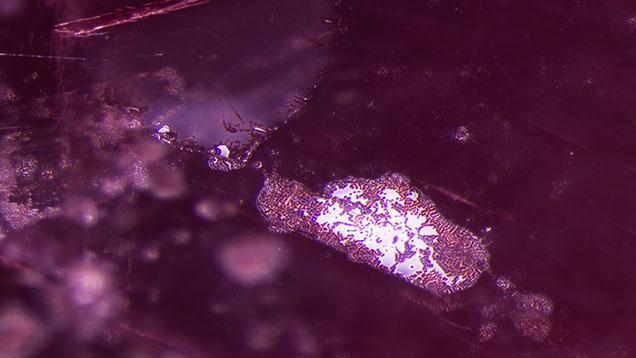
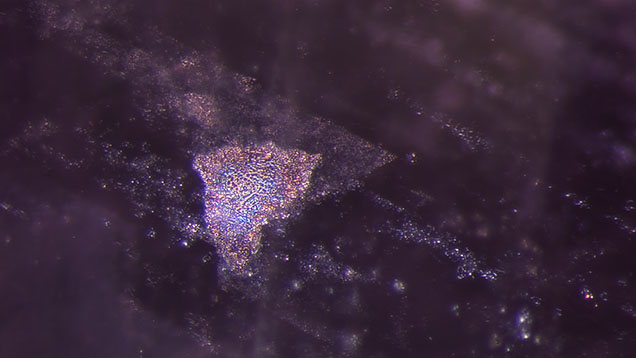
One interesting characteristic was the presence of several flat plates with a mottled surface appearance (figure 1), which may have been heated remnants of the oriented lamellae sometimes seen in Tanzanian spinel. Partially healed fissures with a glassy appearance and irregular melted channels were also observed (figure 2). These features were quite different from the fingerprints often present in unheated spinel.
E. Billie Hughes is a gemologist and cofounder of Lotus Gemology in Bangkok.
Although most spinels that pass through gemological laboratories are untreated, treated samples are occasionally received. Oiling is the most common treatment, but heated spinels are observed on rare occasions.
A red spinel was recently examined, with a declared origin of Tanzania. Both the photoluminescence spectrum and microscopic observations provided evidence that the stone had been heated. Given how rarely heated spinel is encountered, the inclusion scenes were worth documenting.
One interesting characteristic was the presence of several flat plates with a mottled surface appearance (figure 1), which may have been heated remnants of the oriented lamellae sometimes seen in Tanzanian spinel. Partially healed fissures with a glassy appearance and irregular melted channels were also observed (figure 2). These features were quite different from the fingerprints often present in unheated spinel.
E. Billie Hughes is a gemologist and cofounder of Lotus Gemology in Bangkok.