Wild & Petsch (Idar-Oberstein, Germany) was formed when two established companies, headed by brothers-in-law Alexander Wild and Thomas Petsch, joined forces. The roots of the merged company go back to 1901. Today the firm is still sourcing rough and faceting stones in their 15-cutter workshop in Idar-Oberstein. Over the last few years they have increased their quality levels, embracing the slogan “Nothing leaves our offices that is not perfect.” While most of their work involves freeform hand faceting, machine-assisted techniques are used during preforming to achieve optimal results. They supply other businesses mainly through trade shows and an international network of distributors.
According to Alexander Wild, high-quality material is not limited to facet-grade rough. Wild & Petsch produces faceted stones, cabochons, and beads, but all must be of the highest quality. To guarantee high standards of their craftsmanship, the firm has started an apprenticeship program. During this three-year period, enrollees learn high-level lapidary skills in the company’s professional workshop while attending school. After this period, they are certified as gem cutters, and after a few more years they can receive the distinction of Master Gem Cutter. The region has seen a renewed interest in lapidary work among young men and women.
All the material cut in the workshop is sourced by Wild & Petsch. They travel to the producing areas and buy as close to the mines as possible. In some cases, this means buying at the source, which requires a strong relationship with the mine owners. Wild & Petsch has such relationships with tourmaline miners in East Africa. Elsewhere, they collect stones in the local markets (e.g., Arusha, Tanzania) where material from a wide area comes together.
Wild said the rough trade has not changed much in the last few decades. As new sources are found, it remains extremely important to maintain contact with the source and the end client to strike the best deals. Flexibility is key, as they must be able to check out new finds right away. For example, the majority of beryl is sourced from Africa, but in the mid-1990s the most amazing materials came from Ukraine and other former Soviet states. Without an extensive international network that covers nontraditional mining areas, such opportunities would be missed.
The biggest change in recent years is likely the speed at which information travels. Today a single social media post about a new find can alert the whole world, but simply having that information is not sufficient. Rough buying is clearly more complex than traveling to mining areas with sufficient funds. Being able to judge parcels quickly in terms of quality and value—and having the confidence to invest in the material—requires years of experience. This is not a skill that can be learned in school. In this area, established companies like Wild & Petsch have an enormous advantage.
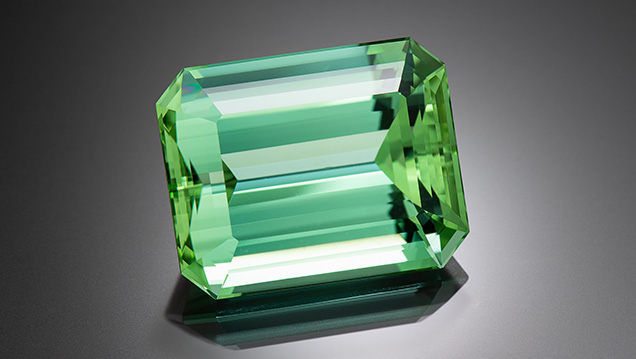
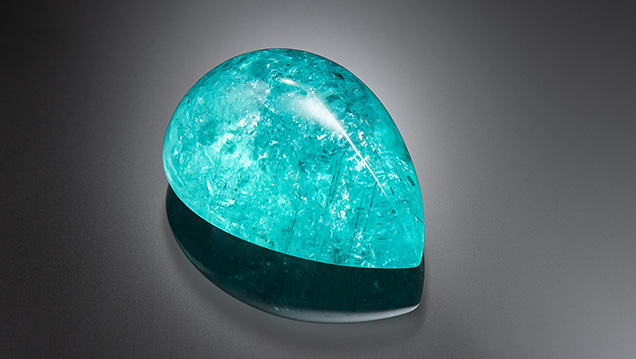
For Wild & Petsch, the most exciting material in the last five years has been Mozambican cuprian tourmaline (figure 1), which satisfies a market demand created by the original Paraíba tourmalines from Brazil. Another exciting find is green non-cuprian tourmaline from Mozambique (figure 2), with its fresh, minty colors and blue-green tones. Apart from tourmaline, the company works with a wide range of colored gemstones, including different beryls, fine tanzanite, and African garnets.
Wild acknowledged that regional trends strongly impact rough buying and finished goods sales, using the interest in bicolor tourmaline from Asia about 10 years ago as an example. Many dealers had those stones in stock for decades already, with prices established. Clients paid a premium for these tourmalines, and everyone was happy to sell their old stock for an additional profit; this also raised prices at the source. This unusual market behavior did not last, and prices quickly collapsed. As a result, many people are now sitting on very expensive rough material that does not conform to current market prices. Even though those trends impact the trade on different levels, Alexander Wild stands by the motto “Good taste is international.”
Responsible practices have become increasingly important in the gem trade, and Wild & Petsch is working on its own set of standards to provide to customers. Wild said that his larger clients have already requested such information. He noted, “This is a rocky road with many challenges and obstacles. We will have to take a realistic approach and acknowledge that there will be limits to what we can do and not everything is within reach. Unfortunately, you can’t control the world.” Wild does believe that everyone in the trade should see how they can apply responsible practices in sorting, cutting, manufacturing, and exporting.
Wild & Petsch (Idar-Oberstein, Germany) was formed when two established companies, headed by brothers-in-law Alexander Wild and Thomas Petsch, joined forces. The roots of the merged company go back to 1901. Today the firm is still sourcing rough and faceting stones in their 15-cutter workshop in Idar-Oberstein. Over the last few years they have increased their quality levels, embracing the slogan “Nothing leaves our offices that is not perfect.” While most of their work involves freeform hand faceting, machine-assisted techniques are used during preforming to achieve optimal results. They supply other businesses mainly through trade shows and an international network of distributors.
According to Alexander Wild, high-quality material is not limited to facet-grade rough. Wild & Petsch produces faceted stones, cabochons, and beads, but all must be of the highest quality. To guarantee high standards of their craftsmanship, the firm has started an apprenticeship program. During this three-year period, enrollees learn high-level lapidary skills in the company’s professional workshop while attending school. After this period, they are certified as gem cutters, and after a few more years they can receive the distinction of Master Gem Cutter. The region has seen a renewed interest in lapidary work among young men and women.
All the material cut in the workshop is sourced by Wild & Petsch. They travel to the producing areas and buy as close to the mines as possible. In some cases, this means buying at the source, which requires a strong relationship with the mine owners. Wild & Petsch has such relationships with tourmaline miners in East Africa. Elsewhere, they collect stones in the local markets (e.g., Arusha, Tanzania) where material from a wide area comes together.
Wild said the rough trade has not changed much in the last few decades. As new sources are found, it remains extremely important to maintain contact with the source and the end client to strike the best deals. Flexibility is key, as they must be able to check out new finds right away. For example, the majority of beryl is sourced from Africa, but in the mid-1990s the most amazing materials came from Ukraine and other former Soviet states. Without an extensive international network that covers nontraditional mining areas, such opportunities would be missed.
The biggest change in recent years is likely the speed at which information travels. Today a single social media post about a new find can alert the whole world, but simply having that information is not sufficient. Rough buying is clearly more complex than traveling to mining areas with sufficient funds. Being able to judge parcels quickly in terms of quality and value—and having the confidence to invest in the material—requires years of experience. This is not a skill that can be learned in school. In this area, established companies like Wild & Petsch have an enormous advantage.
For Wild & Petsch, the most exciting material in the last five years has been Mozambican cuprian tourmaline (figure 1), which satisfies a market demand created by the original Paraíba tourmalines from Brazil. Another exciting find is green non-cuprian tourmaline from Mozambique (figure 2), with its fresh, minty colors and blue-green tones. Apart from tourmaline, the company works with a wide range of colored gemstones, including different beryls, fine tanzanite, and African garnets.
Wild acknowledged that regional trends strongly impact rough buying and finished goods sales, using the interest in bicolor tourmaline from Asia about 10 years ago as an example. Many dealers had those stones in stock for decades already, with prices established. Clients paid a premium for these tourmalines, and everyone was happy to sell their old stock for an additional profit; this also raised prices at the source. This unusual market behavior did not last, and prices quickly collapsed. As a result, many people are now sitting on very expensive rough material that does not conform to current market prices. Even though those trends impact the trade on different levels, Alexander Wild stands by the motto “Good taste is international.”
Responsible practices have become increasingly important in the gem trade, and Wild & Petsch is working on its own set of standards to provide to customers. Wild said that his larger clients have already requested such information. He noted, “This is a rocky road with many challenges and obstacles. We will have to take a realistic approach and acknowledge that there will be limits to what we can do and not everything is within reach. Unfortunately, you can’t control the world.” Wild does believe that everyone in the trade should see how they can apply responsible practices in sorting, cutting, manufacturing, and exporting.