
As the industry sees technology become more involved in daily gem trading and responsible sourcing has become a hot topic, Jean Claude Michelou, the editor-in-chief of InColor and a veteran of the industry, shared his perspective about supply chain transparency, beneficiation in source countries, and recent development of a Nigerian sapphire mining project.
While the diamond industry is already applying the blockchain concept, Michelou believes it is also the future of the colored stone counterpart. Blockchain and cryptocurrency both have the potential to increase the transparency of the colored stone supply chain by digitally recording all trading activities between different parties involved in the gem trade. He pointed out why miners, dealers, big brands, and consumers all need more transparency. The big jewelry brands especially need transparency to reinforce brand image and consumer confidence. Therefore, he expects the real changes will start with these companies, and gradually other players will be drawn in.
Loading video player...
Jean Claude Michelou and the Supply Chain
Jean Claude Michelou reviews factors that he believes will affect the gem and jewelry industry’s supply chain.
Michelou also sees the impending shortening of the supply chain, especially as new technologies such as mobile devices become readily available even in the very remote mining areas. Even though many do not welcome the disappearance of the middleman between the supplier and the end consumers, it is unavoidable if no extra value can be added other than sharing the margin with both ends.
For the past decade, Michelou has taken part in several beneficiation projects initiated by multiple organizations. One project he is highly involved with is in the Swat Valley emerald deposits of Pakistan. Before he joined this project, a partnership between the local miners and a foreign company worked quite well for a three-year period. The company bought all the finished stones that were cut and faceted by local cutters. When this partnership stopped for unknown reasons, Michelou was contacted by locals who knew of his expertise.
Loading video player...
Gemstone Samples from Pakistan and Afghanistan
Gemstone Samples from Pakistan and Afghanistan
Jean Claude Michelou displays emerald from Pakistan’s Swat Valley and lapis lazuli from Afghanistan.
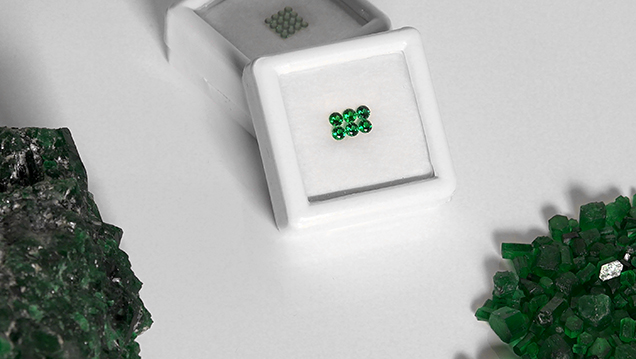
There are three mines in Swat Valley. The one that this project is working on has about 80 to 100 individual tunnels. Trained local women, usually the wives of miners, can handle 1.5–3.0 ct round brilliant cuts very well. Michelou became the liaison between them and a luxury jewelry brand in Europe that offered these women training and paid them a $500 per month salary. If these rough emeralds were transported to Jaipur for faceting, the cost would in fact be lower. However, the luxury brands are willing to pay more to guarantee a transparent supply chain since it enhances their brand image for consumers who care about where the stones are from. It also improves their reputation with the local people. Even though many rough stones are still exported to other countries for further processing, at least a portion of them stay in Pakistan for services that benefit the community through employment and added value to the resource (figure 1).
Loading video player...
Emerald Deposits of Pakistan’s Swat Valley
Jean Claude Michelou recounts mining and beneficiation efforts at the emerald mines in Pakistan.
Finally, Michelou talked about his involvement in a Nigerian sapphire mining venture. Although the project was delayed for eight months, it will be a large-scale operation with two washing plants. The first plant will have a washing capacity of 50 tons per hour. From his time spent in Nigeria and Pakistan, Michelou has rich experience working with the people at the source. He said that understanding the local culture is very important for any company or individual wanting to start a gem mining or trading enterprise in these source countries. His personal experience has told him that trying to adapt the local people to the Western way of doing business is a challenge, especially at the beginning stage of the collaboration. One must gradually prove to the locals that a different approach can produce results that will benefit them tremendously, and this will help to change their mindset.
Loading video player...
Sapphire Mining in Nigeria
Jean Claude Michelou discusses a new large-scale sapphire mining venture in Nigeria.
As the industry sees technology become more involved in daily gem trading and responsible sourcing has become a hot topic, Jean Claude Michelou, the editor-in-chief of InColor and a veteran of the industry, shared his perspective about supply chain transparency, beneficiation in source countries, and recent development of a Nigerian sapphire mining project.
While the diamond industry is already applying the blockchain concept, Michelou believes it is also the future of the colored stone counterpart. Blockchain and cryptocurrency both have the potential to increase the transparency of the colored stone supply chain by digitally recording all trading activities between different parties involved in the gem trade. He pointed out why miners, dealers, big brands, and consumers all need more transparency. The big jewelry brands especially need transparency to reinforce brand image and consumer confidence. Therefore, he expects the real changes will start with these companies, and gradually other players will be drawn in.
Loading video player...
Jean Claude Michelou and the Supply Chain
Jean Claude Michelou reviews factors that he believes will affect the gem and jewelry industry’s supply chain.
Michelou also sees the impending shortening of the supply chain, especially as new technologies such as mobile devices become readily available even in the very remote mining areas. Even though many do not welcome the disappearance of the middleman between the supplier and the end consumers, it is unavoidable if no extra value can be added other than sharing the margin with both ends.
For the past decade, Michelou has taken part in several beneficiation projects initiated by multiple organizations. One project he is highly involved with is in the Swat Valley emerald deposits of Pakistan. Before he joined this project, a partnership between the local miners and a foreign company worked quite well for a three-year period. The company bought all the finished stones that were cut and faceted by local cutters. When this partnership stopped for unknown reasons, Michelou was contacted by locals who knew of his expertise.
Loading video player...
Gemstone Samples from Pakistan and Afghanistan
Gemstone Samples from Pakistan and Afghanistan
Jean Claude Michelou displays emerald from Pakistan’s Swat Valley and lapis lazuli from Afghanistan.
There are three mines in Swat Valley. The one that this project is working on has about 80 to 100 individual tunnels. Trained local women, usually the wives of miners, can handle 1.5–3.0 ct round brilliant cuts very well. Michelou became the liaison between them and a luxury jewelry brand in Europe that offered these women training and paid them a $500 per month salary. If these rough emeralds were transported to Jaipur for faceting, the cost would in fact be lower. However, the luxury brands are willing to pay more to guarantee a transparent supply chain since it enhances their brand image for consumers who care about where the stones are from. It also improves their reputation with the local people. Even though many rough stones are still exported to other countries for further processing, at least a portion of them stay in Pakistan for services that benefit the community through employment and added value to the resource (figure 1).
Loading video player...
Emerald Deposits of Pakistan’s Swat Valley
Jean Claude Michelou recounts mining and beneficiation efforts at the emerald mines in Pakistan.
Finally, Michelou talked about his involvement in a Nigerian sapphire mining venture. Although the project was delayed for eight months, it will be a large-scale operation with two washing plants. The first plant will have a washing capacity of 50 tons per hour. From his time spent in Nigeria and Pakistan, Michelou has rich experience working with the people at the source. He said that understanding the local culture is very important for any company or individual wanting to start a gem mining or trading enterprise in these source countries. His personal experience has told him that trying to adapt the local people to the Western way of doing business is a challenge, especially at the beginning stage of the collaboration. One must gradually prove to the locals that a different approach can produce results that will benefit them tremendously, and this will help to change their mindset.
Loading video player...
Sapphire Mining in Nigeria
Jean Claude Michelou discusses a new large-scale sapphire mining venture in Nigeria.