

Field gemology highlights the connection among gemstones, the earth, the trade, and the communities involved in production. For decades, GIA gemologists have traveled the world to visit gem mining and trading locales, documenting conditions in the field and collecting research samples. This systematic collection of research samples on site is essential to ensuring that data supporting origin determination and related research areas remain current and robust. This G&G column provides contextual background and presents photos capturing the seemingly common and occasionally spectacular observations encountered during these visits to gemstone sources.
In November 2025, a team of GIA gemologists conducted a field visit to northern Vietnam to document the local mining and trading scene and to enhance their understanding of the region’s gemstone culture.
Collecting samples in Vietnam often requires hiking to remote locations where miners are still finding gems. The GIA team spent several days making trips across narrow jungle trails into the surrounding hills to meet with local miners, observe their practices, and collect research samples alongside them. Engaging with gemstone miners is a valuable component of such fieldwork, as they represent the earliest stage of the supply chain, forming the connection between the earth and the trade.
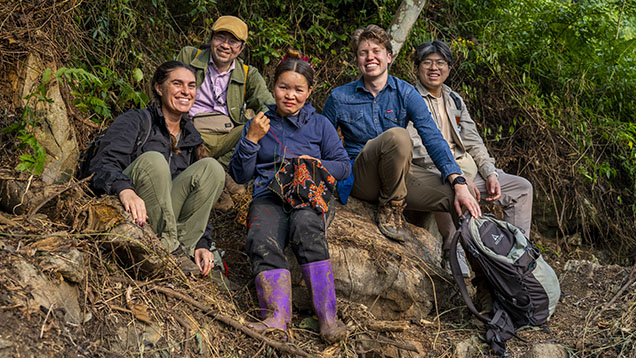
Part of the GIA team in Vietnam, from left to right, including Jessa Rizzo, Yusuke Katsurada, Alex Goodsuhm, and Narint Jaisanit, along with a local ruby and spinel miner (center), in Luc Yen, Vietnam.
Loading video player...
Mining in Bai Tai Valley, Vietnam
GEMSTONES
Deep in the hills of northern Vietnam lies the town of Luc Yen. The surrounding valleys, caves, and hill flanks are rich in gems, but were only discovered in the late 1980s. Since then, the region has been growing in popularity among gemstone connoisseurs, with more gems being discovered across a wider area in recent years.
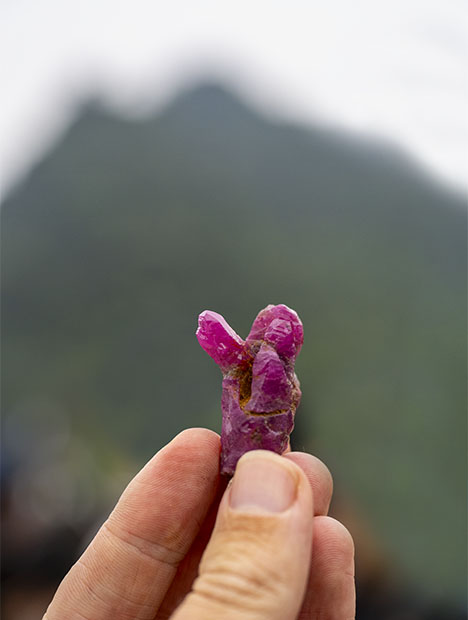
Ruby was the primary gemstone that initiated the mining boom in northern Vietnam, with large-scale operations active in the surrounding valleys during the early 1990s. Today, ruby production is limited, as most of the easily accessible deposits have been depleted; however, material continues to be recovered from less accessible areas. While the relatively limited quantity of facet-grade material is typically directed to the international market, lower-grade rubies remain readily available in local markets, along with crystal specimens such as this ruby cluster shown above.
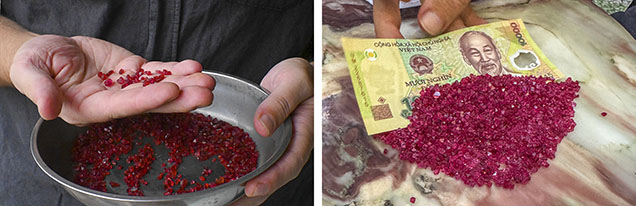
Currently, most of the mining and trading interest is focused on spinel in a wide range of colors, with reds and pinks predominating. Large parcels are routinely seen in the market, such as those shown above, although evaluating them can be extremely complex. The exact hues and intensities of the pink and red stones have a significant impact on value, with prices ranging from only a few US$ per gram to several thousand per gram for large, clean, and brightly colored stones.
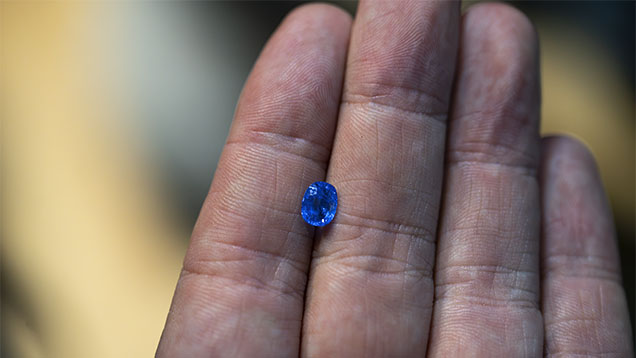
The highly prized cobalt blue spinel commands an absolute premium. While blue spinel is found in multiple localities around the world, the richest blue stones are almost synonymous with this region in Vietnam. In these saturated colors, sizes exceeding half a carat are exceptionally rare and clean material is extremely scarce.
Loading video player...
Opalescent Sapphires
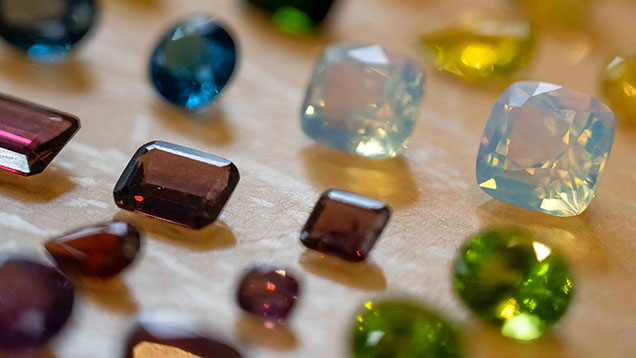
Over time, additional gem varieties have been discovered, including several types of garnet and tourmaline, with yellow colors being the most sought after. Opalescent sapphires have gained considerable popularity in recent months, combining a moonstone-like glow and cloudiness with the durability characteristic of sapphire.
MINING
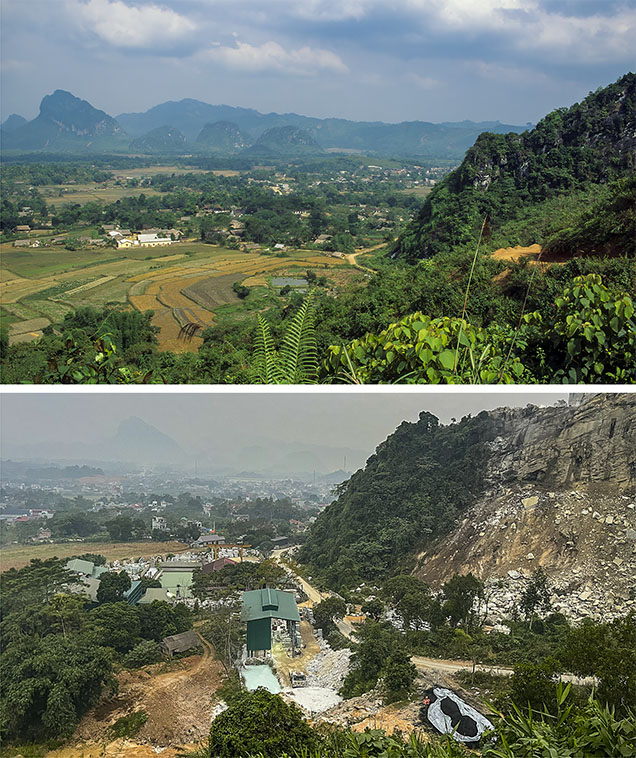
Most of Luc Yen’s gem resources can be traced to the abundance of marble that dominates the local geology. Initially regarded as the host rock for gems, marble has since become an important economic pillar for the local industry. In recent decades, numerous marble mining operations have established quarries to cater to the growing international demand for high-quality white marble. The first two photos below, taken 35 years apart from the same viewpoint, show the development of a large marble mining operation.
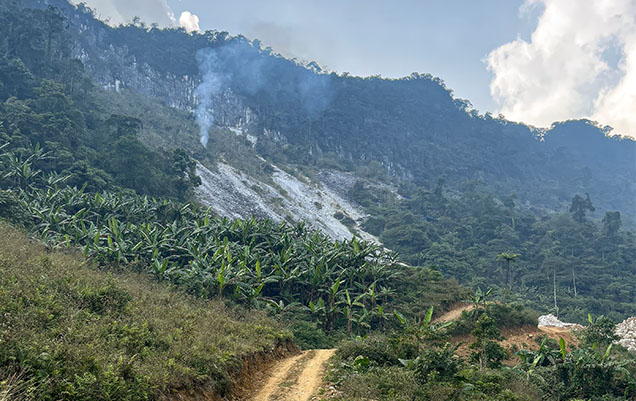
Near the village of An Phu lies a mining area known as Cuong Troi, which translates roughly to “gate to the sky.” Higher on the hillsides, crews break the marble in pursuit of spinel crystals, leaving a prominent white scar across the landscape, where freshly exposed marble contrasts sharply with the surrounding jungle, as seen above.
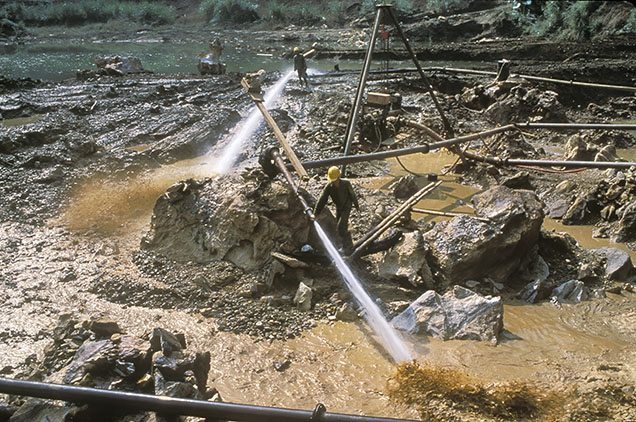
In the early days of gem mining around Luc Yen, attention was focused on alluvial deposits located at the bases of narrow valleys. Over time, natural forces broke down the marble and released the gemstones from its matrix, resulting in thick beds of sediment that were rich in gems and easy to exploit. This photo above from 1992 illustrates how rubies were mined during that period, when heavy machinery enabled the efficient washing and screening of gravels to recover the stones.
Loading video player...
Miners Collect Gravel in Minh Tien, Vietnam
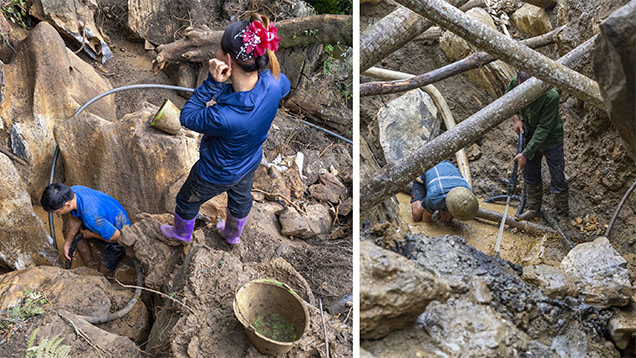
Mining in Luc Yen continues today, though it is markedly different. Much of the easily accessible thick sediment layers have been depleted, and the remaining gem-bearing material is largely confined to small cracks and caves between boulders and rocks, where the use of heavy equipment is not feasible. Small crews of miners work these deposits manually, pumping water in to turn the accumulated mud into a slurry that drains away, leaving behind the heavier pebbles. This material is then scooped out and manually washed to reveal the gems. Throughout the narrow valleys and higher elevations of the surrounding jungles, small mining crews can be observed digging between boulders in search of gems.
THE MARKET
Given the abundance of gem material in the region, a vibrant trading scene quickly developed. While the majority of goods on display are locally sourced, globalization has extended to these mountainous areas of Vietnam. Gems from southern Vietnam, including sapphire and peridot, as well as stones from other continents, are increasingly available in the markets.
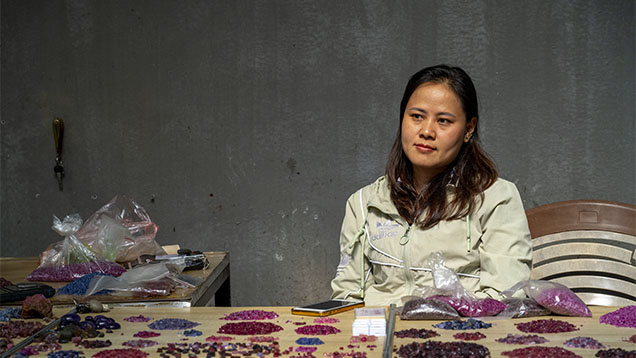
The main markets are located in Luc Yen city center, where gem traders set up tables every morning to display their stones. This allows potential buyers to efficiently scan the available goods; however, rare and high-value stones are not always openly exhibited.
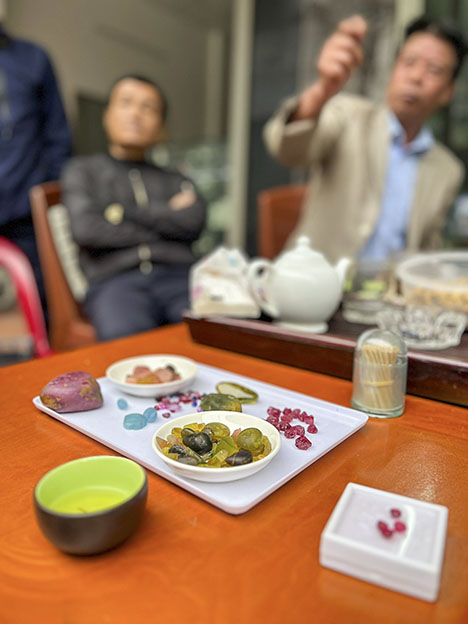
In the alleys surrounding the markets, many gem dealers conduct business over a cup of tea. Stones are passed around and offers are made, typically involving higher-value material.
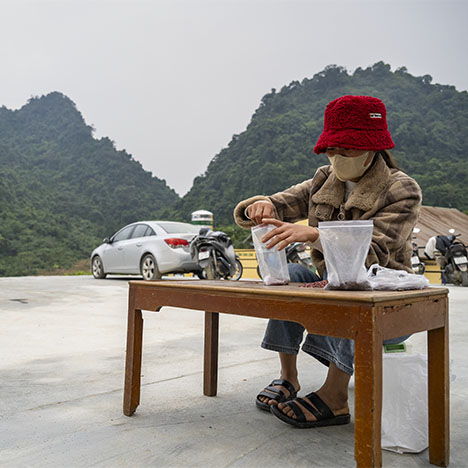
In the village of An Phu, located near several significant spinel mining areas, a small outdoor market takes place each afternoon, with dealers and miners gathering to display their parcels of rough stones.
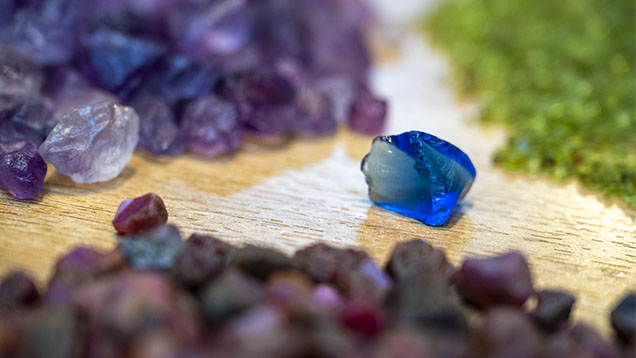
With the strong demand for fine rough and the rapid development of the trading sector, the presence of fraudulent material is inevitable. During this most recent visit to the Luc Yen markets, this suspiciously large, clean, and bright piece of rough shown above attracted attention. Based on visual features (color concentrations and conchoidal fractures), it was immediately clear that the specimen was unusual. Examination with a 10× loupe revealed distinct gas bubbles, confirming this was a piece of glass fashioned to imitate a blue spinel crystal. Such stones highlight that even in close proximity to the mines, caution should always be exercised.
Loading video player...
Glass Cabochon Imitating Blue Spinel
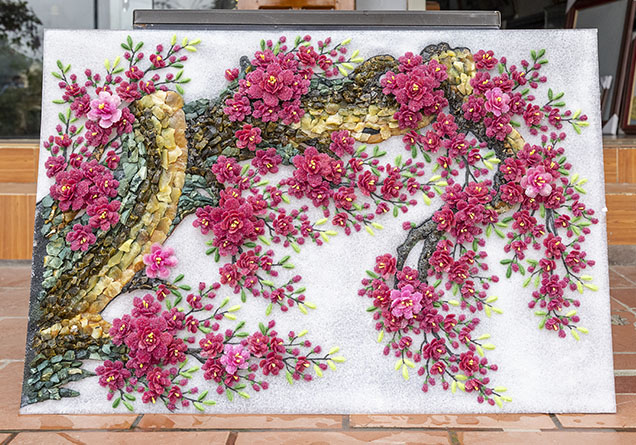
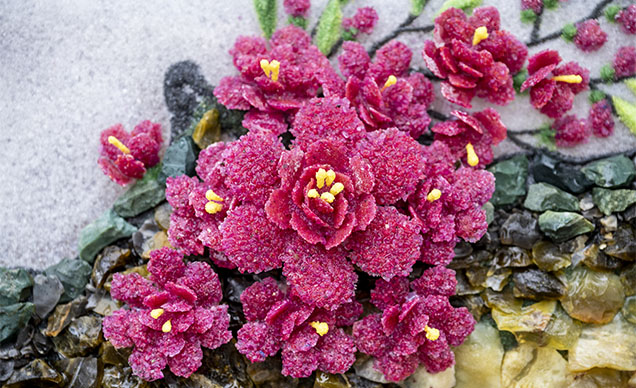
In the alleys around the Luc Yen markets, multiple workshops produce “gem paintings,” such as the one pictured above. Using gems of intense color but small size and low clarity, artists create delicate patterns and scenes that often hold strong cultural meaning. This side industry complements traditional gem trading, as it relies on a steady supply of gem minerals not suitable for faceting.
Loading video player...
Gem Painting from the Luc Yen Market
Wim Vertriest is manager of field gemology at GIA in Bangkok.
Field gemology highlights the connection among gemstones, the earth, the trade, and the communities involved in production. For decades, GIA gemologists have traveled the world to visit gem mining and trading locales, documenting conditions in the field and collecting research samples. This systematic collection of research samples on site is essential to ensuring that data supporting origin determination and related research areas remain current and robust. This G&G column provides contextual background and presents photos capturing the seemingly common and occasionally spectacular observations encountered during these visits to gemstone sources.
In November 2025, a team of GIA gemologists conducted a field visit to northern Vietnam to document the local mining and trading scene and to enhance their understanding of the region’s gemstone culture.
Collecting samples in Vietnam often requires hiking to remote locations where miners are still finding gems. The GIA team spent several days making trips across narrow jungle trails into the surrounding hills to meet with local miners, observe their practices, and collect research samples alongside them. Engaging with gemstone miners is a valuable component of such fieldwork, as they represent the earliest stage of the supply chain, forming the connection between the earth and the trade.
Part of the GIA team in Vietnam, from left to right, including Jessa Rizzo, Yusuke Katsurada, Alex Goodsuhm, and Narint Jaisanit, along with a local ruby and spinel miner (center), in Luc Yen, Vietnam.
Loading video player...
Mining in Bai Tai Valley, Vietnam
Wim Vertriest is manager of field gemology at GIA in Bangkok.