ABSTRACT
From its earliest adoption as a tool by early human species more than 1.5 million years ago to its continued use in jewelry, shell has a historical reach unrivaled by any other gem material. As the first global currency, cowrie shells fueled industries that shaped humankind and left a lasting impact on various cultures. Native Americans created their own shell-based currencies that were still in use during the colonial period. Nacreous freshwater shells were once the most popular button material in the United States, with factories in the Midwest outproducing all other global sources. The Spondylus shell was one of the most treasured materials among Mesoamerican cultures—the Inca traded gold, silver, and emeralds for it. Today, Native American tribes such as the Navajo, Zuni, and Hopi continue to incorporate Spondylus into their jewelry. Shells have also served as enduring religious symbols and as a seemingly endless source of artistic inspiration. Although their popularity has waned and their historical significance is often overlooked, their influence remains unparalleled among gem materials.
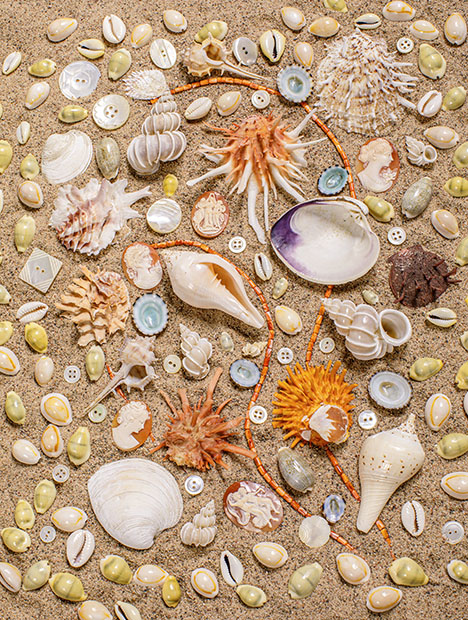
Aside from their role in the creation of pearls, shells seldom receive recognition for their gemological significance and profound historical relevance. Their extensive use as gems, jewelry, ornaments, evolutionary benchmarks, currency, artistic inspiration, and symbols across the millennia sets them apart from other gem materials (figure 1). From their first use as tools by hominins 1.6 million years ago (Ma) (Choi and Driwantoro, 2007) to their ornamental applications today, shells occupy a unique position. Exhibiting some of nature’s most intriguing designs, shells embody a series of paradoxes: impossibly geometric yet wholly natural, rocklike yet organic, and rigid protective vessels for some of the softest living bodies. A rough, unassuming exterior often conceals the smooth, colorful iridescent nacre lining the interior. Shells are enduring relics that survive long after the living mollusks have died. Their architecture has inspired artists, architects, economies, and religions alike, weaving shells into the fabric of human history.
Shells are the hard protective cases secreted by mollusks, a large phylum of invertebrates. The Mollusca phylum can be divided into eight classes, three of which are the most widely known and culturally important: Bivalvia (clams, scallops, and oysters), Gastropoda (snails, whelks, and conches), and Cephalopoda (squids, octopuses, and nautilus). They are constructed with both mineral and biological materials. The primary mineral component is calcium carbonate, while the biological components include protein and chitin. Calcium carbonate exists either as calcite, aragonite, or very rarely vaterite. Of these, aragonite is responsible for the beautiful iridescent nacre on shells referred to as mother-of-pearl. Mollusks do not shed their shells; instead, the shells grow progressively as the organisms develop.
Paleontological evidence suggests that all mollusks evolved from a single shelled ancestor at least 540 Ma (Barnett, 2021). This is supported by a fossil record unmatched by any other organism. Some mollusks are so ubiquitous throughout a specific era, such as the ammonites that flourished between the Devonian period (419.2–358.9 Ma) and the Cretaceous (145–66 Ma), that their presence is deemed an index fossil—a marker of geologic time. Fossilized marine shells are also key constituents of limestone and its variants, including chalk, travertine, and marble.
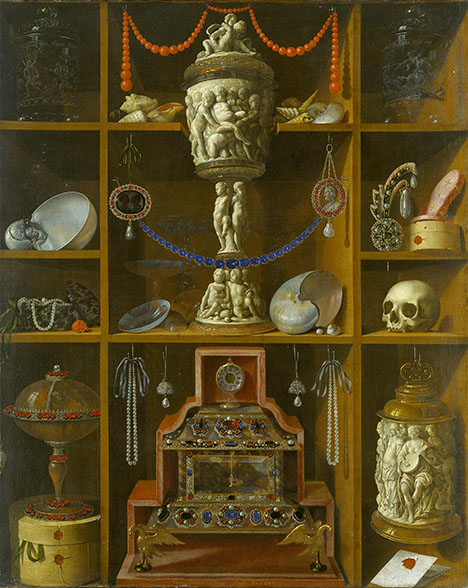
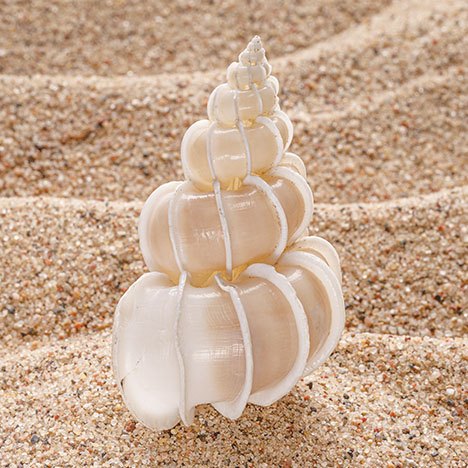
Conchology, the study and collection of mollusk shells, reached its height in Europe during the Age of Discovery, spanning the fifteenth through eighteenth centuries. During this period, shells became prized objects in cabinets of curiosities (Moretzsohn, 2023). These collections of naturalia attempted to reflect the great diversity of the known world within the confines of a room or cabinet—a trove of natural wonders not found in books (figure 2). The craze started with European sailors who brought home souvenirs from their distant travels, sparking the interest of the wealthy and educated. These collections included gems, minerals, taxidermy, bones, and dried plants, and shells were often the most treasured items. Among these were nautilus shells, heavily polished to reveal their mother-of-pearl layer and set in gold for use as a cup. The rarer and more exquisite the specimen, the better. The precious wentletrap shell (Epitonium scalare) embodied all of these qualities and became the most coveted shell of the period (figure 3). Its name comes from the Dutch word for spiral staircase, a tribute to the shell’s steep white spirals. The first mention of a wentletrap in a collection is from 1663. By 1750, Holy Roman Emperor Francis I reportedly paid 4,000 guilders for one specimen—equivalent to more than US$114,000 today (Barnett, 2021). But wentletraps lost their mystique and value just a few years later, once collectors learned they could be found in abundance in the sands of the southwestern Pacific.
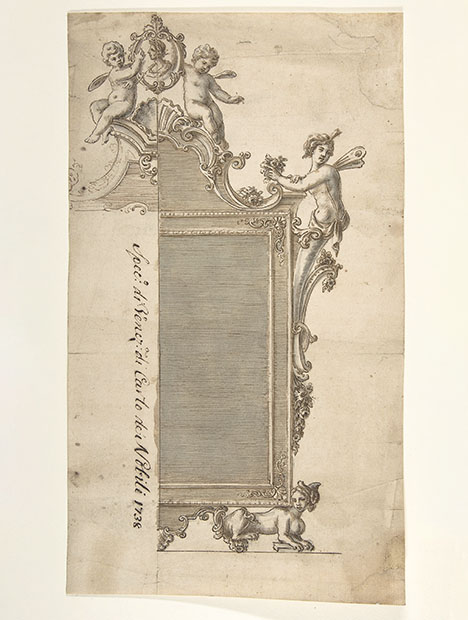
The following century saw shells become a central point of inspiration for two major French art movements. The Rococo era (mid- to late-eighteenth century) was characterized by an excessively ornamental style, pompous and purely frivolous. The movement emerged from the earlier Rocaille era, which heavily incorporated shells into its designs and derived its name from rocaille, a decorative building material composed of rock fragments. The scallop shell specifically was a signature motif of the Rococo movement, featured in everyday objects such as tableware, accessories, and especially carved furniture (figure 4). But these are not the earliest examples of shell’s cultural influence. The use of this material predates art movements, manifesting over millennia in many forms across global cultures.
PRIMITIVE BEGINNINGS
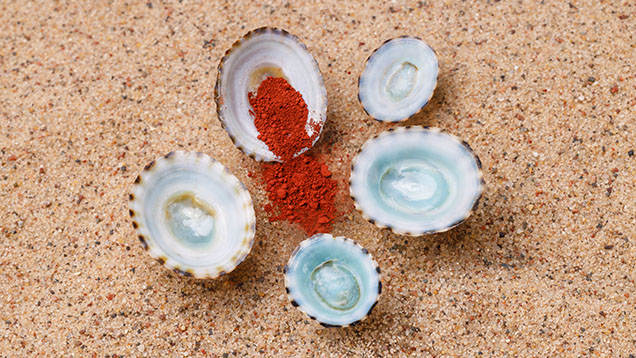
The intersection of humans and shell occurred before the existence of Homo sapiens. The earliest evidence of shell use is a 1.5 to 1.6 million-year-old cutting tool used by Homo erectus (Choi and Driwantoro, 2007). Another discovery of this hominin’s mollusk use found that an extinct freshwater bivalve (Pseudodon vondembuschianus trinilensis), dated as 430,000 to 540,000 years old, was collected from Indonesian waters, opened with skill, and consumed (Joordens et al., 2015). The same study found a shell with a polished edge, which suggests it was used for cutting or scraping, and another specimen that displayed geometric engravings on its outer surface and could be considered the world’s earliest known “art.” Evidence of limpet shells being used to scrape, extract, and process red ochre pigment for cave paintings 17,000 to 26,000 years ago has been found at sites in the Iberian Peninsula (Cuenca-Solana et al., 2016) (figure 5). Similar evidence in the region links shells to the production of tanned hides, also during the Upper Paleolithic (Cuenca-Solana et al., 2013).
The affinity for shell continued with the evolution into Homo sapiens. As intellect developed, so did the need for more sophisticated forms of expression. This is clear from the discovery of Tritia gibbosula shell beads found in Algeria, Israel, and South Africa, which date back as far as 135,000 years (Vanhaeren et al., 2006). The shells were pierced, strung, and worn by early humans solely for the purpose of ornamentation. Similar finds of the same shell species unearthed in Morocco are at least 142,000 years old, making them the oldest known jewelry (Sehasseh et al., 2021). The psychological implications of these adornments are profound, as they reveal some of the earliest forms of symbolic expression. They indicate a more advanced level of self-awareness and intellect not seen in other modern animals. Jewelry enabled these early humans to project an identity that went beyond their biological selves—a striking sign of an emerging consciousness.
Over time, the value associated with shells continued to rise, culminating in their adoption as currency within numerous societies across Asia, Africa, and the Americas. Shell currencies were used not only in exchange for goods and services, but also as symbolic offerings in religious and ceremonial practices. Cowrie shells (Cypraeidae family) in particular became humanity’s first global currency, with a use spanning 1,500 years (Yang, 2019). Their purchasing power was exercised not just as cash for small daily items, but also as economic instruments that shaped global civilization through trade. Cowries also influenced cultures through their use in jewelry and decoration, a tradition that lives on for many.
CURRENCY BEFORE COIN
The concept of using shells as currency might appear strange and illogical to the modern mind. If shells are virtually infinite in abundance, how can they be of any value? First, it must be established that in previous centuries, access to a seashore was limited to those who lived near the water or had the means to travel. Those situated inland would likely never have the opportunity to explore a coastline. As a result, marine resources brought to landlocked communities were inherently finite and valuable. Second, only specific shell species were accepted as money within a community. These species were usually not native to the areas in which they circulated; they were transported great distances from their native waters. When societies did use locally sourced shells as money, the material was usually cut and polished in a time-consuming, labor-intensive process to prevent overproduction, akin to the mining of metals and minting of coins. These factors protected the rarity and value of each shell in circulation.
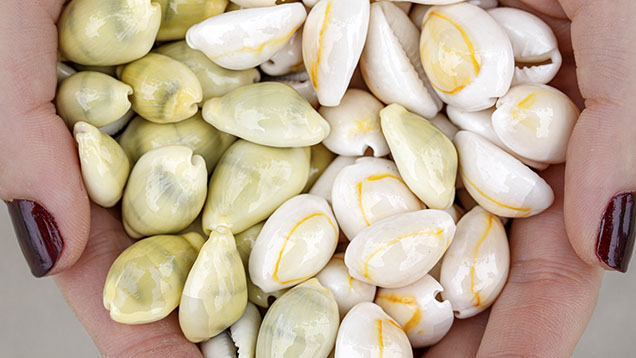
India. Of the more than 250 cowrie species, the most significant are two from the Maldive Islands: Monetaria moneta, known as the “money cowrie,” and Monetaria annulus, or “ring top cowrie” (figure 6). These shells were once exchanged extensively throughout East Asia, Southeast Asia, the Middle East, and Africa. The transition of cowries from objects of ceremony, spiritualism, and personal adornment to a formal currency is difficult to date precisely; however, it is widely accepted that cowrie shell currency originated in Bengal, where it circulated alongside metal coinage by the middle of the first millennium (Yang, 2019; Deyell, 2020). Around this time, cowries were traded for rice and used as ballast in ships traveling from the Maldives to Bengal. Their resistance to counterfeiting added to their appeal. They were used to make small daily purchases, while silver was reserved for medium-size purchases and gold for large transactions. Eventually, cowrie currency spread to northern India, where it was used in some areas until the early twentieth century (Fauvelle, 2024). Cowries were even accepted as payment by the British during the early colonial period.
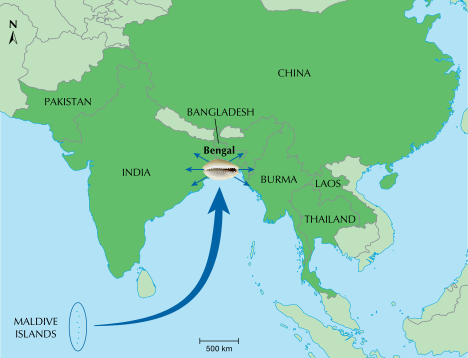
Cowrie money exchange in India extended from Bengal to Orissa by the ninth century and later into modern-day Pakistan and Afghanistan as well as Southeast Asia, including Burma (Myanmar), Thailand, and Laos (Yang, 2019) (figure 7). Its influence also extended to neighboring China, where the cowrie became a model for official metal coinage.
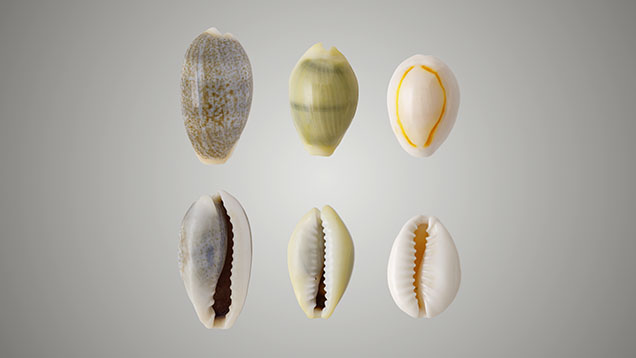
China. Cowries were imported into China by the end of the third millennium BCE where they took on a symbolic role as objects of prestige, power, and status (Fauvelle, 2024). Most of the cowries used in this region were the Monetaria moneta and to a lesser extent the Monetaria annulus and Erronea errones (figure 8), though none of these were differentiated. They were most influential in China as mortuary objects and as the inspiration for bronze cowries, a shell-shaped metal currency. Bronze cowries were produced as early as the Shang period (1600–1050 BCE) and were used most widely during the Zhou dynasty (1050–221 BCE) (Yang, 2019). The casting of bronze cowries was most prevalent in the ancient state of Chu in eastern China, as revealed by more than 100 discoveries amounting to over 150,000 pieces total (Yang, 2019). When the Qin dynasty unified China in 221 BCE, it began to standardize metal money, bringing an end to bronze cowries as Qin coinage became universally circulated up until the very end of imperial China in 1912. Genuine cowrie shells saw a brief period of renewed use during the Xin dynasty (9–25 CE), when Emperor Wang Mang made them official currency alongside tortoise shells (Yang, 2019). Unlike the bronze cowrie system, which assigned each piece the same value, genuine cowries and tortoise shells were valued by size. The end of the short-lived Xin era brought permanent replacement of cowries and tortoise shells in China.
Africa. No consideration of shell currency is complete without a discussion of the cowrie’s past and present hold on Africa. Its first appearance was in predynastic Egypt, where Monetaria moneta and Monetaria annulus functioned as decorations, charms, and amulets, before moving west (Yang, 2019). Archaeological discoveries confirm the two species reached West Africa by the end of the first millennium CE via the trans-Saharan route (Moffett et al., 2022). Cowries were used as money by West Africans in the Mali and Songhai empires long before the arrival of Europeans, but how and when this role began remains unknown. At one time, a wife could be purchased for 20,000 to 60,000 cowries, while something as trivial as a pipe load of tobacco cost only 12 shells (Hoyt, 1967). The European link came when the Portuguese first learned of cowries being used as cash in West Africa. As they entered the slave trade, they began importing shells from Bengal and later directly from the Maldives. Between 1700 and 1790, Europeans brought an estimated 10 billion cowries to the West African coast to purchase slaves for relocation to the Americas (Walvin, 2017).
With the abolition of the West African slave trade in the early nineteenth century, a new industry sustained the cowrie shell economy: the palm oil trade. This resource was in demand for lamp oil, soap making, industrial lubrication, and a variety of other applications. The palm oil trade kept cowrie currency afloat until the end of the nineteenth century, with the discovery of Monetaria annulus off the coast of East Africa. The species was harvested on a large scale and exported to West Africa, where oversupply caused the currency’s value to collapse. In response, governments ordered that all future transactions be conducted with coin instead.
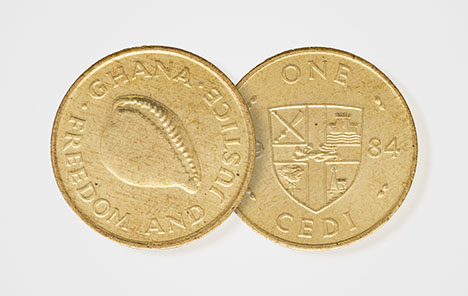

While shell money is mostly a historical footnote today, the cowrie’s legacy continues in daily life for some. Ghana’s currency is named the cedi, which directly translates to “cowrie.” The one-cedi coin issued in 1984 pays homage to its namesake (figure 9). Most striking are the cowries that have been worn by Africans as jewelry and hair accessories for centuries. Initially worn as a status symbol, they now represent fertility and tradition (Moretzsohn, 2023) (figure 10).
North America. Native Americans were not part of the global cowrie network; instead, they relied on their own shell-based system. On the west coast, shells were adopted as currency by two tribes. The Chumash of southern California used cupped beads made from Callianax biplicata shell, while the Yurok of northern California used unaltered Antalis pretiosa shells, colloquially called “tusk shells.” While these currencies sometimes crossed tribal boundaries, their interaction with colonists was minimal.
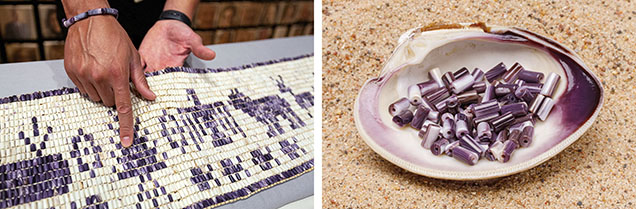
Native Americans from the northeast, however, fueled larger and more complex economies with their shell money. Thousands of years before European colonization, the Algonquian and Five Nations Iroquois tribes crafted beads from whelk shells (specifically the Busycon carica and Busycotypus canaliculatus) for use in ornamentation, social exchange, diplomatic agreements, spiritual and healing practices, courting rituals, and burial ceremonies (Otto, 2013). These beads became known as “wampum” (figure 11, left). As relations and trade were established between Native Americans and early European settlers, wampum served not only its traditional roles but also as currency. Carved with newly acquired iron tools from the Dutch, dark purple beads from the much harder quahog clam (Mercenaria mercinaria) joined the wampum as a form of currency in the 1630s (figure 11, right) (Otto, 2013). Purple beads were worth two to three times more than white beads (Gentle, 2016), perhaps due to the rarity of the color in New England waters. Apart from the quahog clam, most shells displaying bright purple, red, pink, or orange coloration come from mollusks of warm tropical seas. Wampum also had higher purchasing power than cowries due to the intensive human labor involved, as only 36 to 48 pieces could be manufactured per person per day (Yang, 2019). By the end of the seventeenth century, new technologies had led to overproduction and hyperinflation, causing the collapse of wampum as a currency, although its decorative and ritual functions supported continued commercial production until the 1880s (Bradley, 2011).
MOTHER-OF-PEARL BUTTONS
Before the advent of plastics nearly a century ago, shell nacre, or mother-of-pearl, was once the standard material for button making. Historically, natural substances such as metal, wood, bone, horn, and vegetable ivory (tagua nut) were common button options. Mother-of-pearl is one of the oldest and most widely used decorative materials throughout human history, making its sartorial contribution as buttons a logical choice. Its application in the production of buttons dates back at least to the early 1800s, with the most famous historical example being King George IV’s undershirt from 1827 (Lindbergh, 1999).
From 1860 until the end of World War II, Australia was the foremost source of marine shells for the mother-of-pearl button industry. Additional sources included the Philippines, Fiji, Singapore, Japan, and Indonesia (Jordan et al., 2019). Shells from the silver-lipped variety of Pinctada maxima, now known for producing South Sea pearls, dominated the trade; at its peak, an estimated 80–90% of all P. maxima shells harvested worldwide were made into buttons (Mullins, 2005). After harvesting, the shells were exported and sold in London, then transported to button factories, typically in France or Austria (Mullins, 2005). Other species used in the trade included Pinctada margaritifera (now associated with Tahitian pearls), Turbo marmoratus, Haliotis species (abalone), and Trochus species (Mullins, 2005).
Commercial production of shell buttons in the United States began in the late nineteenth century in northeastern cities such as New York (Biuk, 2018). Early factories relied on Pinctada maxima shells imported from Australia and operated on a small, artisanal scale. In 1891, German immigrant John Boepple recognized the economic potential of using domestic freshwater nacreous mussels (members of the Unionida order) from the Mississippi River. Boepple established a factory in Muscatine, Iowa, and within a decade, it became the world’s largest manufacturer of freshwater mother-of-pearl buttons, turning out more than 138 million buttons in 1898 alone (“The pearl button story,” n.d.). The industry was further supported by hundreds of smaller factories lining the Arkansas, Mississippi, and Tennessee rivers.
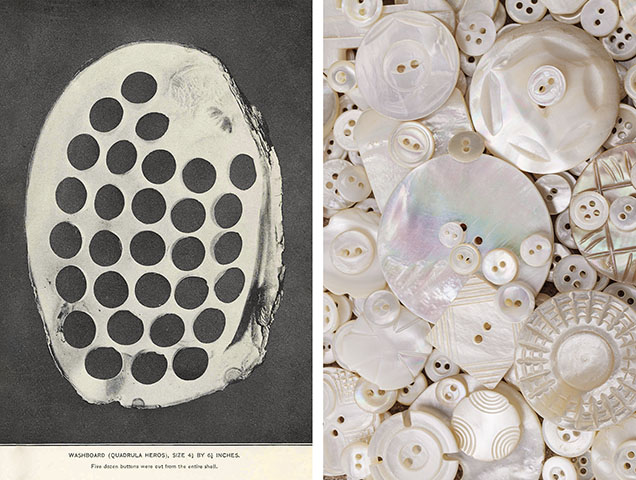
The process of creating buttons was both a technical skill and an art form. Each shell was carefully examined to maximize the number of button blanks before cutting with a lathe fitted with a core drill (figure 12, left). The blanks were then sanded and polished. To enhance their natural color and eliminate chalkiness, the buttons were tumbled in acids such as hydrochloric acid before a final tumble in finishing oil, the composition of which varied among factories (Biuk, 2018). Finally, the inset “face” and buttonholes were drilled away, creating the finished product (figure 12, right). The natural gradient of thickness and nacre quality within each shell yielded a corresponding range of button qualities. Thicker, higher-quality buttons were reserved for luxury clothing companies, while thinner, lower-quality buttons went to more affordable brands.
The shell button industry experienced significant fluctuations, rocked by waves of economic turbulence in the early twentieth century (Shoults, n.d.). While the Great Depression dramatically reduced clothing purchases, the onset of World War II and the government’s effort to conserve metal for military use revived the shell button industry. This resurgence was short-lived, however, as plastic replaced the craft by the mid-twentieth century. Remnants of abandoned or repurposed button factories can still be found along the Mississippi and Arkansas rivers, echoes from a time when natural resources were rarely wasted.
While the replacement of natural resources with plastics is often viewed as environmentally detrimental, the adoption of plastic imitation mother-of-pearl buttons may represent a rare exception. Freshwater mussels are the most endangered fauna, with half of North American species expected to be extinct within the next 100 years (Haag, 2012). Their plight began in the 1850s with a decades-long “pearl rush” that led to the overexploitation of nacreous mussels across North America, threatening several species, particularly the Margaritifera margaritifera (Haag, 2012). Their numbers were further reduced by the button industry, and now they face threats from water pollution, dam construction, river channel modification, invasive species, and climate change.
PIGMENTS
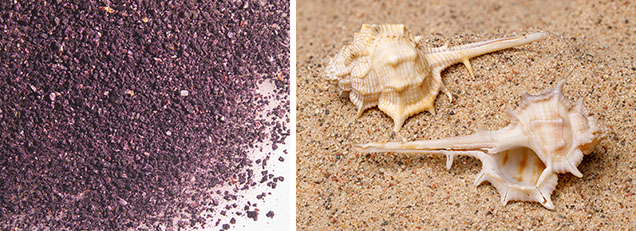
Historically, mollusks have also been the source of two notable pigments: Tyrian purple dye and gofun white pigment. Tyrian purple may have originated in Qatar on the Persian (Arabian) Gulf around 2000 BCE or on the Mediterranean island of Crete, where mounds of shells and remains of dye baths dating to 1800 BCE have been discovered (Cooksey, 2013). The dye was extracted from a variety of Muriciade-family gastropods in the Mediterranean and Indo-Pacific regions, including the Hexaplex trunculus, Nucella lapillus (“dog whelk”) (figure 13, left), Stramonita haemastoma, and especially the Bolinus brandaris (figure 13, right). Though likely not the world’s first source of purple dye, it represents the first mass-produced and industrialized purple dye. According to Pliny (77 CE), the soft tissues of the mollusks were crushed by the thousands and boiled with salt. Fleeces were then dipped into the dye before being spun and woven into threads and fabrics. Occasionally this dye was used on parchment for important manuscripts. Some 12,000 sea snails were required to produce 1.4 grams of color, and its cost was equivalent to an equal weight of gold (Cooksey, 2013). The exorbitant cost and rarity of Tyrian purple limited its use to royalty and the elite, establishing purple as a regal color. Commercial production of Tyrian purple ended with the advent of synthetic dye, first developed in 1856 (“Making color,” n.d.).
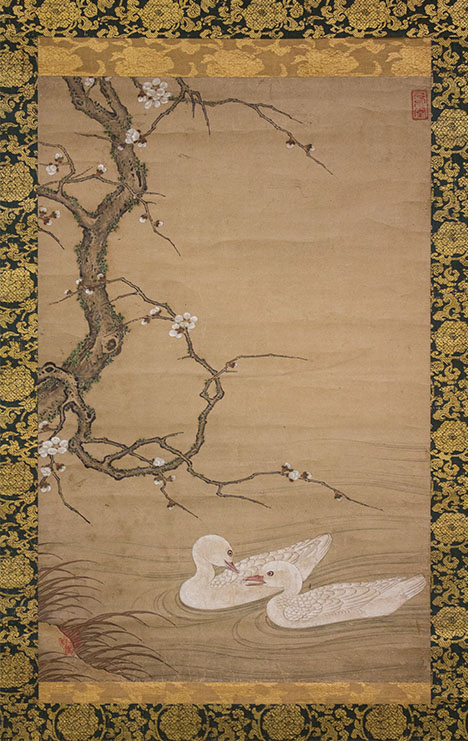
Shell has also been used to create the white pigment gofun, most notably in Japan since the late medieval period to the present, where it is still occasionally applied as an undercoat. Gofun’s use began in twelfth-century Japan as an alternative to lead-based white pigment, which was susceptible to oxidation in humid climates, often turning black (Matsubara and Okada, 2021). In contrast, gofun offered greater stability. Created from Ostrea denselamellosa, a densely laminated oyster (Matsubara and Okada, 2021), gofun is known for its soft, warm tone and pearly luster. Japan’s only remaining gofun producer reports the shells are gathered and left outside to weather for five to ten years. During this time, the organic matter erodes and the shells are naturally bleached by the sun. The shells are then crushed and refined into a chalky powder before being blended with an animal glue binder to form the paint (Kremer Pigmente, n.d.) Gofun has been used in ukiyo-e and other fine art paintings (figure 14), as well as the pale Hakata and Fushimi faces painted on traditional Japanese dolls (Gettens et al., 1993; Matsubara and Okada, 2021).
GEMS AND JEWELRY
The use of shell in jewelry spans nearly every culture and historical period. Indigenous groups have particularly valued shells and incorporated them into distinctive jewelry styles that often serve as diagnostic markers of their societies. Their natural beauty, color variety, durability, and accessibility made them a practical gem choice for coastal populations. One of the most prominent and enduring forms is mother-of-pearl, which has been used as a gem since at least 6800 BCE (Alarashi et al., 2023). Within indigenous populations, shells held considerable value and complex meanings, their use in jewelry extending far beyond the ornamental. Shell jewelry was often associated with reverence, symbolism, and spiritual offering. In civilizations where shells carried religious significance, they often occupied a central role in daily life, blurring the distinction between personal adornment and sacred symbolism.
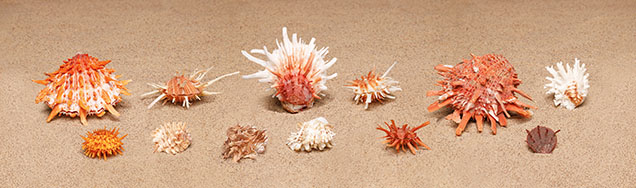
Spondylus Shells. The Spondylus genus, sometimes called “spiny oyster” despite technically being a scallop (Pectinida order) and not a true oyster (Ostreida order), consists of 75 species inhabiting tropical waters globally. Spondylus shells were once widely used as jewelry and ritual objects in the pre-Columbian American Southwest, western Mexico, and a number of cultures along the Pacific Coast south to Peru (figure 15). The primary species was Spondylus crassisquama, which occurs in orange, red, and white colors and is distributed intermittently from the Gulf of California to southern Ecuador (Liu, 2005). A purple variety, Spondylus limbatus, appears to have been used by Peruvians, as evidenced by numerous beads and inlays found at archaeological sites (Liu, 2005). While other species of Spondylus are common in warm coastal regions around the globe, few instances of use as a gem material are known outside of the Americas. Notable exceptions include a bird-shaped pendant from the Middle East dated to the third millennium BCE (Liu, 2005) and beads and ornaments worn by Neolithic populations in the Paris Basin (Bonnardin, 2012). Indigenous people of the Trobriand Islands off the southeast coast of New Guinea have crafted and exchanged Spondylus beads for centuries to maintain trade relationships (Safer and Gill, 1982).
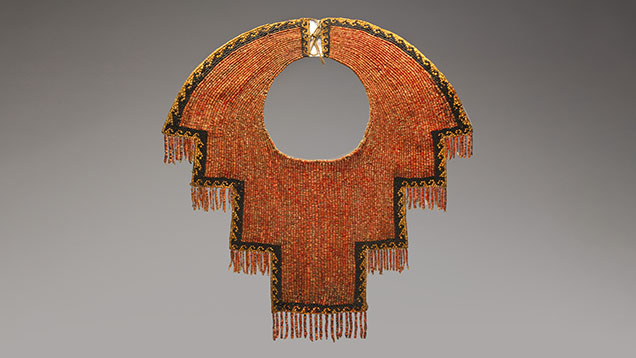
Harvesting wild Spondylus requires skilled divers, as the mollusk lives 20–60 feet below the surface. Art from the Chimú Empire depicts diving platforms from which experienced Ecuadorian divers, cords around their waists and heavy stones in hand, prepare to plunge deep below the surface to collect these valuable shells (Anawalt, 1998). The Chimú flourished along the coast of northern Peru from 900 to 1470 CE before falling to the Inca. They held Spondylus in particularly high regard, obtaining it through trade with Ecuadorians and using it abundantly in royal burials and as powdered offerings scattered along routes traveled by rulers (Anawalt, 1998). The shells were also worked into beads, and elite members of society wore them as elaborate collars, likely for the shell’s symbolic associations with fertility, abundance, and power (Pillsbury and Pearson, 2018) (figure 16). The Inca, successors to the Chimú and the largest pre-Columbian empire, were equally infatuated. In 1525, during Spain’s first explorations of South America, conquistador Francisco Pizarro encountered an indigenous sailing craft off the coast of Tumbes, Peru (Pillsbury and Pearson, 2018). The vessel was filled with objects of gold, silver, emeralds, wool and cotton garments, and other valuables. To the astonishment of the Spaniards, these luxuries were exchanged for coral-colored seashells, which were undoubtedly Spondylus.
Western Mexico has been an important source of Spondylus, both historically and today. Depictions of the shell can be found on inventory and trade records belonging to Aztecs in Cihuatlan (their Pacific province). Spectacular Spondylus jewelry carved with symbolic designs and recovered from shaft tombs illustrates the high esteem in which this material was held by the Aztecs. This location also served as an additional source for Andean traders who sailed north to Mexico, trading colorful garments made from llama and alpaca fibers for the shell (Anawalt, 1998).
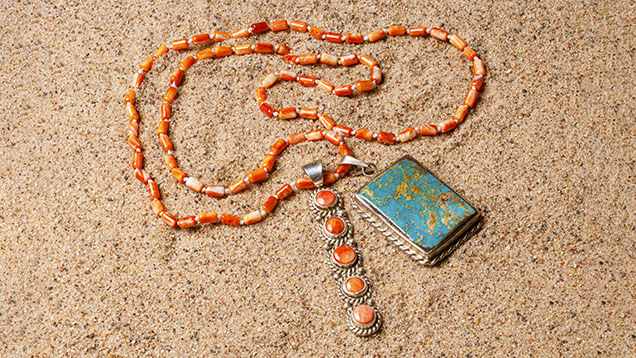
Spondylus is a staple in antique and contemporary Native American jewelry of the U.S. Southwest, though the origins of its use are unclear. The Hohokam, active from 200 to 1400 CE in central to southern Arizona, were possibly the first to source it from the Gulf of California (Liu, 2005). The archaeological distribution of marine shell jewelry indicates long-term trade between the Hohokam and the nearby Mogollon and Anasazi. Due to the lack of written records, detailed information about shell’s significance, symbolism, and length of use by North American indigenous cultures is not well understood. Nonetheless, the use of Spondylus eventually reached the Hopi, Navajo, and Zuni, who maintain the heritage today. Sterling silver, a hallmark of Southwestern jewelry, was only adopted after Mexican silversmiths introduced it to the Navajo in 1853 (Dubin, 2003). The Zuni learned the craft of silversmithing from the Navajo in 1872 and taught it to the Hopi in 1898 (Dubin, 2003). Each culture developed its own signature designs, but the use of Spondylus, turquoise, and coral set in silver is broadly shared (figure 17).
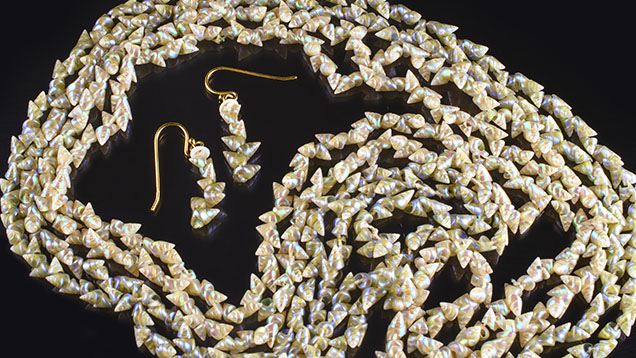
Maireener Shells. The rare gastropod Phasianotrochus irisodontes, or maireener, has been used in Tasmanian aboriginal jewelry for at least 2,600 years (Greeno, 2022). Native to coastal Australia, Tasmania, and smaller surrounding islands, their shells have been collected, strung, and worn by the Palawa people for at least 1,800 years (Cameron, 2006). Palawa women have traditionally crafted the jewelry, preserving generations of knowledge about shell collection and the creation of crowns, necklaces, and bracelets. The necklaces made before and after British colonization of the island in 1803 stand in sharp contrast and reflect the influence of Westerners (Cameron, 2006). Necklaces made before colonization used larger, more mature maireener shells known as “king” or “queen” shells and were strung into choker-length strands more practical for wear during physical activities such as hunting and diving. The post-colonial era introduced the use of smaller shells and longer, looping necklaces inspired by British fashion trends, while also reflecting a shift from unaided hunting to the use of dogs and other tools (figure 18).
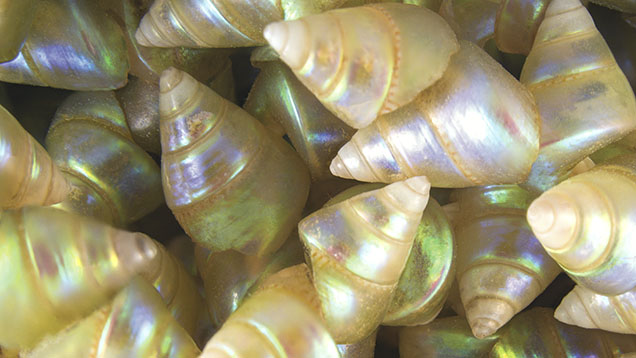
Phasianotrochus irisodontes reaches a maximum length of 15 mm and possesses a brown “skin” on the shell’s exterior, known as a periostracum. The shells are gathered from native kelp forests or are washed up onto local beaches. The shells are left outside for several weeks to allow insects to remove the organic material before being rinsed in an acid solution that dissolves the periostracum, revealing striking purple, green, or blue iridescence (figure 19). Traditionally, the shells were pierced with a kangaroo tooth and strung on sinew from a kangaroo or wallaby tail, though modern tools and materials are now used. In the last 20 years, maireener populations have declined sharply as recreational activities have disturbed kelp forests, nearby abalone farms have attracted predatory fish, and climate change has raised water temperatures and affected kelp growth (Greeno, 2022). Marine scientists have begun planting spores of lab-bred giant kelp off the coast of southern Tasmania. This kelp species is believed to be tolerant of warmer water and could offer hope for the maireeners that depend on kelp forests for survival (Hynninen, 2019; Trans, 2020).
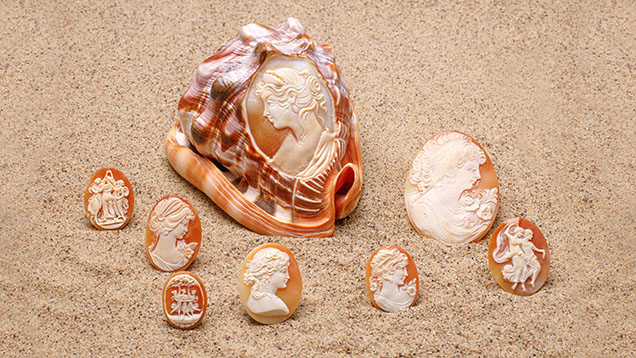
Cameos. Shell reached its peak in European jewelry in the form of cameos, beginning in Renaissance-era France and Italy (Miller, 2002). Early cameos appear to have been carved from a mussel or cowrie shell, giving the relief portions a gray color (Miller, 2002). Queen Victoria’s fondness for shell cameos caused a revival of their popularity in the mid-1800s. Experimentation with different shell species created striking results. Victoria’s material of choice was the pink and white conch shell (Aliger gigas) imported from the Bahamas, which became known as “Queen conch.” The carnelian and white king helmet shell (Cassis tuberosa) from the West Indies was also used for its natural layered coloration, which carvers exploited to create contrasting imagery between the background and foreground (figure 20). The cameo’s popularity waned after the end of the Victorian era in 1901, but the craft still continues on a smaller scale.
In 2024, the National Oceanic and Atmospheric Administration (NOAA) designated the Queen conch as a threatened species under the Endangered Species Act. Regulations had begun in 1975 with a fishing ban in Florida, followed by international trade regulation under the Convention on International Trade in Endangered Species of Wild Fauna and Flora (CITES) in 1992 (Stokstad, 2022). The mollusk is primarily fished for its meat—an expensive delicacy in many countries—with the shells as a byproduct. Fortunately, the bullmouth shell (Cypraecassis rufa) from East Africa and the emperor helmet shell (Cassis madagascariensis) from the southeast coast of Florida are typically used now in cameo production, and both species have stable populations.
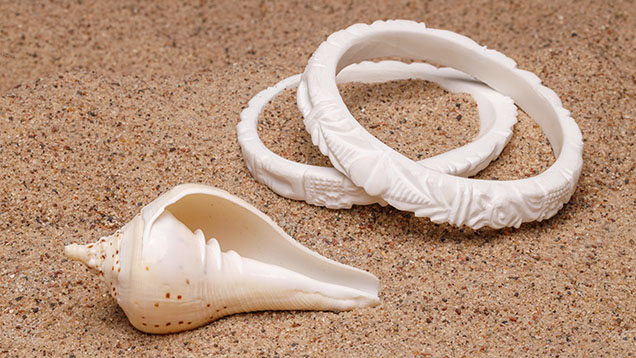
Chank Bangles. The Turbinella pyrum shell, better known as the Indian chank shell, has been fashioned into bangle bracelets and worn by Bengali women for centuries (Safer and Gill, 1982) (figure 21). These bangles are often paired with red coral bangles and function essentially as a wedding ring. Tradition dictates that a married woman wears chank bracelets as a sign of her husband’s prosperity and longevity, never removing them as long as he is alive. Once he dies, the widow removes the bracelets and discards them. The chank shell is also sounded as a trumpet during wedding ceremonies to invoke lasting good fortune for the couple (Safer and Gill, 1982). Outside Bengal, chank bangles are worn by girls and women in Bhutan, Nepal, and Tibet simply as a good-luck talisman.
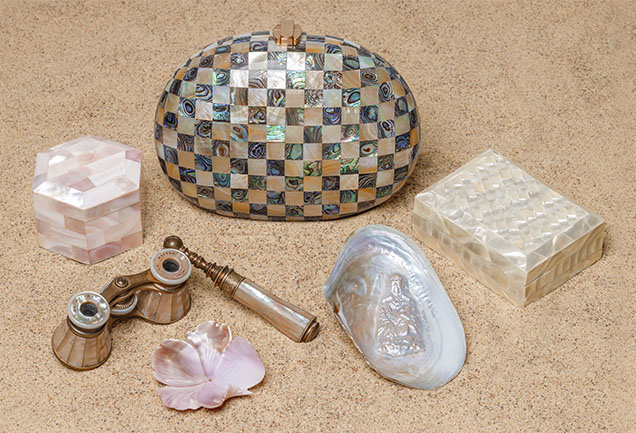
Mother-of-Pearl. Mother-of-pearl remains the most prevalent shell material in modern jewelry, spanning uses from costume pieces to designer couture (figure 22). Defined as the nacreous inner layer of mollusk shell that has been carved or cut into decorative accessories, mother-of-pearl has been used globally for millennia, yet historical scholarship is scant. This is likely due to a lack of distinction between mother-of-pearl and actual pearls in ancient texts, the absence of an artist signature or hallmark on historical mother-of-pearl carvings, the degradation of nacre over time, and general scarcity of documentation. The three main mother-of-pearl oyster bed sources in ancient times were the Persian (Arabian) Gulf, the Red Sea, and the coasts of India and Sri Lanka. Only after the European voyages of discovery beginning in the fifteenth century did the widespread distribution of pearl oyster beds throughout tropical waters become apparent (Meyer et al., 2013).
The earliest known mother-of-pearl artifact is a hololith ring crafted from Pinctada margaritifera shell (sourced from the Red Sea), recovered from a 9,000-year-old Neolithic site in southern Jordan (Alarashi et al., 2023). Such finds are rare, however. China boasts a long tradition of mother-of-pearl craftsmanship, with use in lacquerware beginning in the Song dynasty (960–1279) (Fu et al., 2020). By the seventeenth century, China was exporting lacquerware inlaid with mother-of-pearl globally. Similarly, the Okinawan islands of Japan began producing mother-of-pearl inlay work in 710 CE, and this became a primary source of revenue for the Japanese economy (Meyer et al., 2013). Shell nacre from the Placuna genus, also known as the “windowpane” shell, has been used for thousands of years as a substitute for glass in windows, lampshades, and decorative pieces in China, Japan, the Philippines, and elsewhere in Asia (Moretzsohn, 2023). Palestine was home to one of the largest mother-of-pearl industries for more than 400 years, particularly in Bethlehem, where fifteenth-century Franciscan friars brought in pearl artists from Florence to teach the skill to local artisans using shells from the Red Sea. The industry flourished, especially in souvenirs for Christian pilgrims visiting the Holy Land, but declined in the twentieth century due to persistent conflict (Meyer et al. 2013).
SPIRITUALITY AND SYMBOLISM
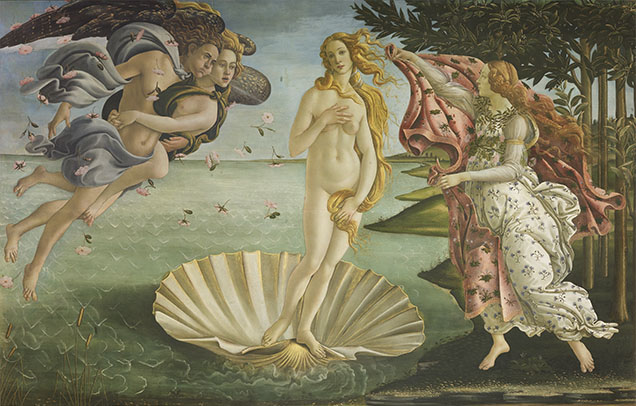
Since the dawn of organized religion, shell symbolism has been nearly universal within spiritual contexts. In Greek mythology, the goddess of love and beauty, Aphrodite, was born from seafoam and emerged unclothed from an open bivalve. Her Roman counterpart, Venus, was born in the same fashion from a scallop shell (figure 23). Shell’s association with fertility, birth, and divinity also appears in civilizations far removed from European influence.
In ancient China, cowrie shells were used in mortuary practices from the Neolithic until the Ming-Qing period in the seventeenth century (Yang, 2019). The shells adorned coffins and were placed in the hands and mouths of the deceased as talismans to confer eternity upon the body or soul. Imitation cowries made from turquoise, jade, clam shell, bronze, lead, and other materials have also been recovered from ancient Chinese gravesites. This symbolism is thought to stem from a resemblance to the female reproductive anatomy, causing the shell to be seen as a symbol of life and fertility. Such beliefs extended to childbirth, as pregnant women in Fujian, China, would hold a cowrie during labor to ensure a smooth delivery (Yang, 2019). A similar custom saw Indian women wearing cowrie shell necklaces to promote conception and easy childbirth. Cowrie shells also appeared in urns in post-ceremonial Indian burials from the fifth to the eighth centuries CE, perhaps as a symbol of wealth (Yang, 2019). This tradition continued even when Buddhism became prominent in India. Cowries were placed in Buddhist relic caskets, including the Vaishali relic, which is thought to contain the ashes of the Buddha.
Mesoamerican elites in western Mexico between 300 BCE and 400 CE were buried with conch shells placed around their bodies as a spiritual offering (Camberos and de la Vega, 1998). This population, like other civilizations around the world, associated shells with fertility and birth, a motif seen in the recurring images of humans emerging from conch shells. Shells represented one half of the life-death cycle and were believed to offer the hope of rebirth. Conch shells were played as trumpets during burial rituals, often decorated with two-headed serpent motifs (a deity also associated with fertility).
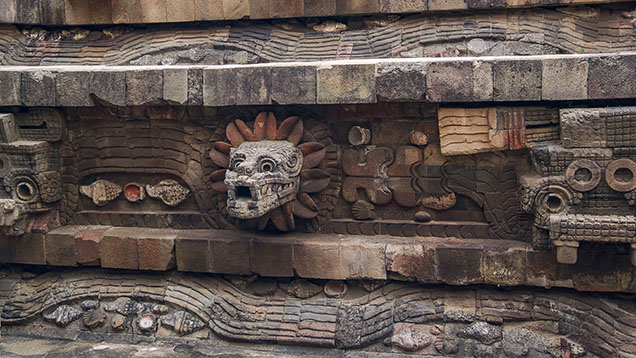
The feathered serpent Quetzalcoatl, one of the most important deities of the Mesoamerican and Aztec pantheon and mythologized as the creator of humanity, was said to have emerged fully formed from a gastropod and to have resided in a shell palace (Barnett, 2021). The most famous temple devoted to him, the Temple of Quetzalcoatl (or Pyramid of the Plumed Serpent) in Teotihuacan, Mexico, is adorned with shell motifs (figure 24). The temple has yielded thousands of shell beads, plaques, carvings, and whole specimens as ritual offerings to the god (Castro et al., 1991).
The Maya also ascribed profound symbolic meaning to shells, burying their dead with scallop and Spondylus shells in anticipation of a watery underworld and the hope of rebirth. For both the Aztecs and the Maya, the shell synthesized beliefs about birth, fertility, the earth, rain, and growth (Safer and Gill, 1982). Maya priests considered embellished conch shell trumpets as intermediaries between their blood offerings and the gods; some scholars have theorized that the conch trumpet itself was regarded as an animate being or spirit (Graham, 1998). As one of the first civilizations to conceptualize the number zero, an innovation that allowed for more advanced mathematics, the Maya chose a stylized shell as its numerical symbol. Since all positive numbers ascend from zero, their use of a shell as the source number was likely intentional.
Shell trumpets possess a rich global history. The Aztecs knew them as quiquiztli, the Japanese samurai called them horagai, and the indigenous Maori of New Zealand use the term putatara. Their use was most often tied to religious ceremony. One species, Charonia tritonis, is colloquially known as the “Triton trumpet.” Fijian warriors blew Triton trumpets before going into battle and during a chief’s funeral rites (Safer and Gill, 1982). In addition to fashioning chank shell into bangle bracelets, Hindus use it as a trumpet in marriage ceremonies and as a call to prayer. Its white color and marine origin carry symbolic significance, as objects derived from the sea are traditionally regarded as pure and sacred in Hindu thought (Safer and Gill, 1982). Various indigenous American communities, including the Hohokam of Arizona (Gomez-Gastelum, 2014), the Huichol of Mexico (Safer and Gill, 1982), and the Chavin of Peru (Barnett, 2021), also used shell trumpets. Priests of the Zuni in Arizona and New Mexico are believed to have derived their power from these instruments (Safer and Gill, 1982). Zuni women presented a mixture of ground corn, powdered turquoise, and white shell as food offerings to their gods (Ball, 1941).
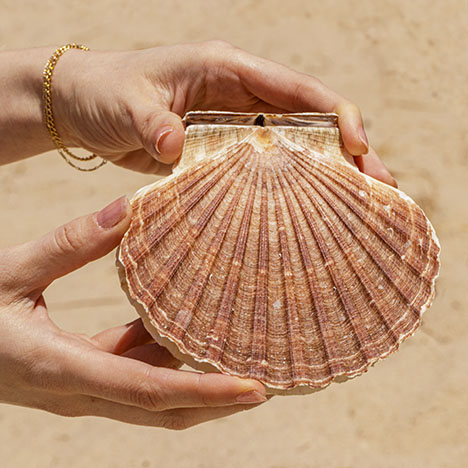
In Christianity, the scallop shell is closely associated with Saint James and symbolizes purity, resurrection, redemption, and forgiveness through pilgrimage. This tradition originated with the belief that Saint James’s remains are buried in the northwestern Spanish town of Santiago de Compostela. In the medieval period, scallop shells were seen in depictions of Saint James, and pilgrimages to the town (along a system of routes now known as the Camino de Santiago) became popular among Christians. Pilgrims often sewed scallop shells onto their hats or clothing for identification of their religious association (Barnett, 2021). Vendors in the town sold scallop shells, usually from the Pecten maximus (figure 25), as souvenirs or “proof” of the trek (Moretzsohn, 2023). Trekking the Camino de Santiago remains popular today, with the scallop shell enduring as its iconic symbol.
Shells from the giant clam (Tridacna gigas), the largest living mollusk, have been prized as baptismal and holy water fonts in Catholic churches since the sixteenth century (Moretzsohn, 2023). Tridacna gigas shell is associated with the Virgin Mary as the vessel holding the “water of life” within her, just as the shell holds a pearl. The species is now critically endangered due to overfishing and climate change, and therefore this tradition has ceased. Nonetheless, many modern baptismal and holy water fonts are crafted from stone that has been artfully carved to resemble a giant clam shell.
CONCLUSIONS
Throughout history, many cultures have utilized shells in multifaceted ways, with these materials serving as markers of identity, status, or spirituality—often simultaneously. Though seldom seen in modern fashion, their symbolic and practical significance endures, giving them a resonance unrivaled by any other gem material.
With globalization, coastal regions are accessible to most people. Once a privilege of the wealthy or local populations, seaside visits have become a commonplace experience. This shift has coincided with the decline in the rarity, popularity, and perceived value of shells.
The Darwin family coat of arms, which features three scallop shells and the phrase E Conchis Omnia (“Everything from Shells”), encapsulates Charles Darwin’s belief that all life originated from a simple form. Yet the motto also suggests that much of human development—from tools used by early humans to resources and inspiration for primitive and modern art, to jewelry, currency, religious symbolism, and more—can be traced, in one way or another, to shells.
Britni LeCroy is a senior staff gemologist at GIA in Carlsbad, California.
Britni LeCroy is a senior staff gemologist at GIA in Carlsbad, California.