
Data Acquisition - Procedures

Insofar as possible, standard testing methods and consistent analytical instruments and conditions were used in acquiring data on the gemstones for this project. The following summarizes these methods and describes the analytical equipment used.

ExpandEXPAND closeCLOSE


  • Weights, Measurements, and Facet Arrangement

    Carat weight was measured on a Mettler-Toledo MX5 electronic balance with the following specifications: maximum weight capacity—25.5 ct, readability—0.00001 ct, and measurement repeatability—0.00010 ct (1 carat = 0.2 gram).

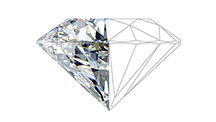
    Dimensions were obtained using the Sarin DiaVision, a non-contact optical measuring system. The gemstone is positioned on a rotating stage where a camera takes a series of up to 400 photographs of the profile shadow. The instrument incorporates a computer program to compile these photographs to produce a three-dimensional model of the gemstone's faceted shape, and to provide accurate proportion measurements. The software then fits facets to the compiled image data and displays the final best fit in the form of a diagram or map of the facet arrangement. This map can be displayed in various orientations. The dimension tolerances for length, width, and depth are ± 0.02 mm (0.015 mm if one is using three decimal places). Facet diagrams are presented here in three orientations. Because of the asymmetric facet arrangements on a few of the gemstones, and the inability of the instrument hardware and software to detect small or poorly defined facets, this calculated facet map may not correctly show certain facets.

    In a few instances, the samples were either too large to fit into the Sarin system or their dimensions were not measured correctly for some reason. In such cases, dimensions were measured manually with a Leveridge gauge or a similar device, and no facet arrangement diagrams were produced.


  • Color Description

    Color Description Based on Visual Observations. A gemstone's color can be described by three attributes: hue, tone (the lightness or darkness of the color), and saturation (the degree of intensity of the color). The colors of the gemstones were described using terminology from the GIA Colored Stone Grading System, as well as the Gemewizard software program that displays arrays of images of faceted colored gemstones in three-dimensional color space, along with the description of the color for each.

    Components of Color

    Hue. The GIA Colored Stone Grading System uses 31 hue names to describe the basic colors of colored gemstones.


    Purple (P)yellowish Orange (yO)bluish Green (bG)
    reddish Purple (rP)orangy Yellow (oY)very strongly bluish Green (vstbG)
    Red-Purple or Purple-Red (RP/PR)YellowGreen-Blue or Blue-Green (GB/BG)
    strongly purplish Red (stpR)greenish Yellowvery strongly greenish Blue (vstgB)
    slightly purplish Red (slpR)Yellow-Green or Green-Yellow (YG/GY)greenish Blue (gB)
    Red (R)strongly yellowish Green (styG)very slightly greenish Blue (vslgB)
    orangy Red (oR)yellowish Green (yG)Blue (B)
    Red-Orange or Orange-Red (RO/OR)slightly yellowish Green (slyG)violetish Blue (vB)
    reddish Orange (rO)Green (G)bluish Violet (bV)
    Orange (O)very slightly bluish Green (vslbG)Violet (V)
      violetish Purple (vP)


    Tone. The system also uses seven terms to describe the tone of a gemstone's color.

    Saturation. The system uses certain terms to describe saturation for both "warm" (upper row) and "cool" (lower row) colors.

    A gemstone's color description is written as: [tone], [saturation], and [hue] (for example: Light, slightly grayish, Blue or Medium dark, moderately strong, slightly purplish Red). In the case of a multi-colored gemstone, two or more color descriptions may be given.

    Gemstones that Exhibit More than One Color. In some instances (mainly tourmalines), a gemstone exhibited more than one color. This color difference is visual evidence of a difference in chemical composition or other color causes between the color zones. In such instances, we attempted to document any differences in gemological properties between the color zones—these variations were most likely to occur in refractive index, absorption spectrum, ultraviolet fluorescence, and pleochroic colors. Whenever possible, these differences were noted and recorded. For example, an elbaite tourmaline with distinct red and colorless zones with differing refractive indices would be described as (Red) 1.625, 1.641 / (Colorless) 1.620, 1.640.


  • Refractive Index and Birefringence 

    Refractive index (RI) values were visually estimated to 0.001 using a gemological refractometer with an RI liquid (1.81) and a sodium-equivalent monochromatic light source. Gem materials whose RI values exceeded the range of the refractometer were reported as "Over the limit." For cabochons or other gems with curved surfaces, it was impossible to obtain accurate RI measurements; these were reported as "Unable to measure." Information on optical character was taken from the published literature on specific minerals.

    The birefringence was calculated by subtracting the smaller from the larger RI value. When RI values were "Over the limit," the birefringence was reported as "Unable to calculate." For isotropic gem materials with only one RI value, the birefringence was reported as "Not applicable."

  • Specific Gravity

    Specific gravity (SG) values were calculated from the weight and dimension measurements obtained from the Sarin DiaVision system. Because these SG values are calculated, they may vary slightly from those obtained by the hydrostatic method. With cabochons or other non-faceted shapes, or when the samples were too large to measure with the Sarin system, SG values were calculated from hydrostatic measurements obtained with an electronic balance.


  • Absorption Spectrum

    Absorption spectra were observed using transmitted light and an Imperial Gem Instruments Discan diffraction grating spectroscope. The gemstone was placed table-down over the light source, and the spectrum was observed through the pavilion facets. Absorption features are reported in nanometers (nm), either as broad regions of absorption or as distinct absorption lines (which in some instances were not sharp lines but broader bands). Weaker absorption features were difficult to see, and thus more difficult to accurately describe in terms of intensity and wavelength range. The lightness or darkness of these features depends on several factors: the intensity and direction of the incident light, the size and faceted shape of the gemstone, the type of spectroscope, and the amount of light allowed by the slit to enter the spectroscope. For consistency, specific absorption features were reported as they were observed but using the same wavelength (nm) values.


  • Ultraviolet Fluorescence

    Ultraviolet fluorescence reactions were observed while in a darkened room using four-watt long-wave (366 nm) and short-wave (254 nm) lamps from Ultraviolet Products. We recorded the color, relative intensity, and the distribution (even or uneven) of any fluorescence within the sample.


  • Magnification

    The gemstones were examined with a standard binocular gemological microscope and brightfield, darkfield, and fiber-optic illumination.


  • Pleochroism

    For gemstones that were not optically isotropic, pleochroic colors were observed with a dichroscope to note the maximum difference in color hue.