
CLIPPIR Diamonds
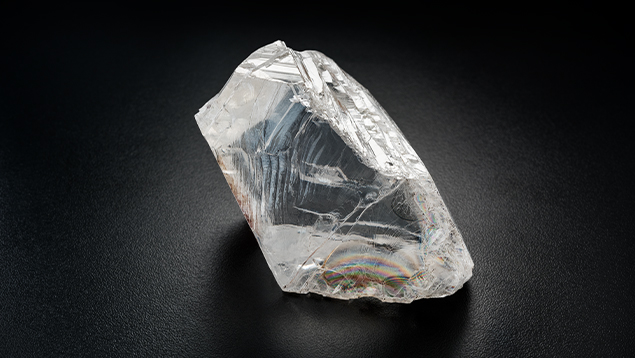
Among superdeep diamonds is a rare subgroup known as CLIPPIR diamonds. These stones tend to be unusually large, chemically pure and irregularly shaped. They often show heavy surface wear from resorption and contain very little nitrogen, which typically places them in the colorless range.
Some famous historic diamonds, such as the Cullinan Diamond, fall into this category. They’re prized not just for their size, rarity and beauty, but for what they reveal about Earth’s deep interior.
Why Rough Diamonds Matter
Rough diamonds may not sparkle like finished gems, but they have a different kind of allure. For scientists and gemologists, rough diamonds provide invaluable insight into how our planet works. For others, they’re a reminder that every polished diamond starts as something raw, unpredictable and shaped entirely by nature.
So the next time you admire a sparkling diamond, imagine the journey it took to get there. Behind every brilliant stone is a rough beginning, and a story written by nature itself.
When you think of diamonds, you probably picture perfectly cut, sparkling gems set in engagement rings or fine jewelry. But long before a diamond is polished and faceted, it exists in crystal form—often rough, irregular and surprisingly full of personality.
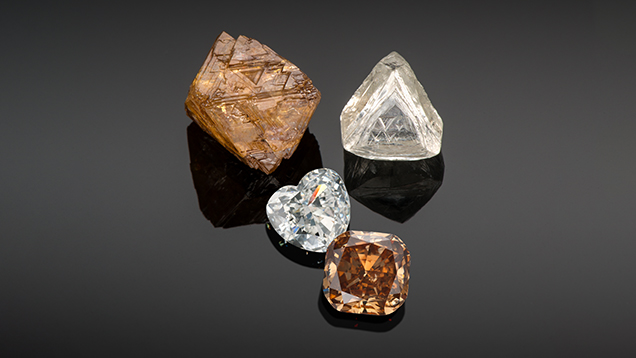
Many rough diamonds form as octahedrons (eight-sided crystals that look like pyramids connected at the base) or macles (flat, triangular shapes). But some go far beyond these familiar forms, emerging from the Earth looking like nature’s sculptures.
GIA researcher Evan Smith recently studied a collection of these striking diamond crystals, searching for clues on how they formed deep underground. These stones are more than curiosities—they’re nature’s time capsules, preserving evidence of Earth’s geologic processes over the past millions to billions of years.
HOW DIAMONDS TAKE SHAPE DEEP UNDERGROUND
Diamonds form far beneath the Earth’s surface, under extreme heat and pressure, when carbon crystallizes into one of the hardest materials on the planet. Many grow into quintessential octahedral shapes, but that’s only the beginning of their story.
Despite their legendary hardness, diamonds aren’t indestructible. As they grow and make their way toward the surface, powerful natural forces shape them. Underground movement can cause diamonds to crack or split cleanly along natural weak points in their crystal structure. Hot fluids and molten rock can also partially dissolve their surfaces—a process called resorption.
Sharper, angular stones may reflect crystal growth or breakage, while smooth, rounded diamonds are often signs of heavy resorption
The result is a remarkable range of shapes and textures, created by ongoing crystal growth, breakage and resorption over time.
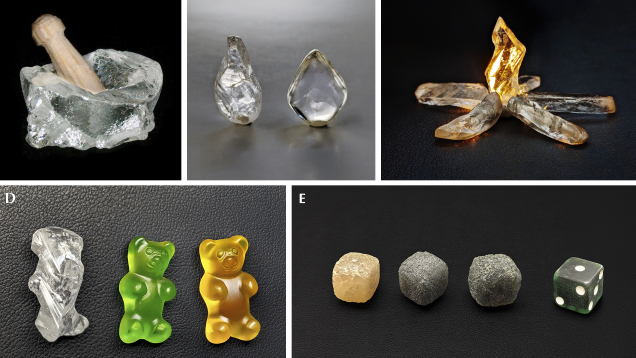
ROUGH DIAMONDS THAT LOOK LIKE…EVERYTHING
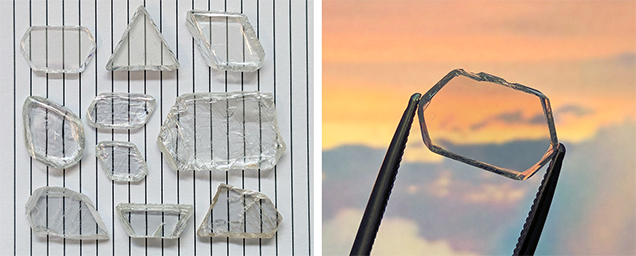
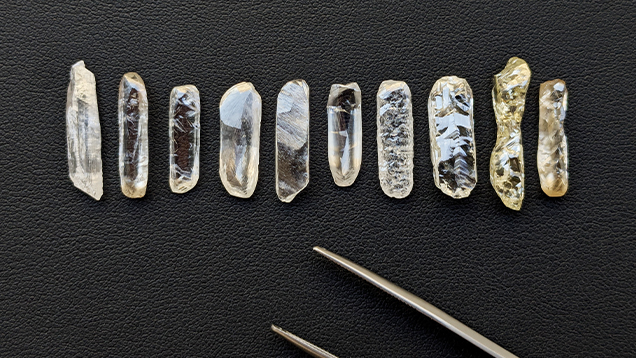
Geologists often describe diamonds as “windows” into the Earth’s mantle. Occasionally, that idea becomes literal. Some diamonds emerge as thin, transparent, plate-like forms that resemble panes of glass.
These shapes form when a diamond breaks along cleavage planes, creating flat, window-like surfaces.
Baguettes
CLIPPIR Diamonds
Among superdeep diamonds is a rare subgroup known as CLIPPIR diamonds. These stones tend to be unusually large, chemically pure and irregularly shaped. They often show heavy surface wear from resorption and contain very little nitrogen, which typically places them in the colorless range.
Some famous historic diamonds, such as the Cullinan Diamond, fall into this category. They’re prized not just for their size, rarity and beauty, but for what they reveal about Earth’s deep interior.
Why Rough Diamonds Matter
Rough diamonds may not sparkle like finished gems, but they have a different kind of allure. For scientists and gemologists, rough diamonds provide invaluable insight into how our planet works. For others, they’re a reminder that every polished diamond starts as something raw, unpredictable and shaped entirely by nature.
So the next time you admire a sparkling diamond, imagine the journey it took to get there. Behind every brilliant stone is a rough beginning, and a story written by nature itself.
CLIPPIR Diamonds
Among superdeep diamonds is a rare subgroup known as CLIPPIR diamonds. These stones tend to be unusually large, chemically pure and irregularly shaped. They often show heavy surface wear from resorption and contain very little nitrogen, which typically places them in the colorless range.
Some famous historic diamonds, such as the Cullinan Diamond, fall into this category. They’re prized not just for their size, rarity and beauty, but for what they reveal about Earth’s deep interior.
Why Rough Diamonds Matter
Rough diamonds may not sparkle like finished gems, but they have a different kind of allure. For scientists and gemologists, rough diamonds provide invaluable insight into how our planet works. For others, they’re a reminder that every polished diamond starts as something raw, unpredictable and shaped entirely by nature.
So the next time you admire a sparkling diamond, imagine the journey it took to get there. Behind every brilliant stone is a rough beginning, and a story written by nature itself.
When you think of diamonds, you probably picture perfectly cut, sparkling gems set in engagement rings or fine jewelry. But long before a diamond is polished and faceted, it exists in crystal form—often rough, irregular and surprisingly full of personality.
Many rough diamonds form as octahedrons (eight-sided crystals that look like pyramids connected at the base) or macles (flat, triangular shapes). But some go far beyond these familiar forms, emerging from the Earth looking like nature’s sculptures.
GIA researcher Evan Smith recently studied a collection of these striking diamond crystals, searching for clues on how they formed deep underground. These stones are more than curiosities—they’re nature’s time capsules, preserving evidence of Earth’s geologic processes over the past millions to billions of years.
HOW DIAMONDS TAKE SHAPE DEEP UNDERGROUND
Diamonds form far beneath the Earth’s surface, under extreme heat and pressure, when carbon crystallizes into one of the hardest materials on the planet. Many grow into quintessential octahedral shapes, but that’s only the beginning of their story.
Despite their legendary hardness, diamonds aren’t indestructible. As they grow and make their way toward the surface, powerful natural forces shape them. Underground movement can cause diamonds to crack or split cleanly along natural weak points in their crystal structure. Hot fluids and molten rock can also partially dissolve their surfaces—a process called resorption.
Sharper, angular stones may reflect crystal growth or breakage, while smooth, rounded diamonds are often signs of heavy resorption
The result is a remarkable range of shapes and textures, created by ongoing crystal growth, breakage and resorption over time.
ROUGH DIAMONDS THAT LOOK LIKE…EVERYTHING
Geologists often describe diamonds as “windows” into the Earth’s mantle. Occasionally, that idea becomes literal. Some diamonds emerge as thin, transparent, plate-like forms that resemble panes of glass.
These shapes form when a diamond breaks along cleavage planes, creating flat, window-like surfaces.
Baguettes
CLIPPIR Diamonds
Among superdeep diamonds is a rare subgroup known as CLIPPIR diamonds. These stones tend to be unusually large, chemically pure and irregularly shaped. They often show heavy surface wear from resorption and contain very little nitrogen, which typically places them in the colorless range.
Some famous historic diamonds, such as the Cullinan Diamond, fall into this category. They’re prized not just for their size, rarity and beauty, but for what they reveal about Earth’s deep interior.
Why Rough Diamonds Matter
Rough diamonds may not sparkle like finished gems, but they have a different kind of allure. For scientists and gemologists, rough diamonds provide invaluable insight into how our planet works. For others, they’re a reminder that every polished diamond starts as something raw, unpredictable and shaped entirely by nature.
So the next time you admire a sparkling diamond, imagine the journey it took to get there. Behind every brilliant stone is a rough beginning, and a story written by nature itself.