
Crystals formed within pegmatitic environments are exposed to hydrothermal fluids that may alter the mineral both externally and internally via fractures or etch channels. The hydrothermal fluids sometimes contain radioactive elements such as uranium, thorium, and radium, which can cause alterations to the host crystal. Evidence of radiation damage is often found in diamond and in copper-bearing tourmaline, referred to as “radiation stains” and “pink sleeves,” respectively (J.I. Koivula et al., “Solution-generated pink color surrounding growth tubes and cracks in blue to blue-green copper-bearing tourmalines from Mozambique,” Spring 2009 G&G, pp. 44–47).
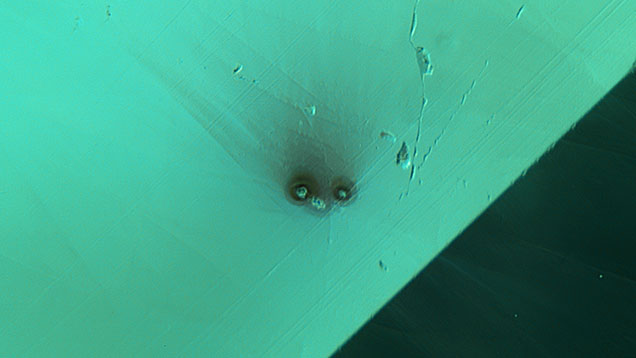
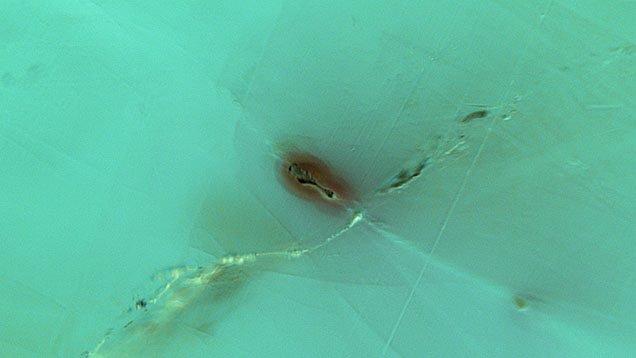
Recently, the author examined a 37.09 ct copper-bearing tourmaline containing many growth tubes that had been altered by radioactive hydrothermal fluids, two of which were intriguing. When viewed directly down the length of the etch tubes, one area resembled a drumstick of a chicken (center of figure 1), while another area looked like the face of a bird with a fuzzy tuft (figure 2).
Jamie Price is a staff gemologist at GIA in Carlsbad, California.
Crystals formed within pegmatitic environments are exposed to hydrothermal fluids that may alter the mineral both externally and internally via fractures or etch channels. The hydrothermal fluids sometimes contain radioactive elements such as uranium, thorium, and radium, which can cause alterations to the host crystal. Evidence of radiation damage is often found in diamond and in copper-bearing tourmaline, referred to as “radiation stains” and “pink sleeves,” respectively (J.I. Koivula et al., “Solution-generated pink color surrounding growth tubes and cracks in blue to blue-green copper-bearing tourmalines from Mozambique,” Spring 2009 G&G, pp. 44–47).
Recently, the author examined a 37.09 ct copper-bearing tourmaline containing many growth tubes that had been altered by radioactive hydrothermal fluids, two of which were intriguing. When viewed directly down the length of the etch tubes, one area resembled a drumstick of a chicken (center of figure 1), while another area looked like the face of a bird with a fuzzy tuft (figure 2).
Jamie Price is a staff gemologist at GIA in Carlsbad, California.
.jpg "YMAL GIA Ed")