
Unknown block type
- Block type (mgnl:type):
- (missing)
- Block index:
- 0
- Path:
- /gia-website/gems-gemology/winter-2025-gemnews-converge-hands-on/contentBlocks/23
Unknown block type
- Block type (mgnl:type):
- (missing)
- Block index:
- 1
- Path:
- /gia-website/gems-gemology/winter-2025-gemnews-converge-hands-on/contentBlocks/17
Introduction to Jewelry Forensics
Hands-on sessions afforded Converge attendees the opportunity to learn from GIA experts and work with samples from the Institute’s extensive reference collection.
The Natural Diamond Story: Natural and Laboratory-Grown Diamond Differentiation
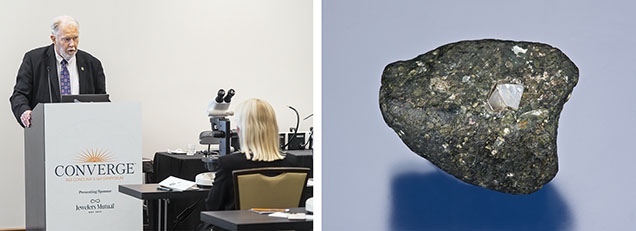
Dr. James Shigley (GIA, Carlsbad) presented a session focused on the incredible geologic story of natural diamond, reminding participants what a remarkable mineral diamond is (figure 1). He explained that the gem’s origins provide jewelry professionals with memorable and relatable information they can use to educate consumers on the value of mined diamonds, to differentiate natural from laboratory-grown, and to address common misconceptions about abundance, mining practices, corruption, and human rights abuses. In this practical session, Dr. Shigley covered key aspects of natural diamonds’ value and rarity, including their incredible geologic age and remarkable formation process, along with how and when they arrived at the surface through kimberlite eruptions. He explained how geologists search for viable diamond deposits and mining companies recover these diamonds, also providing an outline of the world’s significant mines and their projected remaining production years. Also covered were the many positive micro and macro social benefits to communities involved in diamond mining, as well as environmental impact and sustainability. Dr. Shigley explained what is currently scientifically possible in terms of determining the geographic origin of a natural mined diamond—also covered by GIA’s Dr. Michael Jollands in a speaker presentation—and outlined GIA origin services. Participants were able to handle natural and lab-grown rough and faceted gems and use their microscopes to examine interesting natural inclusions.
Beauty in Unexpected Places: The New Frontiers of Ruby and Sapphire
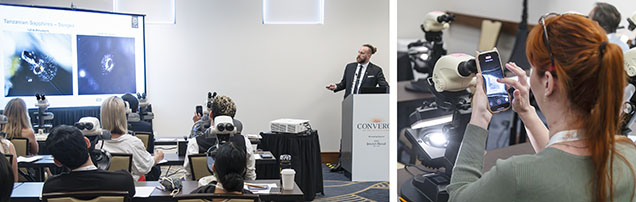
In this hands-on seminar, Dr. Aaron Palke (GIA, Carlsbad) and Wim Vertriest (GIA, Bangkok) provided an in-depth report on rubies and sapphires from lesser-known deposits including the United States (Montana), Tanzania, Kenya, Afghanistan, Sri Lanka, and Greenland (figure 2). They demonstrated practical tips for identifying corundum from these alternative deposits and gave context for understanding the place of these gems in the complex global colored stone trade. Participants were able to examine ruby and sapphire samples from the GIA colored stone reference collection representative of these newer localities and hear directly from the field gemologists who visited the areas and collected the gems.
(Un)Natural Beauty: Treatments in Ruby and Sapphire and Their Identification
It is increasingly rare to come across ruby and sapphire with beauty and appeal entirely due to natural processes. The majority of stones on the market have been treated to enhance their appearance. In this hands-on seminar, GIA’s Dr. Aaron Palke and Wim Vertriest provided an in-depth orientation into the various artificial treatments for ruby and sapphire (figure 3). Using samples from GIA’s colored stone reference collection, participants learned practical tips for identifying these treatments and gained an understanding of their value.
Photomicrography of Gems
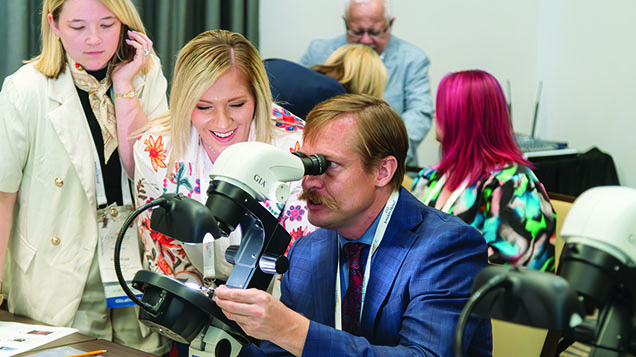
Inclusions in gemstones often captivate gemologists with their natural beauty. In this session, Nathan Renfro (GIA, Carlsbad) demonstrated that inclusions can also provide valuable information about gems, including what they are and whether they are treated, natural, or synthetic (figure 4). Renfro presented various lighting control techniques used to significantly enhance photomicrographs. He focused on a variety of interesting gemstone inclusions, encouraging participants to use their cell phones to practice some of the lighting techniques covered. Renfro explained that documenting observations with a photograph is a useful method of recording inclusions that is easily shared with others. Photomicrographs appeal to a broad audience, from those who are interested in the hidden beauty of the natural world to an appraiser who uses inclusions as a “fingerprint” to document the identity of a unique stone.
For more information, see Renfro N. (2015) Digital photomicrography for gemologists. G&G, Vol. 51, No. 2, pp. 144–159, http://dx.doi.org/10.5741/GEMS.51.2.144
Unknown block type
- Block type (mgnl:type):
- (missing)
- Block index:
- 0
- Path:
- /gia-website/gems-gemology/winter-2025-gemnews-converge-hands-on/contentBlocks/23
Unknown block type
- Block type (mgnl:type):
- (missing)
- Block index:
- 1
- Path:
- /gia-website/gems-gemology/winter-2025-gemnews-converge-hands-on/contentBlocks/17
Introduction to Jewelry Forensics
Hands-on sessions afforded Converge attendees the opportunity to learn from GIA experts and work with samples from the Institute’s extensive reference collection.
The Natural Diamond Story: Natural and Laboratory-Grown Diamond Differentiation
Dr. James Shigley (GIA, Carlsbad) presented a session focused on the incredible geologic story of natural diamond, reminding participants what a remarkable mineral diamond is (figure 1). He explained that the gem’s origins provide jewelry professionals with memorable and relatable information they can use to educate consumers on the value of mined diamonds, to differentiate natural from laboratory-grown, and to address common misconceptions about abundance, mining practices, corruption, and human rights abuses. In this practical session, Dr. Shigley covered key aspects of natural diamonds’ value and rarity, including their incredible geologic age and remarkable formation process, along with how and when they arrived at the surface through kimberlite eruptions. He explained how geologists search for viable diamond deposits and mining companies recover these diamonds, also providing an outline of the world’s significant mines and their projected remaining production years. Also covered were the many positive micro and macro social benefits to communities involved in diamond mining, as well as environmental impact and sustainability. Dr. Shigley explained what is currently scientifically possible in terms of determining the geographic origin of a natural mined diamond—also covered by GIA’s Dr. Michael Jollands in a speaker presentation—and outlined GIA origin services. Participants were able to handle natural and lab-grown rough and faceted gems and use their microscopes to examine interesting natural inclusions.
Beauty in Unexpected Places: The New Frontiers of Ruby and Sapphire
In this hands-on seminar, Dr. Aaron Palke (GIA, Carlsbad) and Wim Vertriest (GIA, Bangkok) provided an in-depth report on rubies and sapphires from lesser-known deposits including the United States (Montana), Tanzania, Kenya, Afghanistan, Sri Lanka, and Greenland (figure 2). They demonstrated practical tips for identifying corundum from these alternative deposits and gave context for understanding the place of these gems in the complex global colored stone trade. Participants were able to examine ruby and sapphire samples from the GIA colored stone reference collection representative of these newer localities and hear directly from the field gemologists who visited the areas and collected the gems.
(Un)Natural Beauty: Treatments in Ruby and Sapphire and Their Identification
It is increasingly rare to come across ruby and sapphire with beauty and appeal entirely due to natural processes. The majority of stones on the market have been treated to enhance their appearance. In this hands-on seminar, GIA’s Dr. Aaron Palke and Wim Vertriest provided an in-depth orientation into the various artificial treatments for ruby and sapphire (figure 3). Using samples from GIA’s colored stone reference collection, participants learned practical tips for identifying these treatments and gained an understanding of their value.
Photomicrography of Gems
Inclusions in gemstones often captivate gemologists with their natural beauty. In this session, Nathan Renfro (GIA, Carlsbad) demonstrated that inclusions can also provide valuable information about gems, including what they are and whether they are treated, natural, or synthetic (figure 4). Renfro presented various lighting control techniques used to significantly enhance photomicrographs. He focused on a variety of interesting gemstone inclusions, encouraging participants to use their cell phones to practice some of the lighting techniques covered. Renfro explained that documenting observations with a photograph is a useful method of recording inclusions that is easily shared with others. Photomicrographs appeal to a broad audience, from those who are interested in the hidden beauty of the natural world to an appraiser who uses inclusions as a “fingerprint” to document the identity of a unique stone.
For more information, see Renfro N. (2015) Digital photomicrography for gemologists. G&G, Vol. 51, No. 2, pp. 144–159, http://dx.doi.org/10.5741/GEMS.51.2.144
.jpg "YMAL GIA Ed")