
Winter 2011
New Beginnings
We all have great expectations for 2012. I’ve gone a step further with my New Year’s resolutions by creating a “goals” book. Not only do I write down my goals, but I also add details such as how and when I will achieve them, and include pictures to make it more visual.
So, what new things can you expect from Gems & Gemology in the year ahead? Our goal is to create an enhanced digital journal, one that offers a more interactive experience for our online audience, in support of what we already do. Digital is changing the way information is consumed, and it provides a unique opportunity to reinvent the way we engage with you, our readers. Digital is beyond relevant: It is the future.
But first we finish 2011. Our final issue of the year includes a report by GIA researchers on a new purple opal that’s been hitting the market. Although it was reportedly natural material from Mexico, gemological investigation identified it as dyed opal from Ethiopia. Because this hydrophane opal can be very absorbent, we can expect to see many other treatments applied to it.
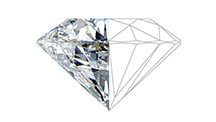
Another piece by GIA researchers examines symmetry parameters in diamond grading. Thanks to improvements in measuring round brilliants with optical scanners, GIA can now evaluate symmetry more consistently. This measurement-based procedure will complement the visual assessment of symmetry, which is one of the components of GIA’s diamond cut grade.
We also feature a set of six antique brooches, apparently from the early- to mid-19th century, set with light blue cabochons that were once thought to be turquoise. Analysis revealed that most of the supposed turquoise cabochons are actually fossilized dentine, also known as odontolite.
In this issue, we also highlight neutron-irradiated “London Blue” topaz. Some trace impurities in this topaz become radioactive after neutron irradiation. The authors found that irradiated samples from China contained up to four of these radioactive impurities. Most of the samples were safe to handle 95 days after irradiation, but others will require several years to reach a safe level.
I suspect that many of us, when we were younger, thought we’d be flying around in space pods by now instead of driving cars. Yet when the future arrives, we find that technology never changes as fast as our minds imagined it! As we progress in our digital offerings, we are going to keep it simple by delivering relevant content in innovative ways.
In 2012, I hope you achieve your goals and meet your expectations.
Cheers,
Jan Iverson
Editor-in-Chief
Current Issue